
The Hidden Logic of Amsterdam’s Narrow Homes
Few cities wear their history as visibly as Amsterdam. Every canal, bridge, and crooked house seems to whisper stories from a time when the city ruled the seas. Built on a web of waterways and marshland, Amsterdam is a triumph of human ingenuity a place where architecture and adaptation became one.
The city’s charm lies in its contradictions: steep staircases leading to bright attic studios, reflections that shimmer against centuries-old brick, and homes that lean forward as if listening to the water below. To understand Amsterdam is to understand why these houses were built this way and how they came to symbolize a nation’s delicate balance between practicality and beauty.
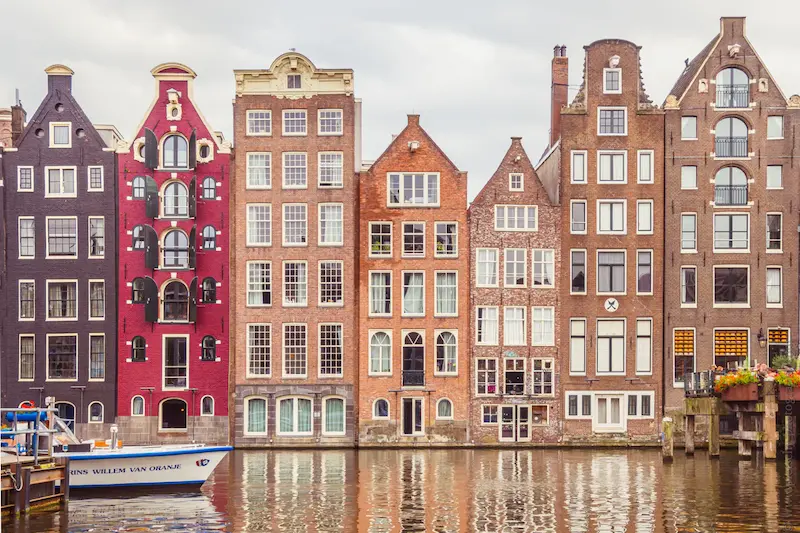
The Leaning Charm of Canal Houses
At first glance, the canal houses seem almost fragile, narrow, tall, and leaning forward as if bowing to the water. But this tilt is no accident. Built during the 17th century Dutch Golden Age, these homes were both residences and warehouses. Their slender façades hid deep interiors where merchants stored spices, fabrics, and treasures brought from the East Indies.
The tilt was intentional: it made hoisting goods through upper windows easier and prevented heavy loads from hitting the façade. Each house has a metal hook at its gable, a pulley system designed to lift cargo straight from the boats below. The forward angle kept the goods from scraping the building’s face, protecting ornate carvings and windows.
Over centuries, Amsterdam’s soft soil, reclaimed from the sea, caused additional shifts. Wooden piles driven deep into the clay began to settle unevenly, creating the charming imperfections we see today. The result? A cityscape that seems alive, slightly tilted, always in motion, as if breathing with the rhythm of the canals.
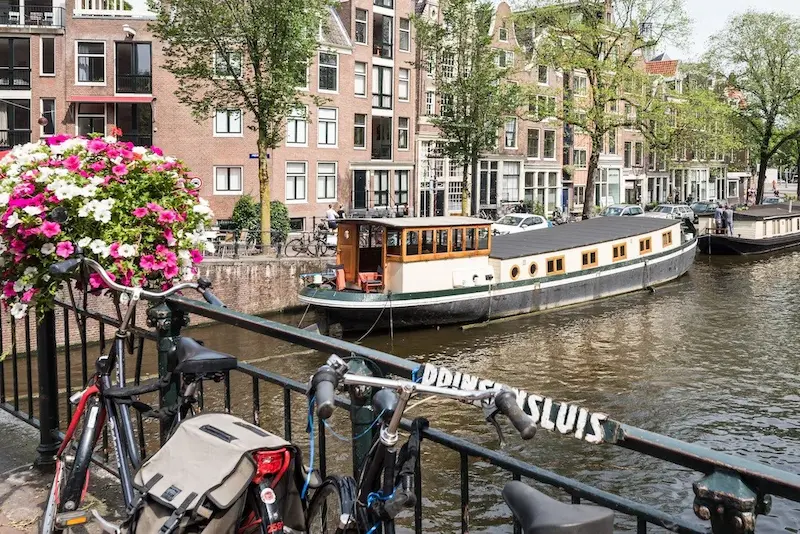
Life on Water: Amsterdam’s Floating Houses
While the canal houses rose from the earth, another kind of home grew from the water itself. Houseboats or “woonboten” have been part of Amsterdam’s urban fabric for over a century. Originally born from housing shortages after World War II, they began as improvised shelters and evolved into some of the city’s most sought-after residences.
Each floating house has its own personality. Some are sleek, modern structures of glass and steel; others are converted cargo barges with geraniums blooming in window boxes. Life here moves with the water’s mood. In winter, the canals freeze, turning the boats into floating islands of light; in summer, reflections shimmer across ceilings like moving art.
Living on water also reflects the Dutch spirit of coexistence. Instead of resisting nature, Amsterdam learned to live with it, to float, to bend, to adapt. These homes are both practical and poetic, reminders that architecture is not just about space, but about harmony.
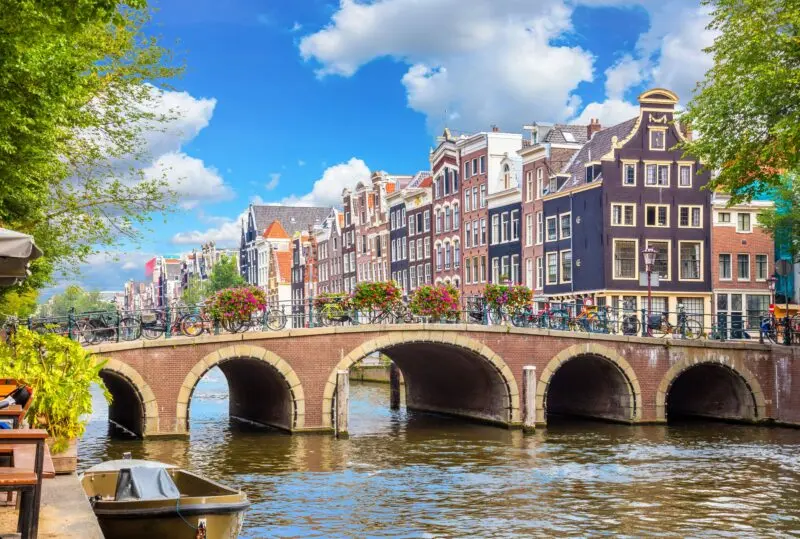
The Canal Belt: Geometry of Water and Light
The Grachtengordel, Amsterdam’s Canal Belt, forms the elegant backbone of the city. Declared a UNESCO World Heritage Site, this network of four major canals Herengracht, Keizersgracht, Prinsengracht, and Singel, was laid out in the early 1600s as a perfect example of Renaissance urban design. Its concentric rings symbolize order, equality, and commerce values at the heart of the Dutch Republic.
Each canal was lined with merchant homes whose façades mirrored prosperity without ostentation. The system of water and streets allowed easy transportation of goods while reflecting the city’s human-centered logic efficient, beautiful, and deeply democratic in its geometry. Even today, the rhythm of bridges and arches feels deliberate, almost musical.
Walking through the Canal Belt is like moving through time. Bicycles hum across cobblestones, bells echo from the Westerkerk, and the smell of roasted coffee drifts from corner cafés. The city moves forward, yet somehow stands still.
The Door Tax and the Art of Constraint
One of the most charming myths about Amsterdam’s architecture is that of the “door tax.” It’s said that in the 17th century, property taxes were based on the width of a building’s façade, the narrower the frontage, the lower the tax. While partly true, this system encouraged creative design solutions that shaped the city’s iconic look.
Builders compensated for narrow plots by expanding upward, adding ornate gables and richly decorated cornices. The façades became canvases for artistry: stepped, neck, and bell gables that told silent stories of family pride and trade success. Even the tilt forward, originally practical for lifting goods, came to embody elegance.
These architectural constraints produced a kind of poetry. Out of limits came identity. The “leaning houses” became more than dwellings; they became metaphors for resilience for how Amsterdam thrives within boundaries, bending without breaking.
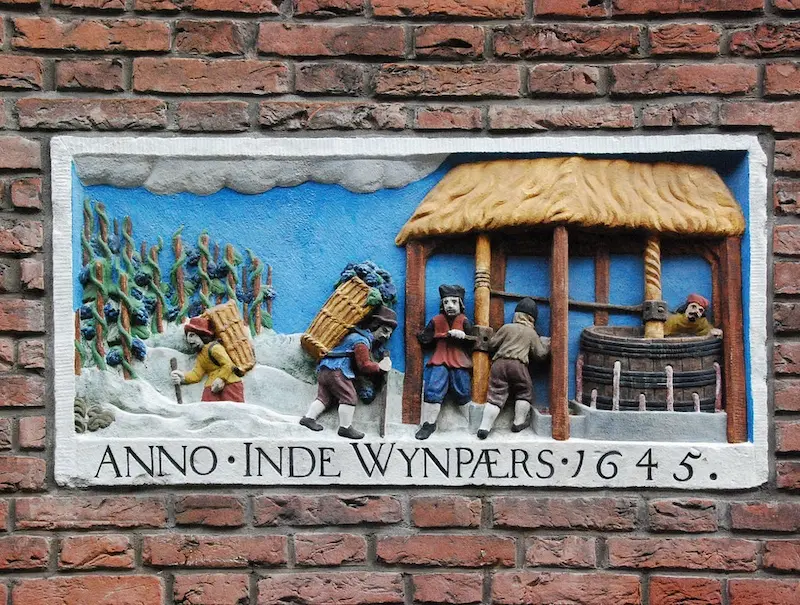
Each gable tells a story of trade, taxes, and timeless beauty.
Bonus: Hidden Corners of Amsterdam
Beyond the postcard canals, Amsterdam hides pockets of authenticity that reveal its quieter heart. Wander into Jordaan, once a working-class district, now a labyrinth of galleries, bakeries, and flower-draped bridges. Its crooked charm feels less like a museum and more like a conversation between neighbors.
Or explore Begijnhof, a secret courtyard dating back to the Middle Ages. Behind an unassuming wooden door near Spui Square lies one of the city’s oldest oases — tranquil, green, and protected by history. It’s a reminder that even in one of Europe’s most visited capitals, serenity still exists if you know where to look.
For a glimpse of modern Amsterdam, cross to NDSM Wharf in Noord. Once a shipyard, it’s now a playground of creativity, home to artists, studios, cafés, and murals that stretch across warehouses. Here, the city reinvents itself daily, proving that innovation and heritage aren’t opposite, they’re partners.

At NDSM Wharf, the past and future share the same canvas.
Between Water and Sky
Amsterdam’s architecture is a living philosophy, an acceptance that perfection isn’t balance, but movement. The houses lean, the canals ripple, and the city continues to evolve without losing its soul. Every limitation, every adaptation, became a story in brick and reflection.
To walk through Amsterdam is to feel time bending with the streets. It’s to see how a city built on mud and water became one of Europe’s most graceful capitals. Its strength lies not in grand monuments but in small details, a window hook, a narrow stairway, a facade that smiles at its own imperfection.
And maybe that’s why people fall in love with it: because Amsterdam doesn’t stand straight, but it stands true.