

Hartsfield-Jackson Atlanta International Airport (ATL) is one of the world's busiest hubs, operating 24/7 around the clock. Navigating an overnight stay or long layover here takes a clear strategy — the experience varies significantly depending on where in the sprawling concourse system you set up for the night.
This guide covers exactly what to expect during an overnight stay at ATL: how the Plane Train and underground walkways work after hours, which concourses stay quietest, how cold it gets indoors, and what to pack to rest comfortably until the shops reopen.
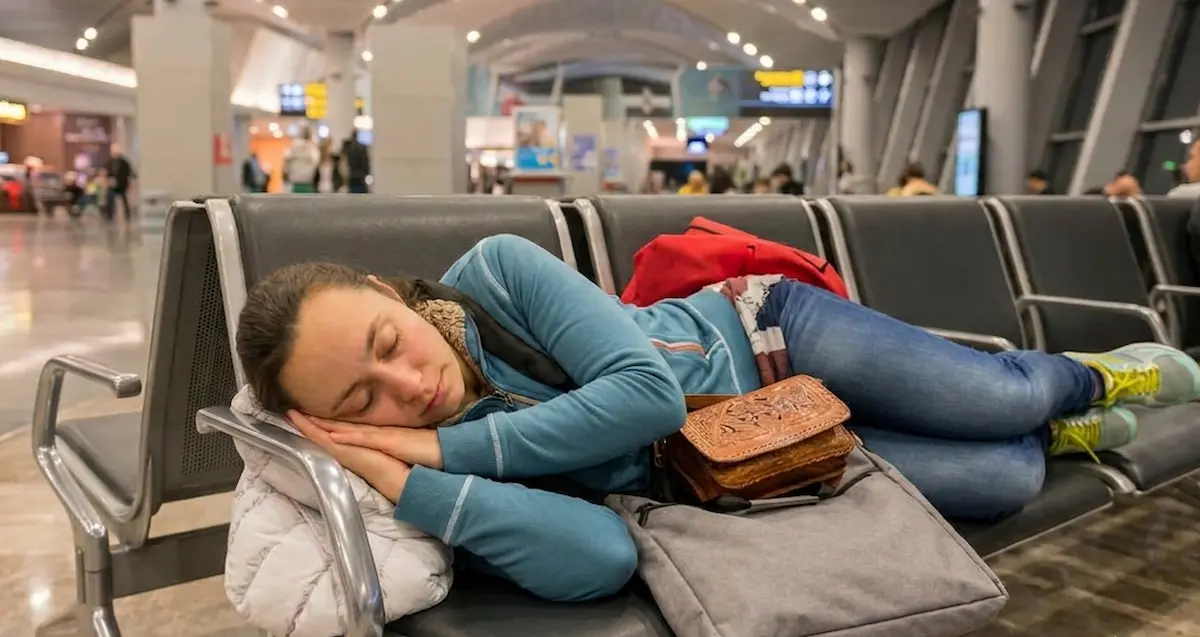
Whether you land in the Domestic Terminal or Concourse F international arrivals, the fundamentals of an ATL overnight stay the same: know your concourse, know your security status, and come prepared for the cold.
Security & Terminal Layout Rules
Atlanta's airport layout consists of a main Domestic Terminal, an International Terminal (Concourse F), and concourses T, A, B, C, D, and E, all connected underground by the Plane Train and pedestrian walkways. Where you can wait overnight, and how you get between concourses, depends on which side of security you're on.
Airside (Post-Security)
If you're already past security with a valid boarding pass, staying airside overnight is permitted, with the concourses and underground tunnels accessible all night.
Landside (Pre-Security)
Checkpoints close overnight, typically between 11:00 PM and 4:30 AM depending on the checkpoint. Late arrivals must wait in the public baggage claim areas until reopening.
Moving Between Terminals
The underground pedestrian walkway connecting all concourses is accessible 24/7 on foot, even during the Plane Train's early-morning maintenance windows.
Because the Plane Train occasionally pauses overnight for maintenance, don't rely on it exclusively — the underground walkways stay open on foot as a reliable backup route between concourses.
Top Rest Areas Inside the Terminals (Airside - Post Security)
Central concourse hubs and atrium spaces stay bright and active overnight. For quieter surroundings, head toward the ends of specific concourses or the connecting tunnels instead.
Environment
Generally the quietest and most modern concourse late at night, once international departures wrap up for the evening.
Seating
Padded seating areas, floor-to-ceiling window views with wider spaces, and carpeted sections just off the main walkway.
Environment
Handles long-haul international and domestic flights, with foot traffic dropping off significantly after midnight.
Seating
Longer stretches of gate seating with fewer armrest dividers than the domestic concourses, plus tucked-away corners near the end gates.
Environment
The tunnels connecting Concourses A through F offer a quiet alternative to open gate areas overnight.
Key Feature
The section between Concourses A and B includes simulated rainforest art installations with softer ambient lighting — a popular spot for a short rest.
What to Expect Overnight
Before you settle in, here's exactly what an overnight stay at ATL feels like — from the lighting overhead to your last chance for a snack.
Lighting & Sound
Main concourse hallways and gate areas keep full overhead lighting 24 hours a day, with frequent announcements, security reminders, and floor scrubbers running overnight.
Temperature
Continuous HVAC airflow can drop concourse temperatures noticeably overnight, especially near gate doors and large glass facades.
Food & Refreshments
Most restaurants, bars, and shops close by 10–11 PM and reopen around 5 AM. Past midnight, vending machines throughout each concourse are the main option.
Water & Refill Stations
Free bottle-refill stations and water fountains are available near restroom clusters in every concourse, so an empty refillable bottle passed through TSA is one of the smartest things to carry overnight.
Overnight Survival Checklist
Pack light, but don't skip these four essentials — they make the difference between a rough night and a genuinely restful one.
- Eye Mask & Noise-Canceling Headphones — crucial for blocking continuous concourse lighting and overhead audio broadcasts.
- Warm Layering — a light blanket, hoodie or jacket keeps you comfortable against the cold indoor airflow.
- Portable Power Bank — outlets and charging stations are abundant, but a portable charger lets you sit away from high-traffic charging hubs.
- Empty Refillable Water Bottle — passes through TSA empty and can be refilled at water stations airside.