
History of Baiyun, Guangzhou: From Ancient Villages to a Modern Urban District
In the north-central part of Guangzhou, Baiyun is a district where centuries of history meet modern urban development, evolving from a largely rural area into one of the city's largest and most important districts.
Known for its scenic mountains, traditional villages and rich cultural heritage, the district takes its name from Baiyun Mountain, whose name means "White Cloud Mountain". Over the centuries, the area has witnessed dynastic changes, resistance against foreign forces, administrative reforms and rapid urban expansion.
Today, Baiyun reflects both the historical traditions of southern China and the growth of modern Guangzhou.
Natural landmark
Baiyun Mountain gives the district its name and identity.
Historic resistance
Sanyuanli is a key site of Opium War history.
Living heritage
Traditional villages and ancestral halls survive amid modern growth.
Transport gateway
Major airport and rail links connect Guangzhou with China and the world.
Ancient Origins of Baiyun District
Part of the Pearl River Delta for over 2,000 years
The history of Baiyun is closely connected to the development of Guangzhou, one of southern China's oldest major cities. The region has long been part of the Pearl River Delta, an area shaped by agriculture, waterways, trade and settlement.
During the Qin Dynasty (221–206 BC), the territory that now forms Baiyun belonged to Panyu County under Nanhai Commandery. This connection continued through the Han Dynasty and the Three Kingdoms period. Under the Sui and Tang dynasties, boundaries changed and the area came under Nanhai County; from the Song through the Qing, parts of present-day Baiyun were governed by Panyu and Nanhai counties.
For much of this time, the landscape consisted of villages, farmland, waterways and wooded hills. These rural communities developed local traditions and family lineages that remain part of Baiyun's cultural identity today.
Baiyun Mountain and Its Cultural Heritage
The "White Cloud Mountain" that named a district
Baiyun Mountain has shaped the area's identity for centuries. Its wooded slopes, streams and viewpoints made it a celebrated scenic destination long before modern Guangzhou expanded northward.
The mountain became especially well known during the Song Dynasty (960–1279), when its landscapes were counted among Guangzhou's notable scenic sights. Its name refers to the clouds that gather around its hills.
Temples, gardens and traditional scenic sites developed in and around the mountain, drawing visitors seeking both nature and culture. Today, it remains one of Guangzhou's best-known attractions and a symbol of the district's link to its past.
Did You Know?
Baiyun Mountain's highest peak, Moxing Ling, rises to about 382 metres, offering sweeping views over the city. The mountain is now a national 5A-rated scenic area.
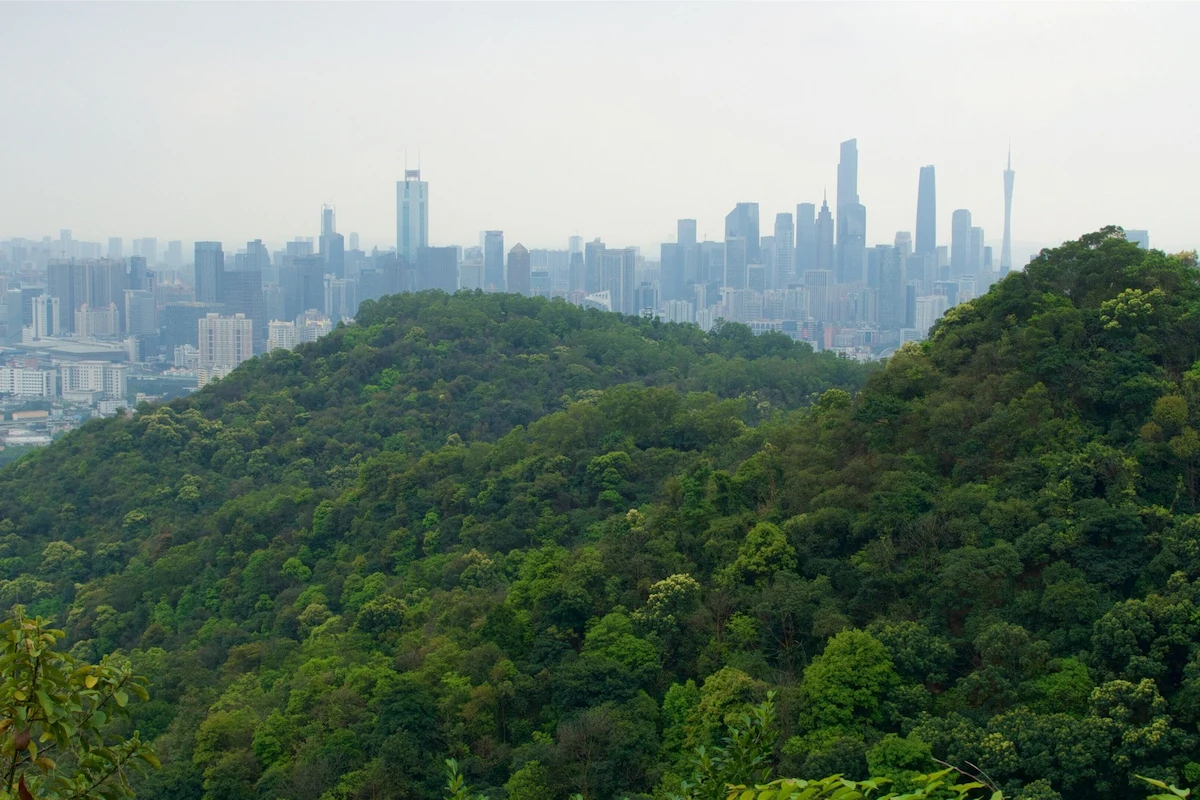
Baiyun During the Ming and Qing Dynasties
A network of villages around a growing city
During the Ming (1368–1644) and Qing (1644–1912) dynasties, the villages of present-day Baiyun continued to develop within the agricultural and commercial networks of the Guangzhou region.
Several historical figures linked to the area shaped its literary, cultural and political history, including Chen Zizhuang, a Ming Dynasty official, and Zhao Ziyong, a Qing Dynasty writer known for his collection of Cantonese love songs (Yue'ou).
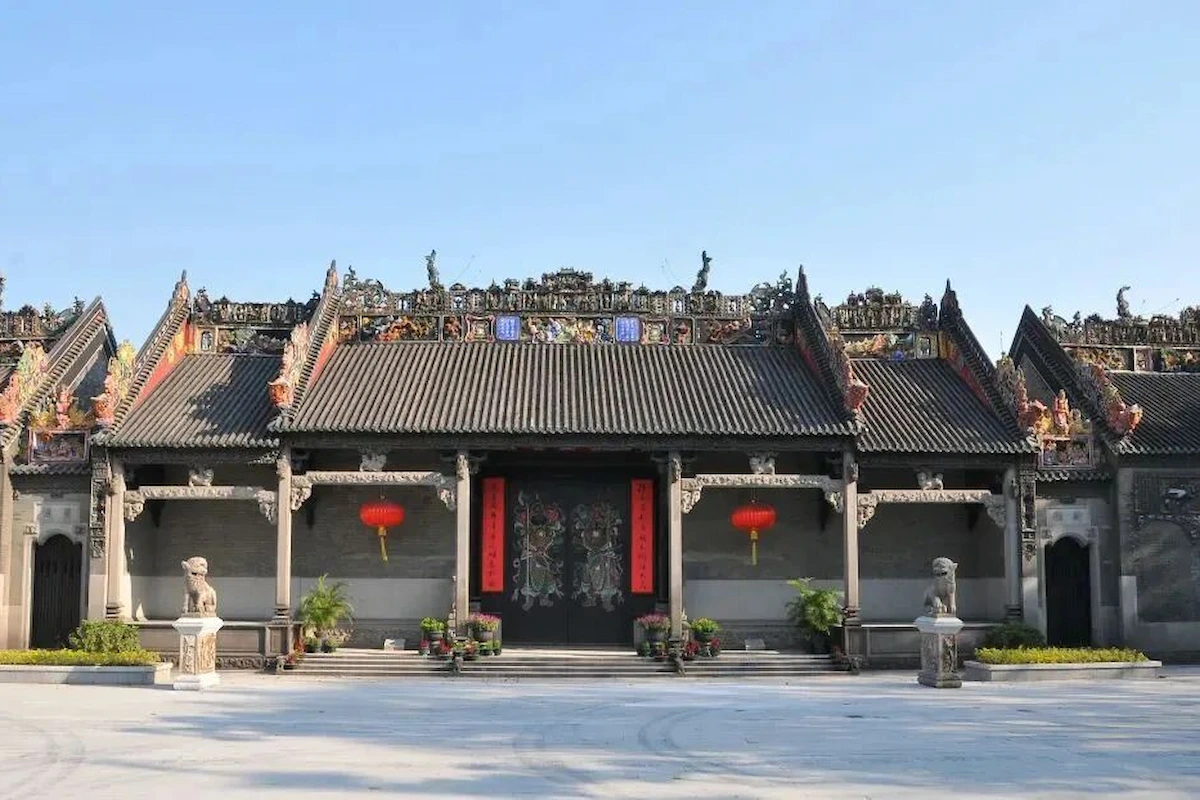
Traditional villages preserved distinctive architecture, family traditions and ancestral halls, and some have survived the area's later urban transformation. Baiyun's history in this period was not defined by a single centre but by a network of rural communities tied to Guangzhou's growing regional influence.
The Sanyuanli Resistance of 1841
A defining moment of the First Opium War
One of the most significant events in Baiyun's history took place during the First Opium War (1839–1842), when British forces fought against Qing China.
In May 1841, residents of Sanyuanli, an area in present-day Baiyun District, rose up against British troops. Villagers organized resistance in response to the foreign military presence, and the event became an important episode in the history of opposition to British intervention in China.
The Sanyuanli resistance is remembered as a symbol of local communities defending their homeland and forms part of Guangzhou's wider Opium War history, a conflict that profoundly changed China's relations with foreign powers. Today, it remains a key part of Baiyun's identity and a reminder that the district's past reaches far beyond its modern landscape.
From Rural Outskirts to Part of Guangzhou
Early 20th-century administrative change
At the start of the 20th century, the administration of Guangzhou and its surrounding countryside began to change. Guangzhou's municipal office was set up in 1918, and the city was formally established in 1921. In 1924, its boundaries were extended northward to the foot of Baiyun Mountain, bringing nearby rural areas more directly under city administration.
Even so, much of today's Baiyun remained rural. Villages, farms and local communities continued to shape daily life while Guangzhou grew into an increasingly important commercial centre, laying the foundations for Baiyun's later transformation into an integrated urban district.
Baiyun After 1949: Administrative Change and Growth
From suburban district to growing city
After the founding of the People's Republic of China in 1949, Guangzhou reorganized its administrative divisions, combining and restructuring several suburban areas in the early 1950s.
On 25 April 1956, Baiyun, Huangpu and Xinjiao were merged to form Guangzhou's suburban district. Further changes followed as the city expanded and surrounding communities became more closely connected to it.
Over the following decades, population growth, better transport, industrial development and new housing gradually changed the area's character. Farmland and traditional villages increasingly sat alongside factories, roads and expanding neighbourhoods, reflecting Guangzhou's rise as a major centre of commerce and manufacturing.
1987: Baiyun Becomes an Official Urban District
A new name rooted in local heritage
23 January 1987
Guangzhou's suburban district is renamed Baiyun District and becomes part of the city's urban district structure.
The new designation gave the area a clearer administrative identity while preserving its historical connection to Baiyun Mountain.
In the following decades, urban development accelerated. New residential communities, commercial areas, industrial zones and transport infrastructure reshaped the district. Former villages were surrounded by expanding neighbourhoods, while older settlements kept elements of traditional Cantonese culture.
Baiyun also benefited from Guangzhou's growing role in domestic and international trade. Its position north of the city centre made it important for transport, logistics, housing and economic activity.
Baiyun District in the 21st Century
Where heritage and modern Guangzhou coexist
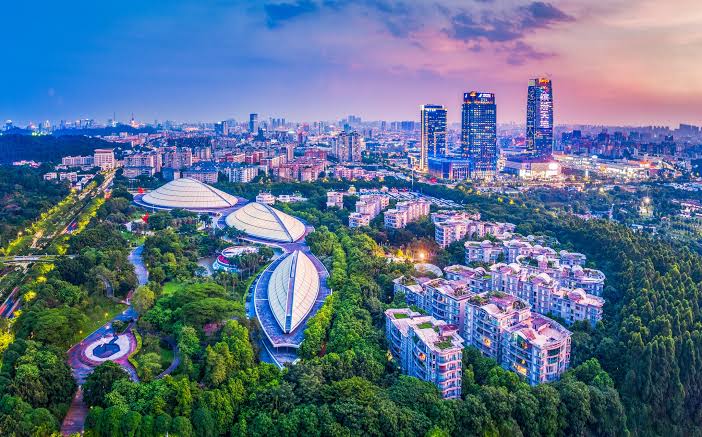
Baiyun has grown into one of Guangzhou's largest urban districts, home to well over three million people and combining residential neighbourhoods, commercial centres, industrial areas, transport infrastructure and extensive green spaces.
It hosts major transport facilities, including Guangzhou Baiyun Railway Station and part of Guangzhou Baiyun International Airport, which lies on the border of Baiyun and Huadu districts. These links strengthen its role in connecting Guangzhou with the rest of China and the world.
At the same time, traditional villages, ancestral halls, heritage sites and mountain scenery offer a contrast to modern development. Baiyun Mountain remains the defining landmark, while Sanyuanli and historic villages reveal the area's cultural background. Rather than losing its past, Baiyun has grown through the coexistence of old communities and new urban districts.
Historical Places to Visit in Baiyun
Where to see the district's past for yourself
Baiyun Mountain
A historic scenic area known for its natural landscapes, cultural sites and panoramic views over Guangzhou.
Sanyuanli
Linked to the 1841 resistance during the First Opium War; the Sanyuanli Anti-British Memorial preserves the story today.
Zhanggang Village
A historic settlement in Zhongluotan Town known for traditional houses and streets in Ming and Qing architectural styles.
Longgang Village
A village with long ancestral heritage, including traditions associated with the descendants of Zengzi, a disciple of Confucius.
Ancestral Halls & Villages
Across Baiyun, these sites preserve family histories, traditional Lingnan architecture and local customs.
Together, these places show Baiyun not simply as a modern district but as a region shaped by centuries of rural life, cultural traditions and historical events.
Timeline of Baiyun District History
Key milestones at a glance
-
Qin & Han dynasties
The area belongs to Panyu County under Nanhai Commandery.
-
Sui & Tang dynasties
Administrative changes place the area under Nanhai County.
-
Song to Qing dynasties
The region develops through rural communities, agriculture and local cultural traditions.
-
1841
Residents of Sanyuanli resist British forces during the First Opium War.
-
1921
Guangzhou is formally established as a city.
-
1924
Guangzhou's boundaries expand to the foot of Baiyun Mountain.
-
1956
Guangzhou's suburban district is created through administrative consolidation.
-
1987
The suburban district is renamed Baiyun District.
-
21st century
Baiyun grows into a major urban district with key transport links and modern infrastructure.
Final Thoughts on Baiyun's History
The history of Baiyun is closely intertwined with that of Guangzhou. From early farming communities and famous mountain landscapes to the Sanyuanli resistance and its transformation into a modern urban district, Baiyun has lived through centuries of change. Today, it combines historic villages, cultural landmarks, natural scenery and modern city life.
Understanding Baiyun's past adds depth to any visit to Guangzhou.