
Top 10 Foods in Beijing: Must-Try Dishes & Snacks
Beijing is not only China's political and cultural capital but also one of its most fascinating food destinations. Its cuisine blends centuries of imperial history, northern Chinese traditions, Muslim influences and everyday local cooking.
While Peking duck is the city's most famous dish, the best food in Beijing goes far beyond roast duck: thick wheat noodles, lamb hot pot, dumplings, savory breakfast crepes and unique local snacks all play a part. You can enjoy an elaborate duck dinner one evening and a simple bowl of noodles from a tiny local shop the next morning. If you are wondering what to eat in Beijing, start with these ten.
The 10 Must-Try Foods at a Glance
Tap a dish to jump straight to it
Top 10 Foods to Try in Beijing
From imperial roast duck to old Beijing street snacks
Peking Duck 北京烤鸭
Beijing kaoya
No list of the top foods in Beijing is complete without Peking duck, the city's most internationally famous dish, with deep roots in China's imperial culinary tradition.
The duck is roasted until the skin turns exceptionally crisp while the meat stays tender, then carved at the table. Wrap a few slices in a thin pancake with sweet bean sauce, cucumber and scallions. Some restaurants serve the first pieces of skin dipped in sugar, a traditional first bite.
Where to try
Quanjude (hung-oven roasting since 1864), Bianyifang (closed-oven roasting, a brand dating to the Ming Dynasty), Siji Minfu and Da Dong. Popular branches get very busy, so book or arrive early.
Best for:First-time visitors, special occasions and anyone after Beijing's signature dish
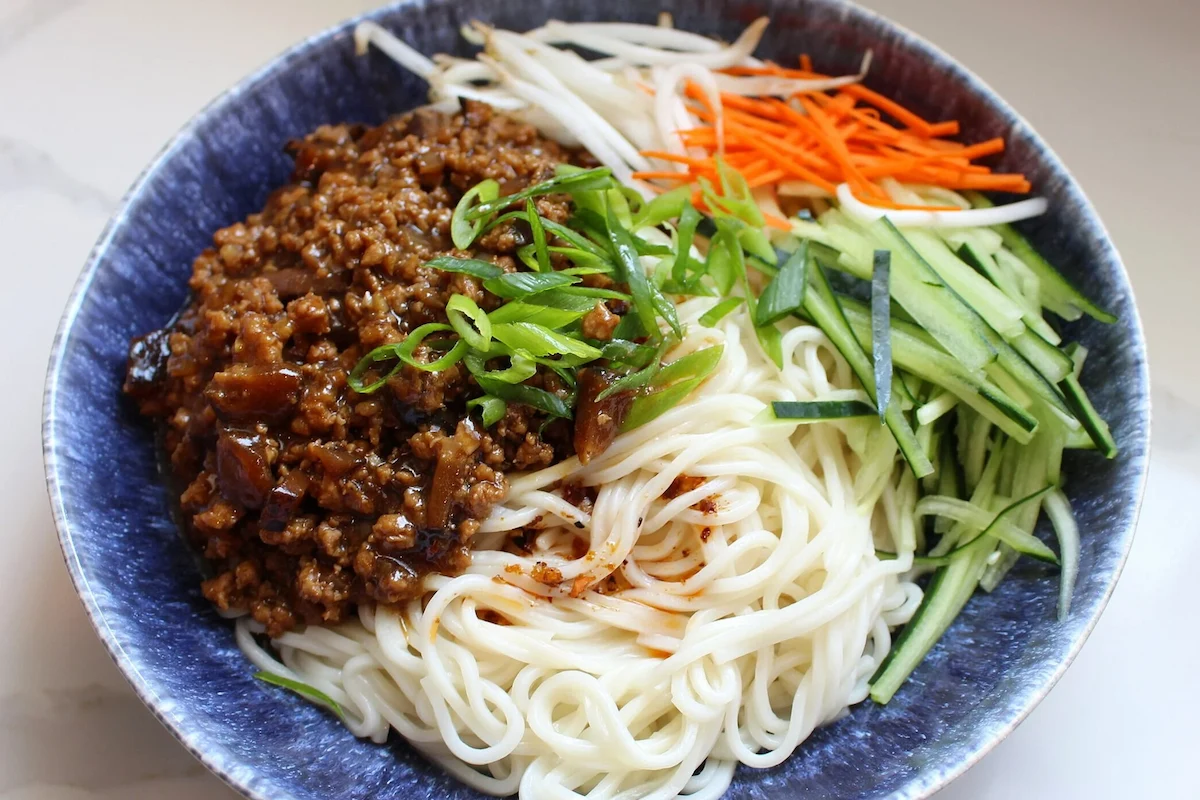
Zhajiangmian 炸酱面
Fried sauce noodles
If Peking duck is Beijing's star restaurant dish, zhajiangmian is its everyday classic: thick wheat noodles topped with a rich sauce of fried fermented soybean paste and diced pork.
Fresh vegetables such as cucumber, radish, bean sprouts and soybeans arrive separately around the bowl, and you mix everything together yourself. It is the perfect introduction to northern China's wheat-based cooking.
Where to try
Old-style Beijing noodle houses and neighbourhood eateries all over the city. Choose places specializing in old Beijing cuisine over tourist-oriented restaurants.
Best for:A casual lunch, budget travelers and everyday Beijing food
Beijing Lamb Hot Pot 铜锅涮羊肉
Shuan yangrou
When temperatures drop, few meals beat Beijing lamb hot pot. Unlike the fiery Sichuan and Chongqing styles, the Beijing version uses a simple broth in a traditional charcoal-heated copper pot, letting the lamb take center stage.
Paper-thin lamb slices are swished briefly in the broth, then dipped in a savory sesame sauce often mixed with fermented bean curd and chive-flower paste. Add vegetables, mushrooms and tofu, and share everything around the table.
Where to try
Donglaishun, founded in 1903, is the classic name; many neighbourhood restaurants serve excellent versions too.
Best for:Cold weather, groups, families and a traditional northern Chinese dining experience
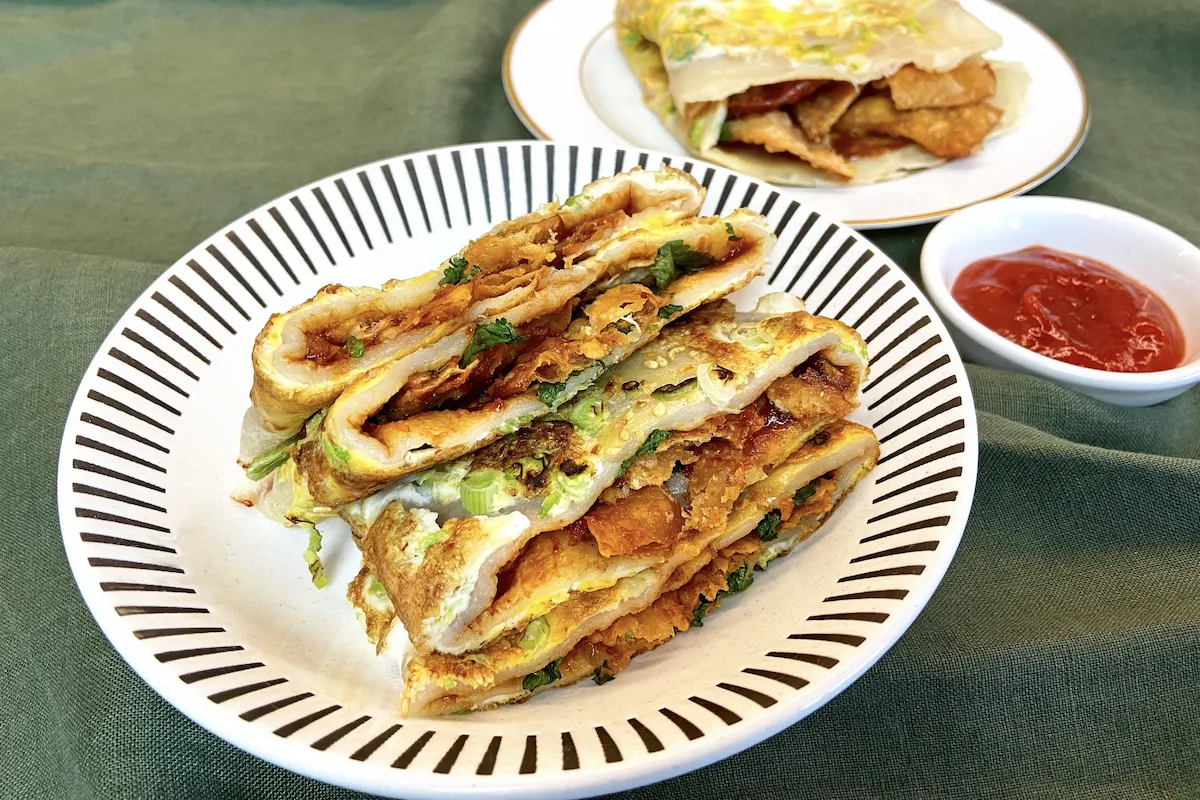
Jianbing 煎饼
Savory breakfast crepe
For one of the best Beijing breakfast foods, look for jianbing, a savory crepe made fresh at street stalls. Originally from neighbouring Tianjin and Shandong, it is now a Beijing breakfast staple.
The vendor spreads batter on a hot griddle, cracks an egg over it and adds scallions, cilantro, a sheet of crispy fried dough, pickles and chili sauce, then folds it into a portable, crunchy breakfast in under two minutes. Watching it being made is half the fun.
Where to try
Busy breakfast stalls in residential neighbourhoods. The longest morning queues are usually the best sign.
Best for:Breakfast, budget travelers and street-food enthusiasts
Jiaozi (Dumplings) 饺子
Jiaozi
Dumplings are one of the most important foods in northern China. Fillings range from pork and chives to vegetables, shrimp and lamb, and they can be boiled, steamed or pan-fried (guotie, with a crispy golden base).
Jiaozi are tied to family gatherings and especially Chinese New Year. Order several fillings to share, and dip them in vinegar, garlic, soy sauce or chili oil.
Where to try
Countless dumpling restaurants across the city, from tiny neighbourhood shops to large specialist restaurants.
Best for:Families, groups, casual lunches and an affordable traditional meal
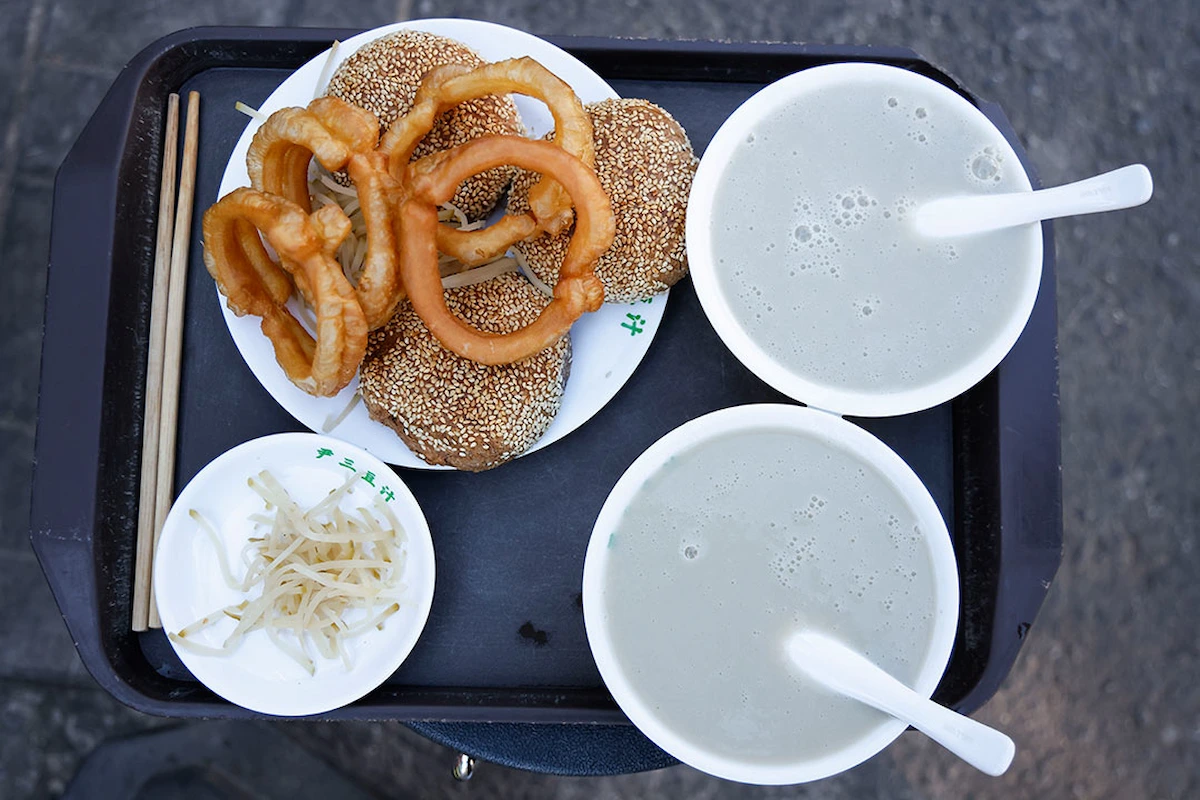
Douzhi 豆汁
Fermented mung-bean drink
For one of the most unusual traditional Beijing foods, try douzhi: a greyish, fermented drink made from the liquid left over when mung beans are processed into starch. Its sour, pungent flavor is famously polarizing, even among Beijingers.
It is traditionally served hot with jiaoquan (crispy fried dough rings) and salty pickles, a classic old Beijing breakfast. Order a small portion and treat it as a cultural experience as much as a culinary one.
Where to try
Traditional Beijing snack shops, especially in the old city around Huguosi Street and Qianmen.
Best for:Adventurous food travelers and anyone curious about old Beijing food culture
Tanghulu 糖葫芦
Candied fruit skewers
For something sweet, look for tanghulu: fruit on a bamboo skewer coated in a hard, glossy shell of crystallized sugar. The classic version uses tart Chinese hawthorn berries, and the sour-sweet contrast is what makes it special.
Today you will also see strawberries, grapes, kiwi and other fruits. Tanghulu is especially associated with winter; eat it right away, while the coating is still crisp.
Where to try
Traditional markets, food streets, tourist areas and seasonal stalls around the city.
Best for:Families, children, dessert lovers and a classic Chinese snack
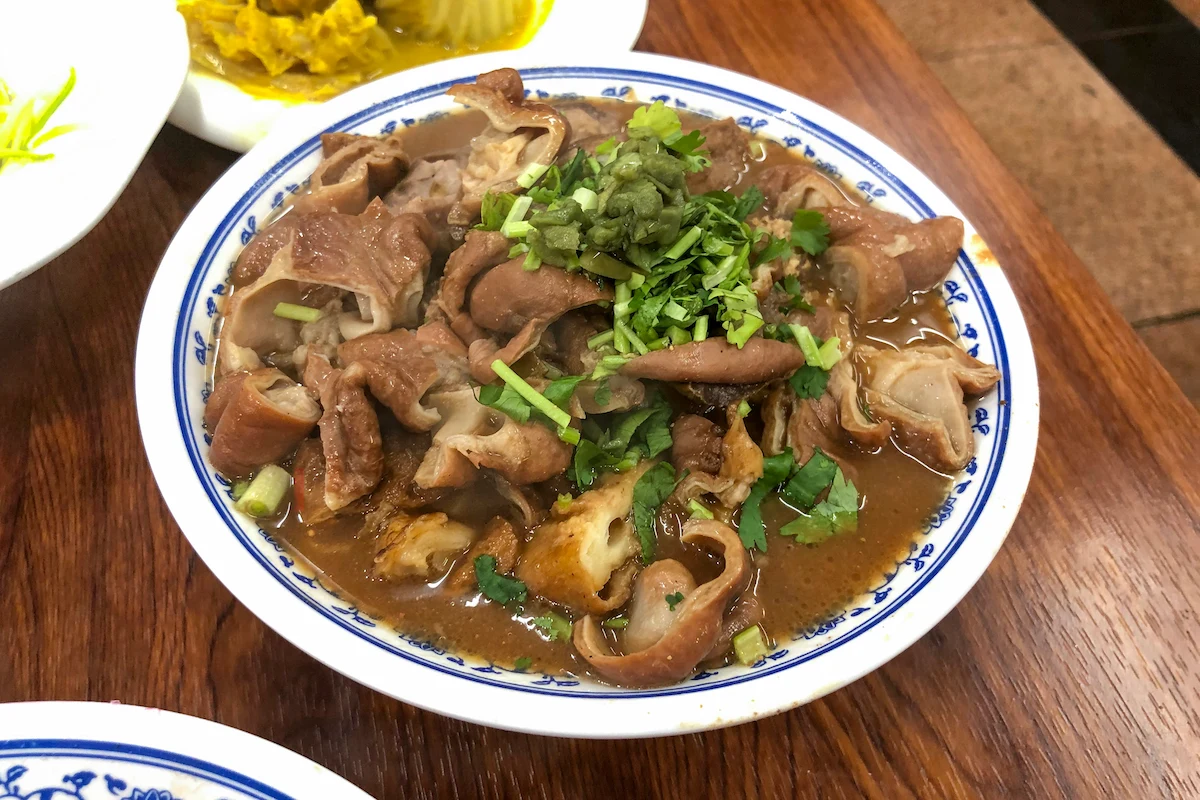
Luzhu Huoshao 卤煮火烧
Offal and bread stew
A much more adventurous choice, luzhu huoshao combines pork intestines and other offal, fried tofu and pieces of wheat bread (huoshao) simmered in a rich, savory broth.
It is deeply rooted in Beijing's working-class food culture: hearty, filling and full of contrasting textures. Not the best first order if you are new to organ meats, but a true taste of authentic local cuisine.
Where to try
Specialist luzhu shops in the old hutong neighbourhoods, where it is often eaten as a hearty lunch.
Best for:Adventurous eaters and travelers seeking traditional local cuisine
Chao Gan 炒肝
Stewed liver and intestines
Despite its name ("stir-fried liver"), chao gan is a thick stew of pork liver and intestines in a glossy, garlic-forward sauce, traditionally eaten for breakfast alongside steamed buns.
Old Beijingers sip it straight from the rim of the bowl rather than using a spoon. If you enjoy offal, it is an authentic glimpse into old Beijing's food culture.
Where to try
Long-established breakfast shops in the old city, such as those around Qianmen and Gulou.
Best for:Adventurous food lovers exploring traditional Beijing snacks
Men Ding Rou Bing 门钉肉饼
Gate-stud meat pie
A more approachable choice is men ding rou bing, a small, round meat pie named after the decorative studs on Beijing's imperial gates.
Traditionally filled with seasoned beef, a nod to Beijing's Hui Muslim food heritage, it is pan-fried until golden and crisp while the inside stays juicy. Eat it hot but carefully, as the filling holds a lot of heat; pair it with a simple soup for a full meal.
Where to try
Halal and traditional snack restaurants, particularly around the Niujie Muslim quarter.
Best for:Casual lunches, quick snacks and traditional food without unfamiliar flavors
Bonus: More Beijing Foods Worth Trying
If you still have room
Baozi 包子
Fluffy steamed buns filled with meat or vegetables.
Guotie 锅贴
Crispy-bottomed pan-fried dumplings.
Beijing pastries
Traditional baked and steamed sweets of the north.
Sesame dishes
Sesame paste flavors many Beijing sauces and snacks.
Beijing barbecue
Grilled skewers and meats in casual local spots.
Donkey burger 驴肉火烧
A Hebei specialty that is easy to find in Beijing.
What Is Beijing Food Like?
Wheat, sesame, lamb and savory sauces
Unlike chili-heavy cuisines, traditional Beijing food centres on wheat, fermented soybean products, sesame, lamb, pork and savory sauces. Northern China's climate favoured wheat over rice, which is why noodles, dumplings, pancakes and breads dominate. As an imperial capital, Beijing also drew cooks and traditions from across China, so a single food tour can range from elaborate Peking duck to a simple breakfast crepe.
Breakfast vs. Dinner in Beijing
How to plan your day of eating
Try jianbing, baozi, douzhi with jiaoquan, or chao gan.
Skip expensive restaurants: small neighbourhood breakfast shops show you how locals really eat.
A classic Beijing dinner: Peking duck, vegetable dishes and dumplings, or a shared lamb hot pot with a group.
For a special occasion, reserve a table at one of the famous duck restaurants.
Best Areas for Food in Beijing
Where to start your food walk
Dongcheng
Historic sights, hutongs and traditional restaurants in one walkable area.
Qianmen
Time-honoured restaurants and classic Beijing snacks near Tiananmen.
Wangfujing
Famous shopping street with visitor-oriented snack stalls (the old Donghuamen night market closed in 2016).
Niujie
Beijing's historic Hui Muslim quarter, great for halal snacks and beef pies.
Hutong areas
Small noodle, dumpling and snack shops tucked into residential lanes.
Guijie (Ghost Street)
A lively late-night food street known for spicy crayfish and hot pot.
Tips for Trying Food in Beijing
Eat smarter, taste more
Go beyond duck
Peking duck is essential, but noodles, dumplings and breakfast foods matter just as much.
Eat where locals eat
Busy neighbourhood places at normal mealtimes beat tourist restaurants.
Try something new
Feeling brave? Douzhi, chao gan and luzhu. Prefer familiar? Duck, dumplings and jianbing.
Share your food
Order several dishes for the table to taste more in a single meal.
Final Thoughts: The Best Food in Beijing
The best food in Beijing is not limited to one famous dish. Order the duck, but also slurp a bowl of zhajiangmian, gather around a copper hot pot, grab a jianbing for breakfast, share dumplings with friends and, if you are brave, try douzhi or chao gan.
The best way to understand Beijing is to taste it, one dish at a time.