
10 Most Famous Landmarks in Beijing
From enormous palace complexes and ancient temples to the Great Wall and monumental public squares, Beijing's landmarks tell the story of China's imperial past and modern identity.
Beijing is one of the world's most historically significant cities. Whether it is your first visit or a return trip, these landmarks belong at the top of your itinerary: some can be explored in a few hours, while others deserve an entire day. Here are the 10 most famous landmarks in Beijing every traveler should know about.
Beijing Landmarks at a Glance
Tap a landmark to jump straight to it
The 10 Most Famous Landmarks in Beijing
From imperial palaces to Olympic icons
The Forbidden City
The Heart of Imperial China
The Forbidden City is arguably the most famous landmark in Beijing and one of the most important historical sites in China.
In the heart of the city, this enormous palace complex was the home of China's emperors and the centre of imperial government for almost five centuries. Construction began under the Ming Dynasty in 1406, and the complex contains thousands of rooms, courtyards, gates and traditional architectural details.
Its scale is hard to appreciate until you walk through its vast courtyards. The Hall of Supreme Harmony, the Meridian Gate and the Imperial Garden are among its most impressive areas, and a visit is an excellent way to understand Beijing's history as an imperial capital.
Book tickets online in advance with your passport. The palace is usually closed on Mondays, except public holidays.
Why visit:Imperial architecture, Chinese history, photography and cultural heritage
The Great Wall of China
An Icon in the Mountains
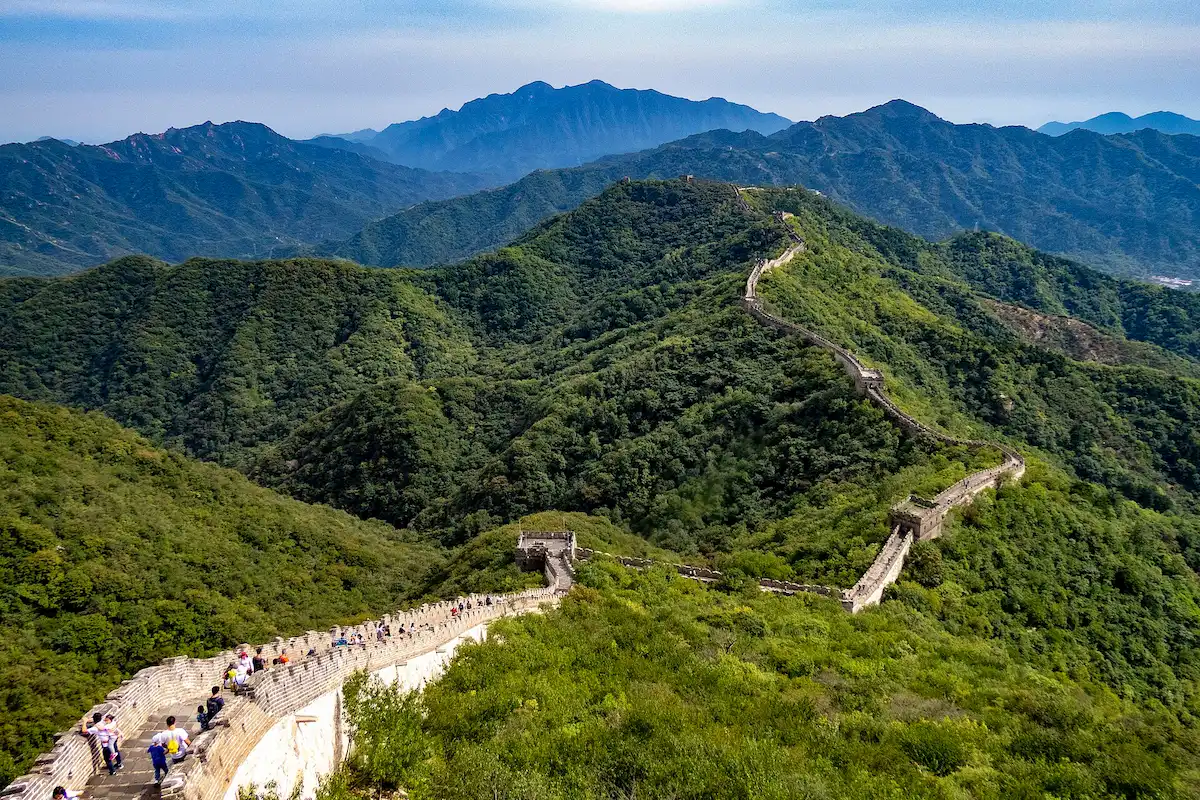
No list of famous Beijing landmarks would be complete without the Great Wall of China.
Although it stretches across northern China, several of its most accessible sections can be visited on a day trip from Beijing. The wall crosses mountains and valleys, creating some of the most spectacular landscapes around the capital.
The Mutianyu section is especially popular with international visitors for its scenery, restored sections and mountain setting. Badaling is the busiest and most developed, while sections such as Jinshanling offer a more rugged hiking experience.
Walking along the wall is very different from seeing it in photographs: the surrounding mountains and sheer scale make it one of the most memorable experiences in Beijing.
Why visit:Iconic scenery, Chinese history, hiking and one of the world's most recognizable landmarks
Tiananmen Square
Monumental Modern History
Tiananmen Square is one of the most recognizable public spaces in China and an important landmark in the centre of Beijing.
The enormous square lies directly south of the Forbidden City and is surrounded by major historical and cultural buildings, including the National Museum of China. Its location makes it easy to combine with the Forbidden City and other central sights.
Monumental in scale, the square represents an important part of China's modern history.
Entry requires an advance reservation and a security and ID check, so check the current access rules and bring your passport.
Why visit:Modern Chinese history, monumental architecture and proximity to major attractions
Temple of Heaven
Imperial Ceremony and Symbolism
The Temple of Heaven is one of Beijing's most beautiful historic landmarks.
Built under the Ming Dynasty and completed in 1420, it was where emperors held important ceremonies and prayed for good harvests. Its architecture is famous for its symbolic design, distinctive circular structures and carefully planned relationship between buildings and landscape.
The Hall of Prayer for Good Harvests is its most recognizable structure and one of the most photographed buildings in Beijing.
The surrounding park is just as interesting. Early in the morning, locals gather for exercise, tai chi, dancing, music and socializing, offering a glimpse into everyday Beijing life.
Why visit:Traditional architecture, history, photography and local culture
Summer Palace
Imperial Gardens by the Lake
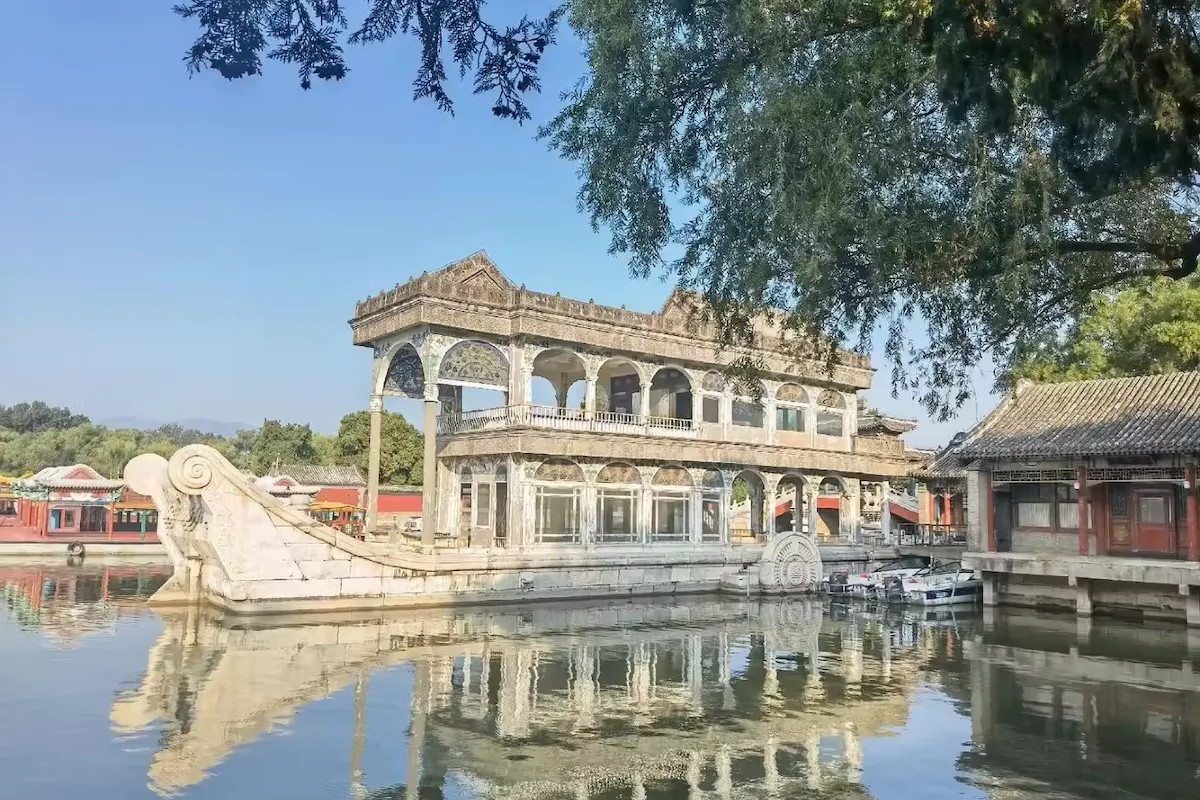
The Summer Palace is another essential Beijing landmark and one of the city's most impressive imperial gardens, listed as a UNESCO World Heritage Site.
Northwest of central Beijing, it combines gardens, temples, pavilions, bridges and traditional architecture around the large Kunming Lake, while Longevity Hill offers elevated views across the grounds.
It served as an imperial retreat where the Qing court escaped the heat of the capital in summer. Damaged in 1860, it was rebuilt in the late 19th century under Empress Dowager Cixi.
Unlike the formal grandeur of the Forbidden City, the Summer Palace feels peaceful and close to nature. Spend several hours walking along the lake, exploring the gardens and discovering its historic buildings.
Why visit:Imperial gardens, lakeside scenery, traditional architecture and relaxation
Jingshan Park
The Best View of the Forbidden City
Directly north of the Forbidden City, Jingshan Park is one of the best places for a panoramic view of central Beijing.
Historically linked to the imperial palace, the park is dominated by an artificial hill built from earth excavated for the palace moat and nearby waterways.
Climb to the Wanchun Pavilion at the top for one of the city's most famous views, with the symmetrical golden roofs of the Forbidden City stretching into the distance. It is especially rewarding right after visiting the palace, giving you a completely different perspective.
Why visit:Panoramic views, photography, gardens and the perfect complement to the Forbidden City
Beijing National Stadium (Bird's Nest)
Icon of Modern Beijing
Beijing's most famous modern landmark is the Beijing National Stadium, better known as the Bird's Nest.
Built for the 2008 Olympic Games, it became a defining symbol of modern Beijing, and it also hosted the opening ceremony of the 2022 Winter Olympics. Its interwoven steel structure resembles a giant nest, giving the building its famous nickname.
Even without major events, it remains a popular attraction: admire it from outside or explore the complex when access is available. It stands next to the National Aquatics Center (the "Water Cube"), making the Olympic Park a worthwhile stop for modern architecture fans.
Why visit:Modern architecture, Olympic history, photography and Beijing's contemporary identity
Beihai Park
A Peaceful Imperial Garden
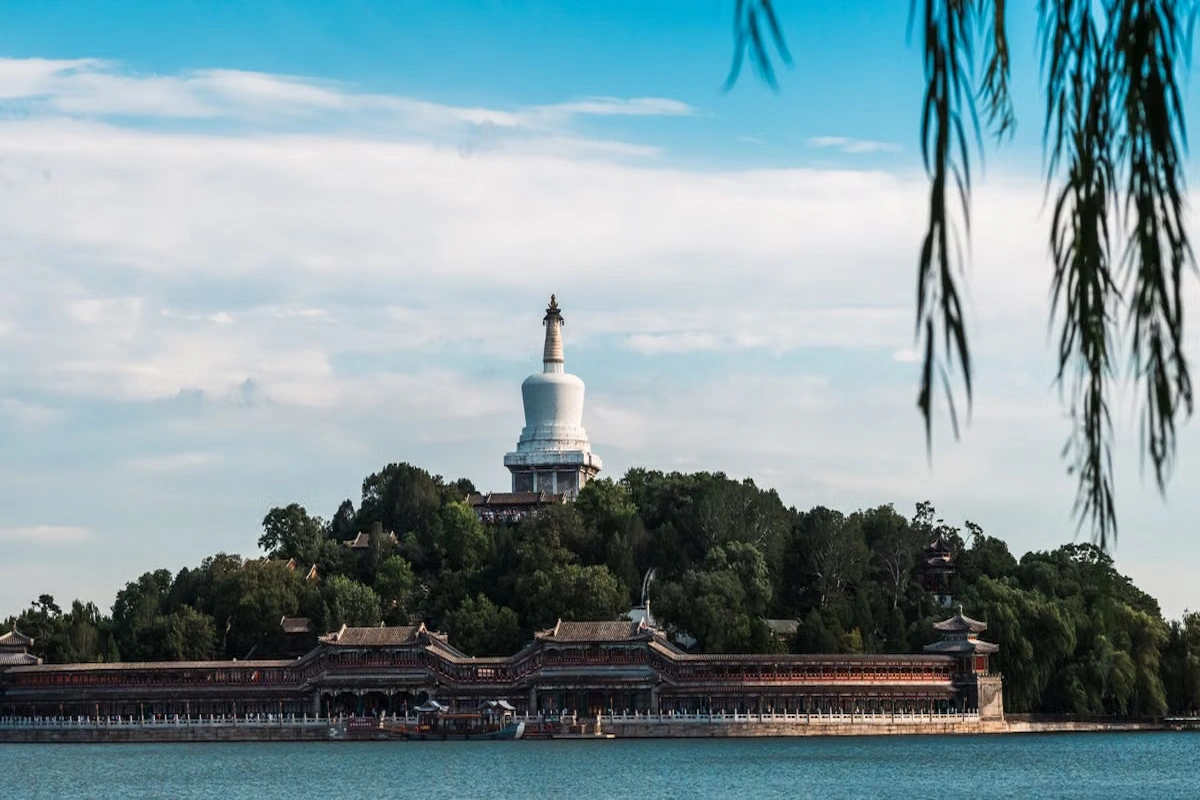
Beihai Park is one of the oldest and best-preserved imperial gardens in China and a peaceful escape from the busy streets of central Beijing.
The park surrounds a large lake and is dominated by the White Dagoba, built in 1651 on Jade Flower Island. Traditional pavilions, gardens, bridges and historic buildings are spread throughout.
Take a relaxing walk around the lake, explore the gardens or simply enjoy the views. Beihai is ideal if you want to combine sightseeing with a slower, more peaceful afternoon.
Why visit:Imperial gardens, traditional architecture, lakeside scenery and relaxation
Drum Tower & Bell Tower
Timekeepers of the Imperial City
The Drum Tower and Bell Tower are two of the most recognizable landmarks in Beijing's historic centre, standing at the northern end of the city's Central Axis.
Near the traditional hutongs of the Gulou area, the towers marked the hours of the day during the imperial era. The Drum Tower holds a collection of enormous drums, with regular drumming performances, while the Bell Tower houses one of the heaviest bronze bells in China.
The surrounding neighbourhood is just as interesting. Afterwards, explore the nearby hutongs, cafés, restaurants and small bars for a great mix of historical sightseeing and modern Beijing culture.
Why visit:Imperial history, traditional architecture, hutongs and local atmosphere
Ming Tombs
Resting Place of the Ming Emperors
Outside central Beijing, the Ming Tombs hold the mausoleums of 13 Ming Dynasty emperors.
Set in a valley surrounded by mountains, the complex combines history with impressive natural scenery. The Sacred Way, lined with monumental stone statues of animals and officials, is one of its most memorable parts, while Changling (the tomb of the Yongle Emperor) and the excavated underground palace of Dingling are the main highlights.
Because the tombs are outside the city, they are best visited on a longer day trip, often combined with the Great Wall. For anyone interested in imperial history, they are an important complement to the Forbidden City.
Why visit:Imperial history, ancient architecture, mountain scenery and cultural heritage
Tips for Visiting Beijing's Famous Landmarks
Make the most of your sightseeing days
Plan your route
Group nearby sights: Tiananmen Square, the Forbidden City and Jingshan Park make one day; the Drum and Bell Towers pair well with the hutongs.
Start early
Major sights get busy during the day. Mornings are especially rewarding at the Temple of Heaven, when locals practise traditional exercises.
Check booking rules
Some attractions have visitor limits, advance reservations or ID checks. Check official information first, especially for the Forbidden City and major museums.
Wear comfortable shoes
The Forbidden City means hours of walking, and the Great Wall has steep climbs and uneven steps.
Allow extra travel time
Sights that look close on a map can take much longer to reach because of traffic, crowds and the city's scale.
How Many Landmarks Can You See in One Trip?
Plan by the number of days you have
The goal is not to tick off every landmark as fast as possible. Beijing's historic areas are enormous, and giving yourself time to explore them properly makes the experience far more enjoyable.
Final Thoughts
Beijing's famous landmarks offer a remarkable journey through more than seven centuries of imperial and modern history. The Forbidden City and Temple of Heaven reveal the grandeur of China's imperial past, while the Great Wall showcases one of the world's greatest architectural achievements. At the same time, landmarks such as the Bird's Nest show how dramatically Beijing has transformed into a modern global capital.
Ancient palaces and modern icons: together, they make Beijing unforgettable.