

Frankfurt Airport: How Europe’s Financial Capital Built Its Aviation Empire
When people think of Frankfurt, two things often come to mind: money and mobility. As the financial capital of Europe, Frankfurt is the powerhouse behind the euro. But it’s also home to one of the busiest and most influential airports in the world. These two realities are not separate. In fact, Frankfurt’s rise as a global financial center has been deeply connected to the growth and evolution of Frankfurt Airport.
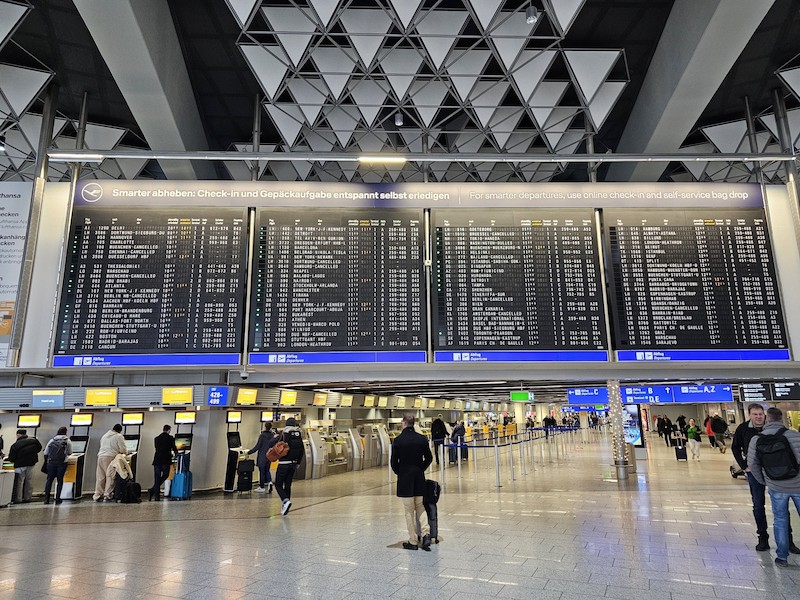
From Zeppelin Fields to Global Runways: The Birth of Frankfurt Airport
The history of Frankfurt Airport begins in 1936, when the original airfield in the Rhine-Main area opened with modest infrastructure and limited commercial ambition. Back then, Frankfurt was far from being a major global player. But after World War II, everything changed. The American military turned the airport into a key base for transatlantic operations. As West Germany's economy surged in the 1950s and 1960s, so did the demand for commercial flights. By the 1970s, the airport had become Germany’s most important air hub.
As Frankfurt developed into Europe’s financial capital, the airport evolved alongside it. The two institutions supported each other in a feedback loop of progress.
Here’s how the city’s financial might propelled the airport’s rise:
- Business Travel Demand: With headquarters of global banks, the European Central Bank, and the Frankfurt Stock Exchange in the city, Frankfurt became a magnet for high-frequency business travelers. Airlines responded by increasing premium seating and expanding routes to other financial centers.
- International Connectivity: Frankfurt’s banking influence meant constant movement of capital and people. To stay competitive in finance, the city needed fast, direct connections to cities like New York, Tokyo, London, and Singapore; all now accessible through Frankfurt Airport.
- Corporate Logistics: As home to global financial institutions and Fortune 500 companies, the city required efficient cargo handling for secure document delivery and high-value freight. This demand made Frankfurt Airport one of the top five air freight hubs in the world.
Frankfurt Airport was designed not just to handle travelers, but to serve decision-makers.
Premium services developed to meet the expectations of finance-focused travelers:
- First-class and business lounges operated by Lufthansa and other airlines
- Fast track security and priority immigration for quick arrivals and departures
- Direct rail connections to financial districts via the long-distance train station
- High-end shopping and dining for international business travelers with limited time
It’s no surprise that Frankfurt Airport is Lufthansa’s global hub. Germany’s flagship carrier saw the long-term value in basing its operations in a city where business never sleeps.
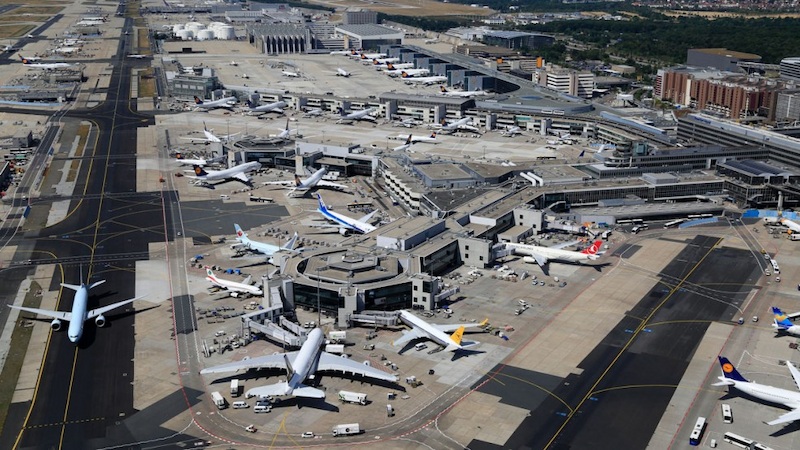
Strategic Investments Fueled by Economic Confidence
Frankfurt Airport was designed not just to handle travelers, but to serve decision-makers. The city’s economic strength allowed the airport to continuously expand and modernize. Some major developments include:
- Terminal 1 (1972): Designed to meet growing demand from European business travelers.
- Terminal 2 (1994): Opened during Germany’s reunification boom to handle rising international traffic.
- Runway Northwest (2011): Built to accommodate more flight movements, especially from long-haul aircraft.
- Terminal 3 (Under construction): Expected to open in phases by 2026, aimed at easing congestion and improving efficiency for business and leisure travelers.
Unlike airports in cities with unstable economies, Frankfurt Airport has. This is largely due to the city's strong, diversified financial ecosystem.
A City of Numbers, A Hub of Connections
Frankfurt's economic DNA and its airport are interlinked in a uniquely powerful way.
| Frankfurt Finance Facts | Frankfurt Airport Facts |
|---|---|
| European Central Bank is headquartered here | Over 300 destinations connected across 5 continents |
| Home to 200+ financial institutions | Handles 2 million tons of cargo per year |
| Frankfurt Stock Exchange is one of the world’s largest | Serves 70M+ passengers annually (pre-COVID) |
| Major banking, fintech, and insurance hub | Lufthansa’s primary global hub |
| Massive post-Brexit talent migration from London | Extensive VIP and private jet facilities |
After Brexit: A New Era of Opportunity
When the UK left the EU, many financial companies began moving operations out of London. Frankfurt was the obvious alternative, and this gave both the city and its airport a new competitive edge.
- Increased diplomatic flights
- More direct links to European capitals
- Surge in private charter services
Frankfurt Airport quickly adapted to this change, offering executive-level services and tailored transit for high-profile individuals relocating or commuting between Frankfurt and London, Luxembourg, or Brussels.
Where Finance Takes Flight
Frankfurt is more than a financial capital. It’s a launchpad for ideas, money, goods, and people. Frankfurt Airport and the city’s financial industry grew up together, shaped by shared ambition and global connectivity. The airport makes Frankfurt reachable. The finance industry makes it essential. Whether you're flying in for a board meeting, sending goods across oceans, or just passing through Europe’s skies, you’re experiencing the result of a century-long partnership between economic power and aviation excellence.
