
Category: Curiosity / Exploration & Nature
Calm in the Chaos: Central Park’s Hidden Corners and Untold Stories
Everyone knows the big lawns and horse carriages. But once you leave the main paths, Central Park becomes something entirely different: a maze of woodland trails, quiet memorials, stone bridges and stories buried under layers of leaves and time.
This is the guide to the park New Yorkers escape to when the city gets too loud: the Ramble’s tangled woods, Strawberry Fields’ quiet songs, secret bridges and the long, surprising story of how a swamp turned into the city’s green lung.
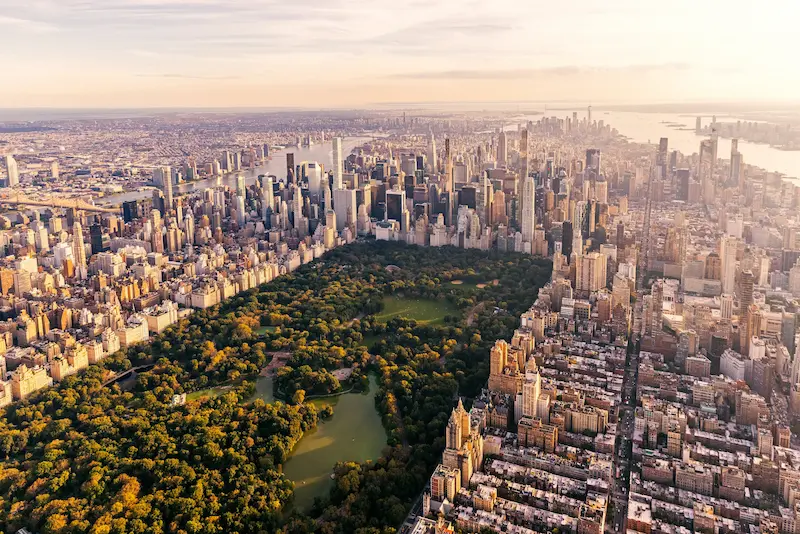 Central Park · NYC
 Step off the wide, familiar paths and follow the smaller trails. The further you move from the crowds, the more you feel what the park was built for: to let a restless city pause, breathe, and get a little lost.
Secret Chapters
A quick pop-culture cheat sheet for the corners you’re about to read: films, lyrics and little references that quietly keep Central Park on the world’s screen and playlists.
Often used as a backdrop for thrillers and dramas that need a wilder, more mysterious Central Park. Its twisting paths and dense trees give directors an instant “you’re not in midtown anymore” feeling.
Look out for wooded paths, rock outcrops and sudden lake views in Central Park scenes – chances are, the camera wandered into the Ramble.
Dedicated to John Lennon, this “Garden of Peace” has appeared in movies that want a softer, reflective side of New York – quiet conversations, flowers on the mosaic, slow walks instead of chase scenes.
- Featured in several modern films that use the Imagine mosaic as a symbol of memory and hope.
- Named after the Beatles’ “Strawberry Fields Forever” – the memorial is the real-world echo of a song that changed pop history.
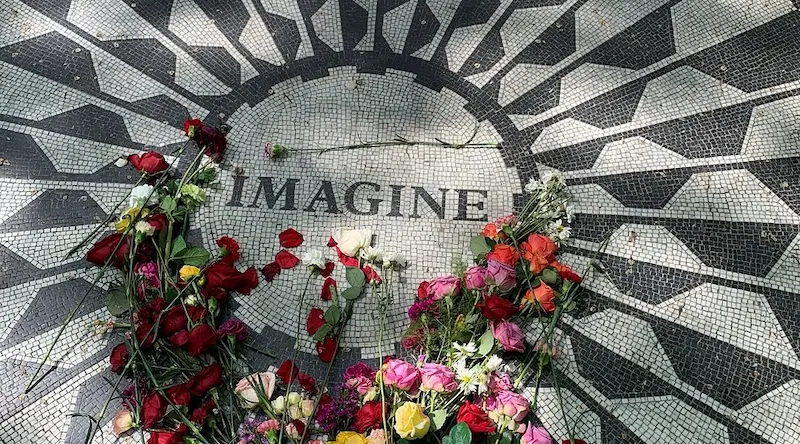
Visitors often leave petals, candles or handwritten lyrics around the word IMAGINE – turning the spot into a living album cover.
Bow Bridge, Gapstow Bridge and the stone arches near the lake are some of the park’s most filmed places – romantic walks, dramatic goodbyes, slow-motion proposals, you name it.
- Classic “New York date” scenes: rowing on the lake, crossing Bow Bridge at sunset, or pausing under an arch while the city blurs behind.
- Countless music videos and TV shows use these bridges when they want one shot that says “yes, this is really New York”.
Next time you see a couple on a curved bridge with skyline in the back, there’s a good chance it was filmed right here.
Long before drones filmed it from above, songwriters were already turning Central Park into a stage – and sometimes into a lyric.
- Old tunes about “strolling through the park one day” captured the idea of escaping the city long before skyscrapers closed in.
- Modern artists still name-drop the lake, the rowboats and the park paths when they sing about New York love stories and breakups.
- Instrumental tracks and albums titled after Central Park turn its trees, fountains and benches into a kind of open-air soundtrack.
Read the stories on the right, then listen closely on your next visit – you’ll start hearing how often books, films and songs secretly meet in these same corners.
The Ramble: A Designed Wilderness
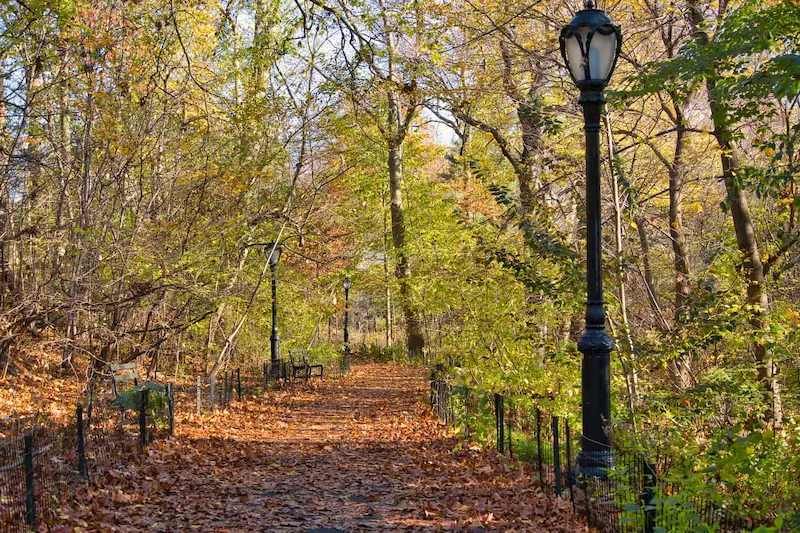
Just north of the lake, the park suddenly stops behaving like a grid. Paths twist, double back and disappear behind rock outcrops. The Ramble is 36 acres of intentionally confusing woodland, built so city dwellers could “get lost safely” without ever leaving Manhattan.
- Birdwatchers’ paradise: Migratory routes turn its treetops into a living field guide during spring and autumn.
- Sound shield: Trees, slopes and curves block sirens and honks so effectively that you forget taxis are just a few minutes away.
- Micro-reveals: Tiny clearings suddenly frame Bow Bridge, the lake or a sliver of skyline like scenes in a slow, carefully edited film.
Under the leaves, not the lights
Strawberry Fields: A Soft Voice in a Loud City
Opposite the Dakota building, where John Lennon once lived, lies a memorial that rarely needs explanation. Strawberry Fields is a landscaped “Garden of Peace” where the tempo of the park slows down and conversations instinctively drop to a hush.
- The “Imagine” mosaic: Simple black-and-white stone, yet one of the most photographed, and felt, surfaces in the park.
- Acoustic circle: Instead of full bands, you’ll find solo guitars and quiet singalongs; a kind of ongoing, open-air vigil in melody.
- Global guestbook: Flowers, lyrics scribbled on paper, small objects and flags turn the spot into a constantly renewing tribute from all over the world.
“Imagine” in stone
Bridges & Arches: Quiet Architecture
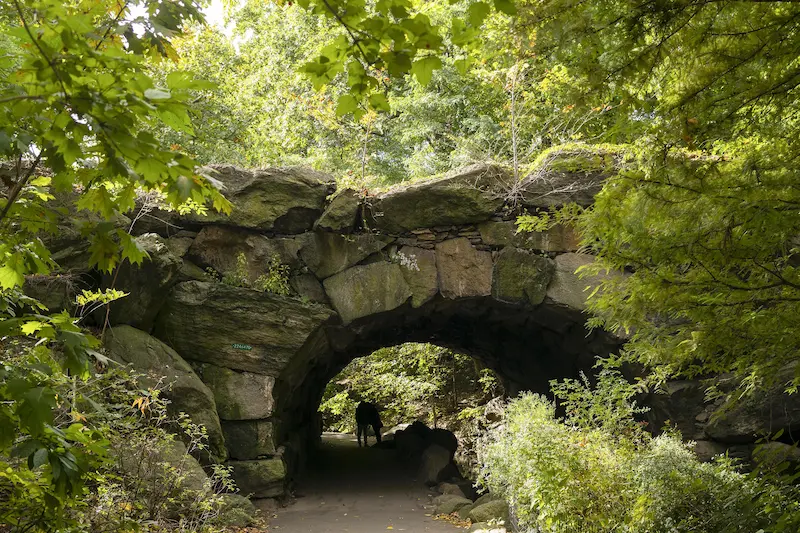
Central Park has dozens of bridges and arches, each shaped to guide not just feet, but eyes and sound. Some lift you over water in sweeping curves; others hide under roads, turning traffic into a distant rumble above your head.
- Bow Bridge: The romantic icon; stand here at sunrise and the lake becomes a mirror, Manhattan softened behind mist.
- Stone tunnels: Walking under them, light pools at each end while the center becomes a cool, echoing pocket of calm.
- Built-in photo frames: Many arches were placed to frame water, trees or skyline fragments, as if the park was designed with future cameras in mind.
Stone and water, side by side
From Rough Ground to the City’s Green Lung
Before the postcards and movie scenes, this land was uneven, muddy and patched with small communities. The 19th-century project that became Central Park moved rocks, redirected water and planted trees on a monumental scale to give a rapidly industrializing city a place to breathe.
- A crafted “wild”: Every hill, lake and open view was drawn, debated and built – nature, but with a blueprint.
- Hidden infrastructure: Beneath the grass lies a network of drains and channels keeping paths dry and lakes balanced.
- For everyone: The park was imagined as a democratic space long before that word was fashionable in urban planning.
Everyday Rituals in a Living Park
Once the stones were laid and the trees took root, the real story began: the way New Yorkers quietly wove Central Park into their daily routines.
- Morning laps & coffee walks: Runners, dog walkers and commuters use the same paths as a moving, breathing ritual to reset before the city fully wakes up.
- Lunch break escapes: Benches become pop-up offices and outdoor dining rooms; laptops close, takeaway boxes open, and for 30 minutes the skyline is just background.
- Golden-hour gatherings: Friends meet by the lake, couples drift in rowboats, and musicians test new songs under trees that have heard a century of melodies.
What began as an ambitious landscape project now works like a shared heartbeat: a place the city returns to again and again to slow down, refill and then dive back into the chaos.
How to Explore
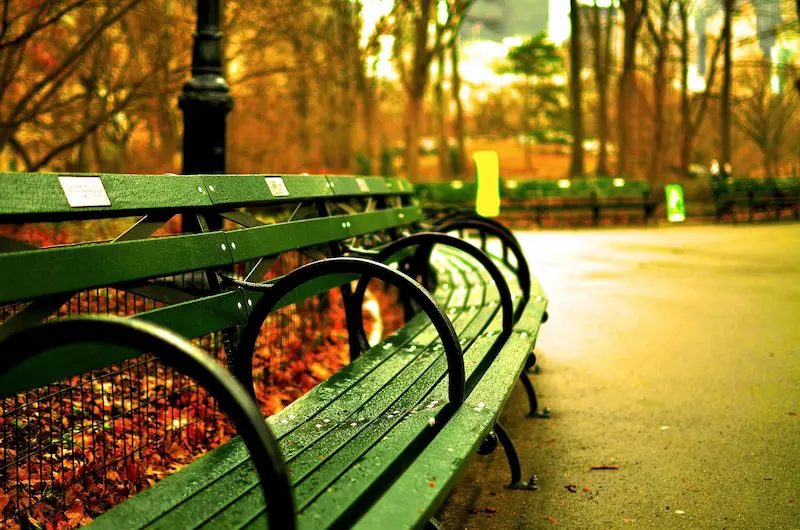
Central Park is not a single sight to “check off”, but a collection of quiet stories hidden between trees and stone. Slow down, choose a corner, and let the city fade to the background for a while.