

JFK Airport Luggage Storage
John F. Kennedy International Airport stands as a massive logistical challenge for travelers. When your itinerary includes a long layover in New York or an early arrival before hotel check-in, professional luggage storage is a necessity. This operational manual details the secure facilities in Terminals 1, 4, 5, and 8, ensuring your belongings are managed under strict TSA and Port Authority protocols.
Technical Storage Specifications at JFK
TSA Audited
All storage units are subject to federal security inspections and 24-hour surveillance.
Digital Inventory
Every bag is tagged with a unique barcode linked to your passport for secure retrieval.
Climate Controlled
Facilities maintain stable humidity and temperature to protect delicate electronics and materials.
AirTrain Linked
Strategic locations allow rapid transit via the JFK AirTrain system between storage points.
Navigating the JFK Luggage Storage Ecosystem
Managing baggage at John F. Kennedy International Airport (JFK) is a critical component of the passenger experience, especially for those navigating the transition between international long-haul flights and New York City’s urban landscape. JFK’s decentralized terminal layout, consisting of six active terminals, dictates that luggage storage is not a unified service, but a series of specialized terminal-level operations. Understanding where and how to store your baggage is the first step in ensuring a stress-free visit to the Big Apple.
Security Protocols and TSA Compliance
Since 2001, security regulations at U.S. airports have undergone a total transformation. As a result, JFK Airport does not offer self-service lockers. Every piece of luggage must be handled by an authorized baggage service provider. These facilities operate under the oversight of the Transportation Security Administration (TSA). When you hand over your bag, it is subjected to explosive trace detection and X-ray screening. This rigorous process is why passengers must provide valid government-issued identification (such as a passport) and be prepared for a manual inspection of their items if flagged by security personnel.
Storing your luggage at JFK is far more secure than using unregulated third-party apps in the city. The storage areas are "bonded," meaning they are legally authorized zones where the chain of custody for your belongings is never broken. This is particularly vital for business travelers carrying sensitive documents or expensive hardware. The facilities utilize 24/7 CCTV and biometric access controls to ensure that only authorized staff can enter the storage bays.
Terminal 1: The Gateway for International Carriers
Terminal 1 handles major international airlines such as Air France, Lufthansa, and Turkish Airlines. The storage office here is strategically located on the Arrivals Level, making it the first point of contact for passengers who have just cleared customs. This facility is managed by specialized ground handling staff who are experienced in dealing with large international suitcases. It is the perfect solution for travelers arriving from Europe or Asia who wish to explore Manhattan before their evening hotel check-in.
Terminal 4: The 24/7 Operational Hub
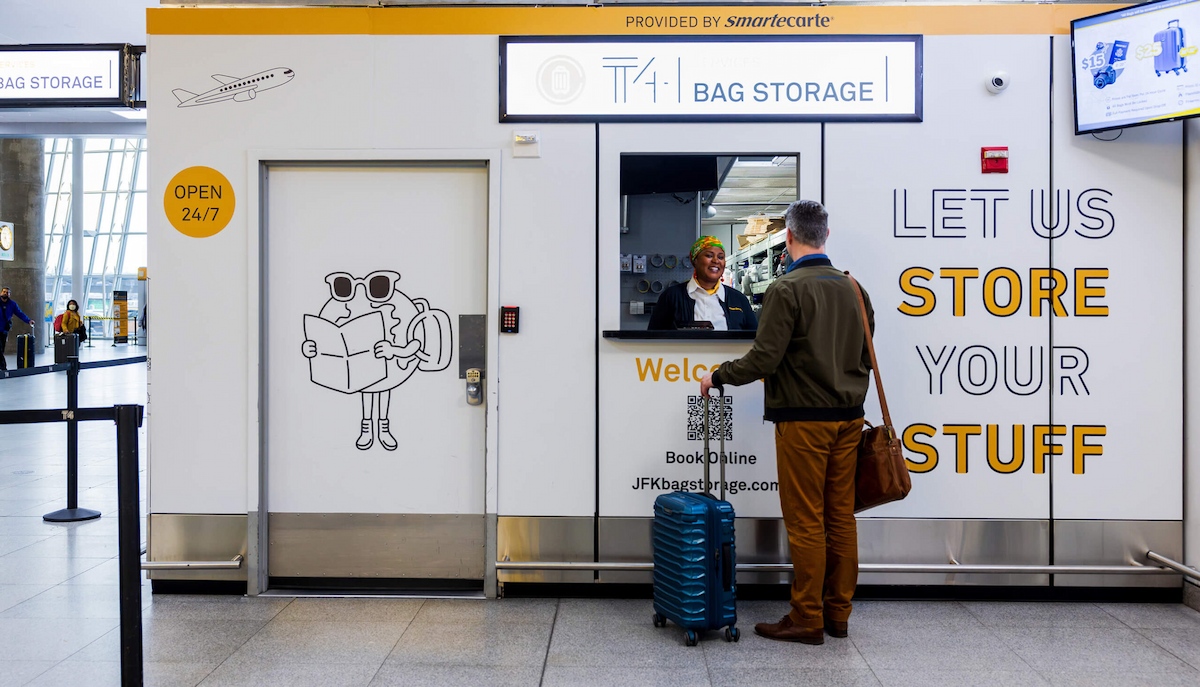
Terminal 4 is the primary international gateway for Delta Air Lines and numerous other major carriers. It is the only terminal at JFK that offers 24-hour luggage storage services. Located on the Arrivals Level (Level 1) near the East and West exits, this facility is the most active at the airport. Due to its around-the-clock operation, it serves as the central storage hub for the entire airport. If your flight arrives at 2:00 AM, Terminal 4 is your only official on-site option for immediate baggage drop-off. The facility is expansive, but during peak travel seasons like the December holidays, it is highly recommended to arrive early as slots can fill up rapidly.
Technical Insight: Barcode Synchronization
"At JFK, the retrieval process is managed through a barcoded inventory system. Upon check-in, your bag is assigned a unique identifier that is synchronized with your digital record. It is essential that you do not lose your physical claim ticket. While agents can retrieve bags using passport data, the barcoded ticket significantly accelerates the process, especially during the high-volume 'rush hours' in Terminal 4 and Terminal 8."
Terminal 5 and Terminal 8: Domestic and Oneworld Hubs
Terminal 5, the home of JetBlue, maintains a sleek baggage service office near the reclaim area. This location is designed for efficiency, catering largely to domestic travelers. Conversely, Terminal 8 serves American Airlines and British Airways. Its storage facility is located on the Arrivals Level and is specifically optimized for Oneworld frequent flyers. These terminals have limited operating hours (typically 6:00 AM to 11:00 PM), so it is crucial to synchronize your return to the airport with their closing times to avoid having your bags locked overnight.
Pricing Structures and Dimensional Logic
The cost of luggage storage at JFK is determined by the dimensions and category of the item. Weight is rarely a factor unless the item exceeds 70 lbs (32 kg). Most facilities follow a tiered daily rate system:
- Small Items ($10 - $15): Laptop bags, briefcases, small backpacks.
- Standard Bags ($18 - $25): Standard checked-in suitcases (24-28 inches).
- Oversized/Specialty ($25 - $35): Golf clubs, skis, surfboards, or extra-large trunks.
Payment is typically required at the time of drop-off, and major credit cards (Visa, Mastercard, American Express) are the standard. For those requiring storage for more than a week, JFK facilities often provide discounted long-term rates. It is a cost-effective alternative to paying for an extra hotel night just to keep your bags secure.

Logistical Advantages of Airport Storage
Choosing to store your bags at JFK rather than in a city center locker offers a major logistical advantage: The AirTrain Link. JFK’s AirTrain connects all terminals to the Jamaica and Howard Beach stations, which in turn connect to the NYC Subway and Long Island Rail Road (LIRR). By leaving your heavy items at the airport, you can navigate the subway system with ease. Returning to collect your bags just before your flight departure ensures that you are already at the airport, mitigating the risk of New York’s notorious traffic delays between Manhattan and Queens.
Furthermore, JFK storage facilities are equipped to handle "odd-sized" items that most city-based shops cannot accommodate. If you are traveling with professional camera equipment or musical instruments, the airport’s temperature-controlled, high-security bays provide a much safer environment than a back-room storage area in a Manhattan retail shop.
Prohibited Items and Preparation
Before arriving at the storage counter, ensure your bags do not contain prohibited items. This includes perishable food, hazardous materials (lithium batteries must be inside devices and powered off), and valuable jewelry or large amounts of cash. It is recommended to use TSA-approved locks on your suitcases. While the facility is highly secure, having a personal lock provides an extra layer of privacy. JFK attendants will ask you to sign a liability waiver, which outlines the limited coverage provided by the facility; always ensure your personal travel insurance covers "luggage in the care of a third party."
Operational Audit
Staffing Alert: All JFK storage attendants are vetted by the Port Authority of NY & NJ for secure baggage handling.
JFK Storage Policy
- Maximum Storage: 30-60 Days (Renewable)
- ID Requirement: Passport or State ID
- Screening: All bags X-rayed upon entry
- Payment: Card Only (T4 & T8)
Expert Assistance
Our JFK VIP agents can escort you to the luggage storage facilities and assist with the check-in process for a seamless layover experience.