

Adolfo Suárez Madrid–Barajas Airport (MAD) is Spain's main international gateway, spread across a large multi-terminal layout split into two physically separate zones. An overnight layover here goes far more smoothly once you understand how those zones connect — or don't — after security closes for the night.
Here's a practical look at sleeping over at MAD: which terminal zone you'll land in, where security draws the line, which gate areas actually quiet down, and what's worth packing before the shops shut.
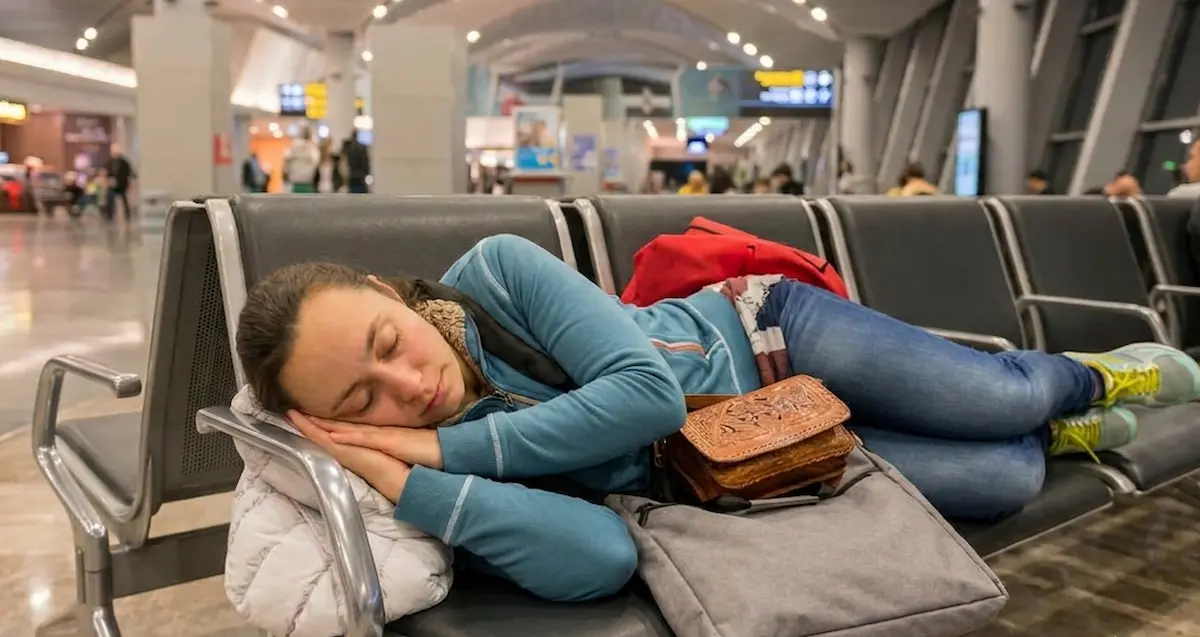
Land in the older T1/T2/T3 complex or the newer T4 building, and the overnight playbook barely changes: figure out your security status first, then find the calmest corner of whichever zone you're stuck in.
Security & Terminal Layout Rules
Madrid–Barajas splits into two terminal zones: the older Terminals 1, 2, and 3 complex, and the modern Terminal 4 with its satellite building, Terminal 4S. These two zones don't mix freely once you're through security, so knowing which one you're assigned to matters more here than at most airports.
Airside (Post-Security)
Transit passengers with a valid onward boarding pass can stay airside overnight. T1, T2, and T3 link via internal corridors, while T4 and T4S share a 24/7 underground APM train.
Landside (Public Halls)
Checkpoints shut for the night around 11:00 PM to midnight and open again near 4:00–4:30 AM. Officers patrol the public halls in between, checking passports and morning tickets.
Getting Between Zones
A free green shuttle bus links all four terminals landside, 24 hours a day. Airside, crossing from the T1/T2/T3 complex into T4 is generally off-limits unless your connection routes you there.
Since the two terminal zones aren't freely connected airside, double-check which one your departure gate sits in well before checkpoints close — there's no easy fix once you're on the wrong side.
Top Rest Areas Inside the Terminals (Airside - Post Security)
The main shopping plazas and central concourse avenues stay bright and busy with cleaning crews all night. Push toward the far ends of the gate piers instead if you actually want to rest.
Environment
Handles non-Schengen long-haul flights, so once the last international departures clear the gate, activity thins out noticeably.
Seating
Purpose-built rest sections with semi-reclined lounge seating near the gates, plus carpeted floor space and wider clusters near the secondary gates.
Environment
A vast, open building under vaulted timber ceilings. The upper floors and the far reaches of the K-gate zone see far less foot traffic overnight than the main level.
Seating
Padded benches, soft carpeted areas near the family zones, and quieter corners set back from the main walking routes.
Environment
The smallest of the three, bridging T2 and T1. The gates near E82 tend to stay calmer overnight than the busy commercial plazas of T1 and T2.
Seating
A handful of bench seats without restrictive armrests and quiet carpeted alcoves tucked near the secondary departure gates.
What to Expect Overnight
Once you've found your spot, here's the reality of the next few hours — the light that won't switch off, the chill that creeps in, and your options when hunger hits at 3 AM.
Lighting & Sound
The main avenues, plazas, and gate lounges stay lit around the clock for security. Expect the odd flight notification, safety notice, or floor scrubber passing through overnight.
Temperature
Climate control runs all night, and the sprawling glass concourses of T4 and T4S in particular pick up quite a chill once outdoor temperatures drop.
Food & Refreshments
Dining and duty-free shops close by 10–11 PM and don't reopen until around 5 AM, leaving vending machines near the gate clusters as your best bet in between.
Water & Refill Stations
Free bottle-refill stations and fountains sit near the major restroom blocks airside, so an empty bottle carried through security saves you from paying terminal prices for water.
Overnight Survival Checklist
A handful of small items make the gap between a miserable night and a genuinely workable one at MAD.
- Eye Mask & Earplugs / Noise-Canceling Headphones — the overhead lighting never dims, and there's always some announcement or another running in the background.
- Warm Layering — a hoodie, heavy sweater or light blanket handles the cool AC and the drafts that creep along the floor.
- Portable Power Bank — outlets exist throughout gate seating, but a battery frees you up to sit wherever it's actually calm.
- Empty Refillable Water Bottle — take it through security dry and top it up at any of the airside refill points.