
Italy Begins Rollout of EU’s New Digital Border System at Major Airports
Italy officially launched the European Union’s new Entry/Exit System (EES) this week at its two main gateways, Rome Fiumicino and Milan Malpensa, starting the shift from manual passport stamps to high-tech biometric checks.
The implementation of the EES began this Sunday at Rome Fiumicino (FCO) and Milan Malpensa (MXP) airports, signifying the start of a country-wide adoption of the new digital border control system. This system is part of a wider EU initiative designed to modernize the way non-EU nationals are processed across the Schengen Zone.
The primary goal of the EES is to record the entry and exit of non-EU citizens traveling for short stays (up to 90 days in a 180-day period). This groundbreaking procedure applies to all visitors from outside the European Union, whether they require a visa or not, including citizens from the United Kingdom, the United States, and Australia.
The New Procedure: Biometrics Replace Stamps
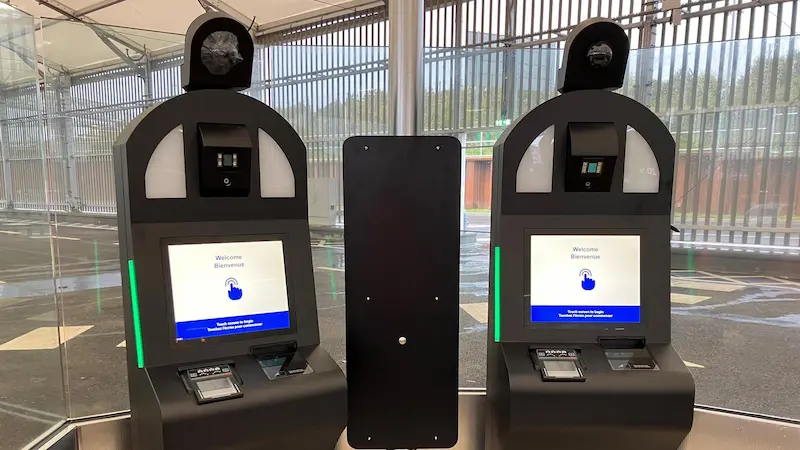
Under the new procedure, travelers crossing external Schengen borders will have their **fingerprints and facial images registered electronically**. The European Union emphasizes that this measure will strengthen security, prevent identity fraud, and **automatically calculate** a traveler's days spent in the Schengen Zone to ensure compliance with the 90-day limit.
While the EES is expected to streamline border checks and create a "smart border" system in the long term, officials and travel experts have warned that the initial implementation period may temporarily cause longer wait times. This is primarily due to travelers submitting their biometric information for the first time.
Important Exemptions for UK Residents in Italy
There is a crucial exemption for British citizens who are **residents of Italy**. These individuals are exempt from the EES biometric registration, provided they can clearly show proof of residence.
The British embassy in Rome has advised residents to carry their proof of legal status either a carta di soggiorno or a permesso di soggiorno (for those who settled before January 1, 2021) when entering or leaving the country to avoid registration.
The system will be phased in gradually across Europe, following a scheduled roadmap, and is expected to be fully operational across all Schengen countries by April 10, 2026.
What to Expect During the Initial Rollout

Travelers are advised to arrive earlier than usual for their initial departure or arrival process at FCO and MXP. While the technology promises long-term efficiency, the introductory phase requires patience as staff and travelers adapt to the new digital kiosks and biometric registration steps.