
Romulus and Remus: The Bloody Myth Behind the Founding of Rome
The Eternal City a global symbol of empire, law, and power began not with strategy, but with a myth a tale of twin brothers, divine lineage, and a she-wolf. Dive into the dramatic foundational legend of Romulus and Remus, the twin brothers of divine lineage whose rivalry and ultimate conflict paved the way for one of history's greatest civilizations.
Divine Birth and the Royal Treachery
The twins’ story is deeply rooted in Roman royalty and mythology. Their mother was Rhea Silvia, a Vestal Virgin who, according to the legend, conceived them with the mighty God of War, Mars. This divine paternity made the boys a direct threat to the established, but illegally held, throne.
Fearing the power the twins represented, the tyrannical King Amulius (who had usurped the throne from their grandfather, Numitor) ordered the infants to be drowned in the Tiber River.
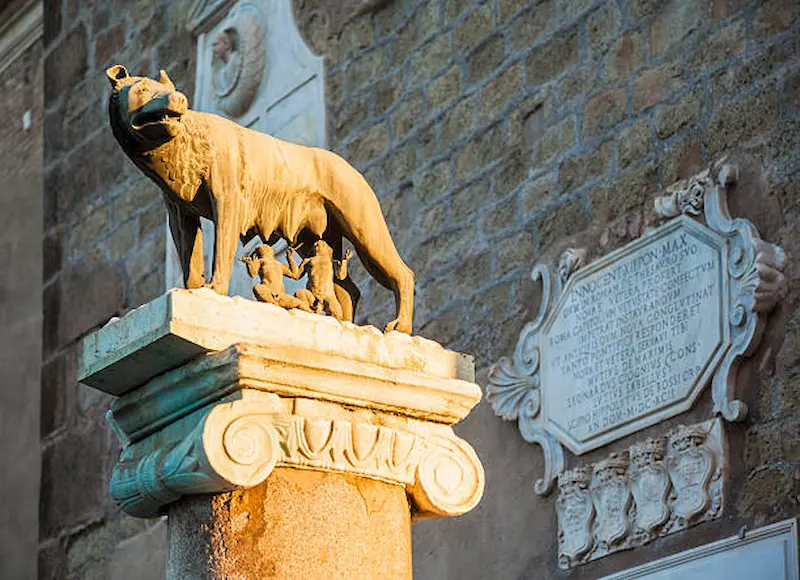
Saved by the Lupa: The basket carrying the infants was abandoned on the Tiber’s banks and washed ashore near the Palatine Hill. They were found and suckled by a wild she-wolf (Lupa), a symbol of Rome's later ferocity.
From Shepherds to Kings: The Retribution
The twins were eventually discovered by a local shepherd, Faustulus, who raised them alongside his wife, Acca Larentia. Growing up among rural folk, the boys became skilled, strong leaders known for protecting their community from bandits.
As young men, they learned the truth of their royal lineage and the injustice done to their family. They marched on Alba Longa, killed the usurper Amulius, and restored their rightful grandfather, Numitor, to the throne. Having accomplished their duty to the old city, they turned their minds toward founding their own.
The Dispute: The Augury and the Hills
The brothers agreed that the new city must be built where they were saved, but they fiercely disagreed on the exact hill. They turned to augury (observing the flight of birds) to determine which location had the favor of the gods.
Remus’s Vision: The Aventine Hill
Remus claimed the first sign: he saw six auspicious vultures flying over the Aventine Hill. He argued for this location, emphasizing its strategic height.
Romulus’s Claim: The Palatine Hill
Romulus favored the Palatine Hill, the site of their rescue. He countered Remus's vision by claiming he saw twelve vultures a sign he claimed was superior and proof of the gods' favor for his chosen location.

The Fatal Line in the Sand
Ignoring the augury dispute, Romulus began drawing the sacred boundary of the city (the *pomerium*) around the Palatine Hill. This boundary was meant to be inviolable.
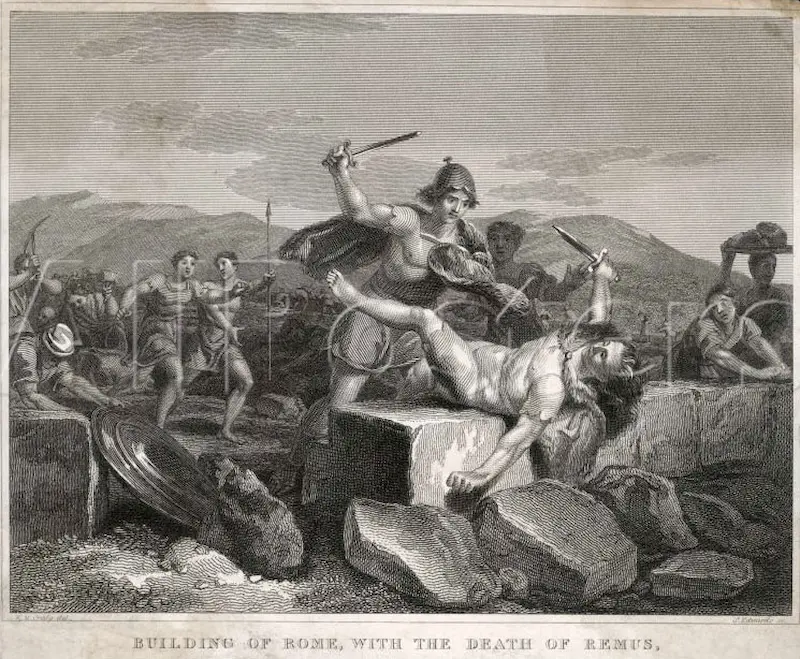
In an act of profound disrespect and mockery, Remus leapt disdainfully over the low earthen wall Romulus was building. To Romulus, this was more than a joke; it was a catastrophic omen a sign that his city's security was worthless.
In a fit of fury, Romulus struck his twin brother down, declaring: "So perish every one that shall hereafter leap over my walls!"
Thus, Rome was founded on the Palatine Hill on April 21, 753 BCE, born from fraternal bloodshed. Romulus, who remained, became the first king of a city forged in ambition, sacrifice, and the belief that security must be maintained at all costs.
Experience the Myth at Rome’s Birthplace
To stand on the Palatine Hill today is to stand where Rome began. Explore the historical site and feel the powerful echoes of Rome’s founding myth.