

Tbilisi City Center to Airport: The Complete Departure Guide
Navigating the journey from the vibrant heart of the Georgian capital back to Shota Rustaveli Tbilisi International Airport (TBS) requires more than just a ride; it requires a strategic plan. Whether you are departing from the historic cobblestones of Old Tbilisi, the high-end districts of Vake, or the bustling hub of Saburtalo, our guide provides the most exhaustive analysis of departure logistics, traffic patterns, and transfer options available in the Caucasus. In this guide, we break down every minute of your journey, ensuring that your transition from the Georgian capital to your gate is as flawless as your stay.
The "TBS Buffer" Strategy
Tbilisi’s urban traffic can escalate rapidly, particularly near the Baratashvili Bridge and the Kakheti Highway. For 2026, we mandate a 3.5-hour buffer: 1 hour for the transit and 2.5 hours for terminal formalities. This strategy accounts for unexpected road closures, peak-hour bottlenecks, and the rigorous secondary security checks often encountered at TBS during high-volume flight windows.
Contactless Payment Protocols
Tbilisi’s transit system is a digital pioneer in the region. All public departure links, including Bus 337, utilize a strictly cashless integrated payment system. While Metromoney cards are the traditional choice, 2026 sees full terminal compatibility with international NFC-enabled devices. One tap provides a 90-minute window of unlimited transfers, making it a highly cost-effective departure solution.
Luggage Capacity Management
Traveling from hilly districts like Sololaki or Mtatsminda? Standard taxis in Georgia often utilize LPG or CNG fuel tanks, which significantly occupies trunk space. For travelers with more than two large suitcases, a pre-booked SUV or Minivan transfer is the only guaranteed way to ensure all belongings and passengers reach the terminal in a single, comfortable journey without logistical compromises.
Tbilisi Airport Transfers: Reliable Departure Planning from the City
Leaving the warmth of Georgian hospitality behind is never easy, but your departure from Tbilisi to the airport should be a seamless experience. Shota Rustaveli International Airport (TBS) is the primary aviation hub of the country, located 17 kilometers southeast of the city center. In 2026, the connection between the capital and its gateway is more robust than ever, but it remains susceptible to the rhythmic ebbs and flows of Tbilisi’s unique traffic ecosystem. To ensure a stress-free departure, one must understand the three pillars of Tbilisi transit: Public Utility, Digital Ride-Hailing, and Professional Chauffeur services.
Public Bus 337: The Backbone of Budget Transit
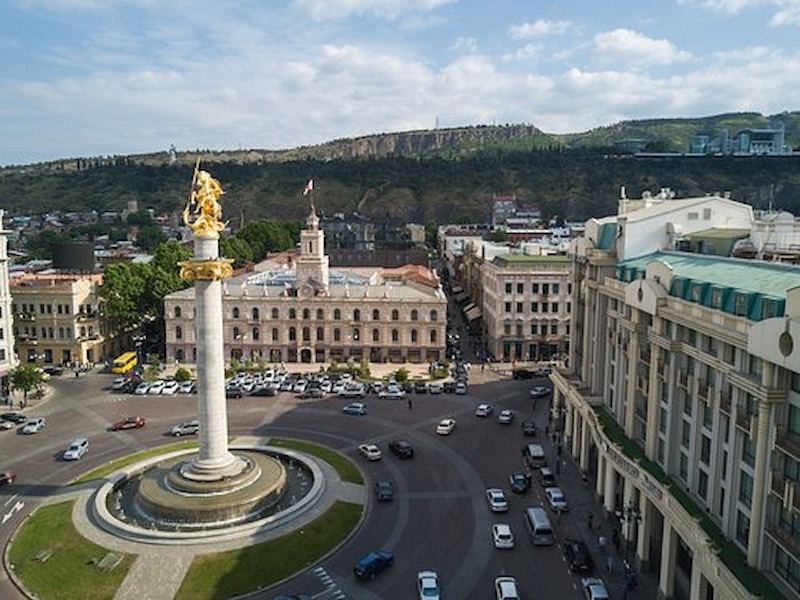
The blue Bus 337, operated by the Tbilisi Transport Company, is a modern and reliable service that connects the terminal to the city’s major arteries. For those departing from the city center, the bus follows a strategic route that starts at Station Square (Central Railway Station), travels down Rustaveli Avenue, circles Liberty Square, crosses the Avlabari district, and merges onto the Kakheti Highway. In 2026, these buses run on a 24-hour cycle, but with significant variation in frequency. During the day (07:00 - 23:00), departures occur every 15-20 minutes. During the late-night and early-morning "dead hours" (00:00 - 06:00), the interval increases to 45-60 minutes. For budget-conscious travelers, this 1 GEL ($0.40) service is unbeatable, provided you account for the 50-70 minute travel time during peak traffic hours.

The Private Transfer Advantage: Navigating Tbilisi’s "Night Window"
A significant majority of international flights departing from Tbilisi to major European and Middle Eastern hubs are scheduled during the "Night Window" (between 02:00 AM and 06:00 AM). During these hours, public transport is at its lowest frequency, and the city’s streets are relatively quiet. However, this is also when the value of a Pre-Booked Private Transfer peaks. A private transfer eliminates the "uncertainty factor" of ride-hailing apps, where drivers may cancel at the last minute or struggle to find a hotel hidden in the labyrinthine alleys of the Old Town. A professional chauffeur monitors your departure time, assists with your heavy luggage, and provides a climate-controlled, direct link to the upper-level Departures Hall entrance. For families with children or business travelers with tight schedules, this is the gold standard for reliability.
Tbilisi District Logistics: Vake, Saburtalo, and Sololaki
Not all departures are created equal. If your accommodation is in the modern Vake or Saburtalo districts, you are geographically further from the airport and must contend with the "Saburtalo Bottleneck", the heavy traffic flow converging on the Pekini and Chavchavadze avenues. Travelers from these areas should leave an additional 30 minutes earlier than those in the center. Conversely, those in Old Tbilisi (Sololaki/Abanotubani) must consider "Cobblestone Time." The narrow, steep, and one-way streets of the historic center often mean a car can only move at walking pace until it reaches the main Baratashvili Bridge. If you are using a bus from these areas, you will likely need to take a short taxi or a long walk to the nearest stop on Liberty Square.
Terminal Procedures: From Curb to Gate
All vehicles dropping off passengers at TBS use the upper-level ramp. This ramp is designed for high-frequency flow and drops you off directly in front of the Departures Hall entrances. In 2026, TBS has implemented a streamlined check-in process, but security queues remain rigorous. Upon entering the terminal, you will find modern self-service kiosks and traditional manned counters. After baggage drop, the journey continues through the second-floor passport control and a secondary security screening. For those with extra time, the airport offers premium lounges and a selection of tax-free shops where you can purchase the finest Georgian wines, spices, and souvenirs to take a piece of the Caucasus with you.
Departure Dashboard
- Private Transfer: 25-35 Minutes.
- Bus 337: 55-75 Minutes.
- Rush Hour: 17:30 - 19:30 (Heavy).
- Bus Fare: 1.00 GEL (Cashless).
Don't Risk Your Flight!
Tbilisi traffic is dynamic and often congested on the airport road. Book a fixed-price transfer today and ensure your journey ends with peace of mind.