From an orchard village beside ancient Rey to the capital of Iran.
For centuries, Tehran lived in the shadow of Rey, an ancient Silk Road city just to the south. Then, in 1786, the Qajar ruler Agha Mohammad Khan made the walled town his capital, and Tehran began its rise into the political, cultural and economic heart of Iran.
Walk through its history gate by gate, from Rey's ancient mounds to Qajar mirror halls, Pahlavi boulevards and today's metropolis.
Darvazeh
دروازه تهران
The gate of Tehran
Walk Through Tehran's History, Gate by Gate
Six eras, from ancient Rey to today
c. 6000 BCE–1220
Ancient Rey
Long before Tehran mattered, its story was tied to Rey (ancient Rhages), around 10 km south of today's centre. Finds at Cheshmeh Ali point to settlement thousands of years ago, and Rey appears in the Zoroastrian Avesta and flourished under successive empires and the Seljuks.
In 1220, Mongol armies devastated Rey. Many survivors moved north to the cooler, well-watered village of Tehran, which medieval writers described with its orchards and underground dwellings.
See it today
1501–1736
Safavid walls
Under the Safavids, Tehran grew from a village into a fortified town. Shah Tahmasp I, who often hunted in the Alborz foothills and visited the shrine of Shah Abdol-Azim in Rey, ordered Tehran's first walls in 1553–1554.
The mud-brick walls had 114 towers, a number often linked to the 114 chapters of the Quran, and four gates enclosing the bazaar and gardens.
See it today
1750–1786
Zand citadel
In the mid-18th century, Karim Khan Zand considered Tehran as his capital and built a royal citadel (Arg) with a moat around it, before choosing Shiraz instead.
That citadel later became the core of Golestan Palace.
See it today
1786–1925
Qajar capital
In 1786, Agha Mohammad Khan Qajar made Tehran his capital, close to his tribe's lands near the Caspian and well placed to respond to threats from the Caucasus and the north-east. He was formally crowned in 1796.
Naser al-Din Shah (1848–1896) transformed the city. From 1867 he replaced the old walls with a larger octagonal wall and moat with 12 tiled gates. Qajar style blended Persian tilework, stained-glass orosi windows and mirror-work (aineh-kari) with European columns and clock towers.
See it today
1925–1979
Pahlavi boulevards
Reza Shah (1925–1941) set out to build a modern state. In the 1930s, the Naseri walls and gates were torn down for wide, tree-lined avenues, and new institutions such as the University of Tehran and the National Museum of Iran, designed by French architect André Godard, mixed ancient Persian motifs with modern forms.
Under Mohammad Reza Shah, the city spread north up the Alborz slopes to Tajrish, Niavaran and Sa'dabad. In 1971, Shahyad Tower, today's Azadi Tower, designed by the young architect Hossein Amanat, was built for the 2,500th anniversary of the Persian monarchy.
See it today
1979–today
Revolution to today
In 1979, Tehran's squares and its university became the stage for mass protests that ended the monarchy and founded the Islamic Republic.
Since then, Tehran has grown into a city of around nine million people, with a Metro network, the soaring Milad Tower and award-winning modern landmarks such as Leila Araghian's Tabiat Bridge.
See it today
How the City Grew: From Walls to Metropolis
Five snapshots of Tehran's footprint
Village
Before 1553
Safavid walls
1553
Naseri octagon
1867
Walls removed
1930s
Metropolis
Today
Key Historic Sites in Tehran
Where to see the city's story today
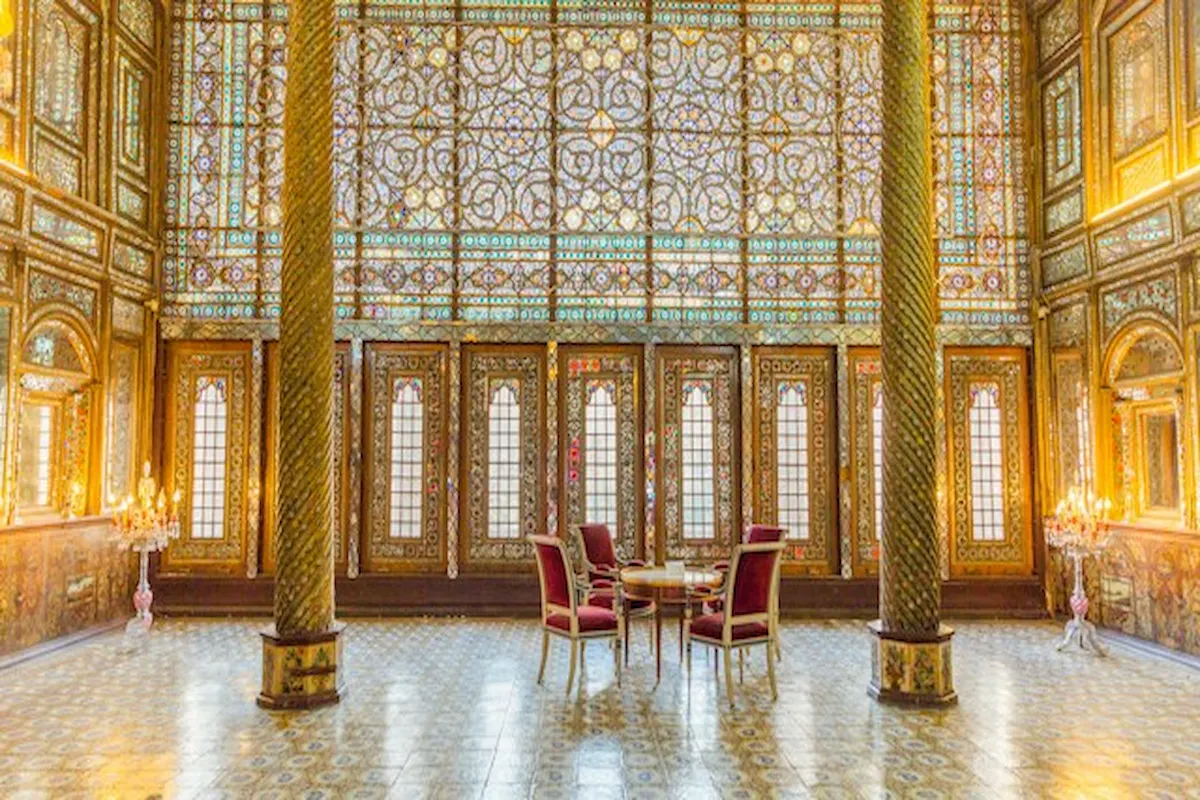
Golestan Palace
UNESCO · 2013Built around the old Zand citadel, Golestan became the Qajar royal residence and later the site of Pahlavi coronations. See the Marble Throne, carved from yellow Yazd marble, the dazzling Hall of Mirrors, the Shams-ol-Emareh (Edifice of the Sun) and the windcatcher building.
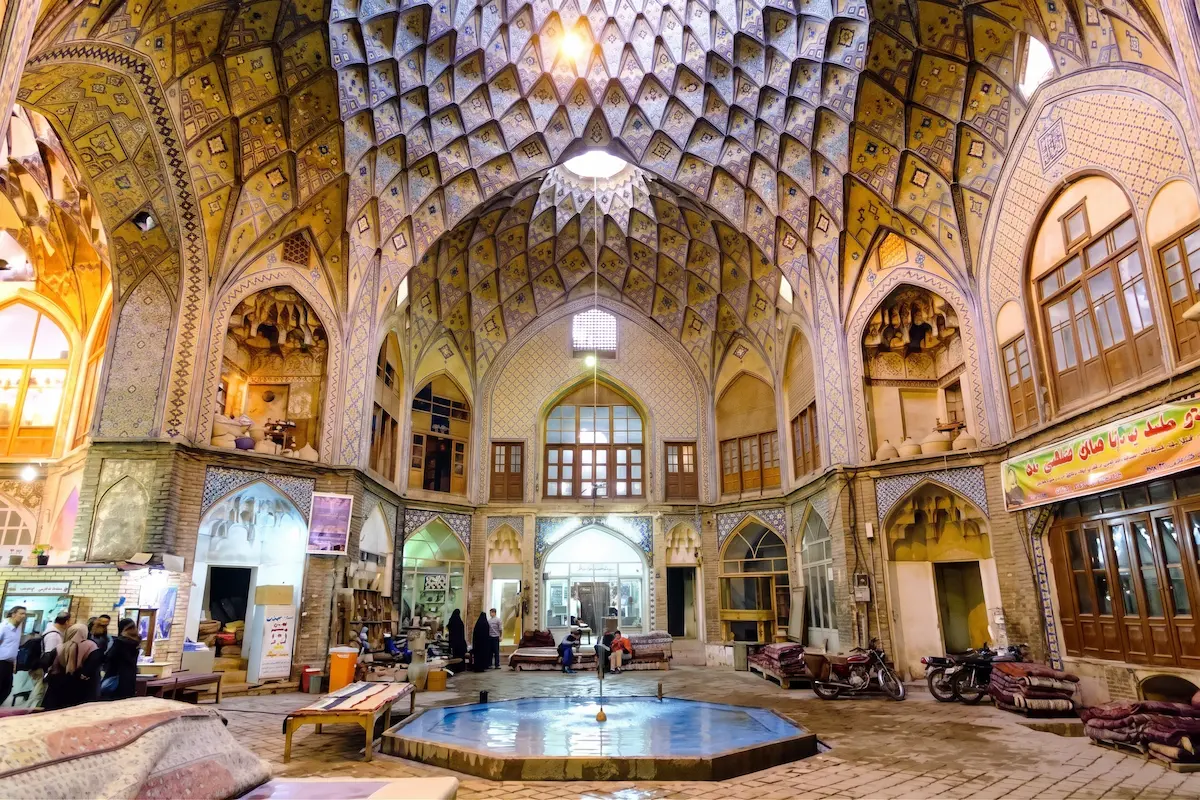
Tehran Grand Bazaar
16th–19th centuryAround 10 km of covered lanes, long the financial heart of Tehran. Its merchants played a major role in the 1906 Constitutional Revolution and in 1979. Look up at the domes of Timcheh-ye Amin al-Dowleh and visit the Imam (Shah) Mosque.
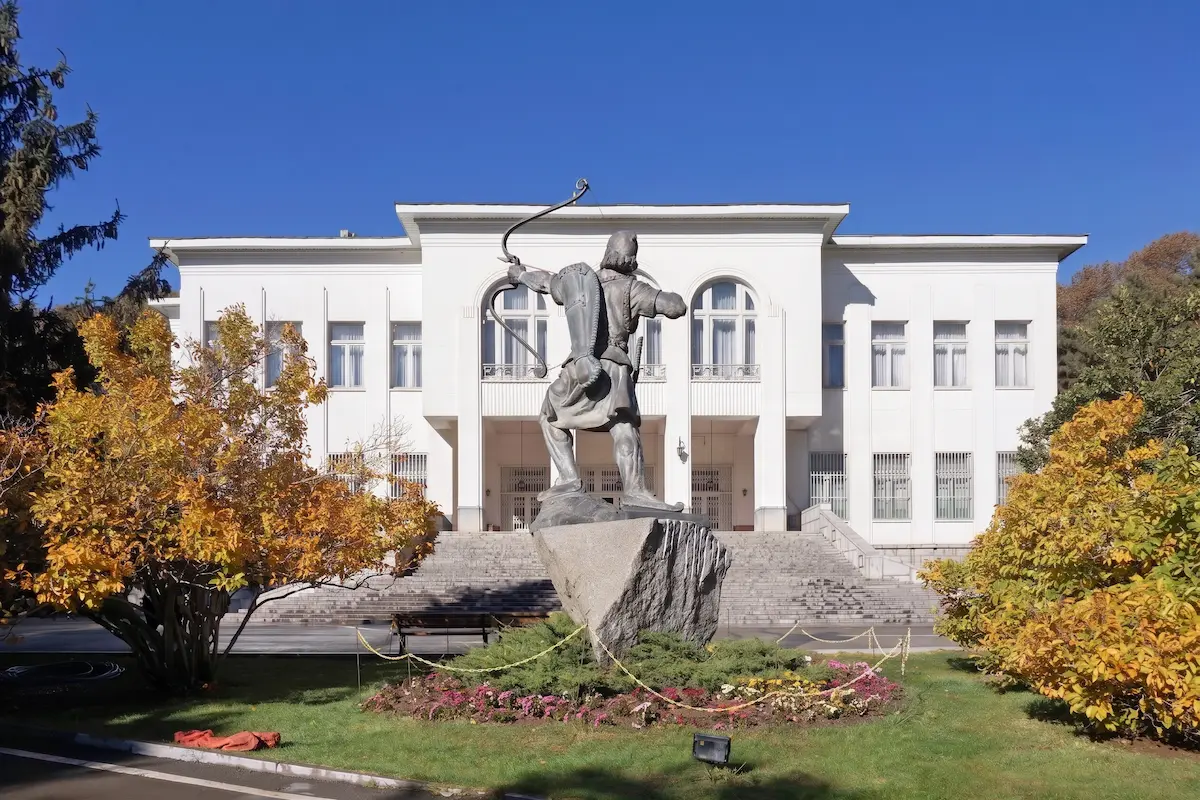
Sa'dabad & Niavaran
19th–20th centuryTwo royal estates in the cool north. Sa'dabad has around 18 palaces and museums in wooded grounds, including the White Palace and the Green Palace, faced with green stone from Zanjan. Niavaran preserves Mohammad Reza Shah's 1970s rooms and the Ahmad Shahi Pavilion.
Treasury of National Jewels
Imperial crowns and gems, including the Darya-i-Noor diamond and the Naderi Throne. Opening days are limited.
Azadi Tower & Square
The 1971 marble tower, originally called Shahyad, with a museum beneath it.
Shah Abdol-Azim Shrine, Rey
A golden-domed shrine in historic Rey, near the Seljuk Toghrol Tower and Cheshmeh Ali.
Tips for History Lovers
Make the most of your visit
Metro Line 1: a history axis from south to north
Shahr-e Rey
Ancient Rey and its shrine
Panzdah-e Khordad
Golestan Palace and the Grand Bazaar
Tajrish
Sa'dabad, Niavaran and northern Tehran
Check opening days
The Treasury of National Jewels opens only on certain afternoons, so confirm before you plan.
Pair Golestan and the bazaar
They are next to each other; allow a full morning for both.
Dress for shrines
At active shrines such as Shah Abdol-Azim, women are usually asked to wear a chador, often lent at the entrance.
From Rey to Revolution, and Beyond
Tehran's story is one of steady growth: an orchard village beside ancient Rey, a Safavid walled town, a Qajar capital of mirrored palaces, a Pahlavi city of boulevards and today's vast metropolis. Visit Golestan Palace, the Grand Bazaar and the northern palaces, and ride Metro Line 1 to see these layers of history come together.