

Nestled along the ridge of an ancient lakebed south of Baghdad lies Al-Najaf Al-Ashraf — one of the world's most profound spiritual hubs. For centuries, millions of pilgrims, scholars and curious travelers have crossed desert roads to reach this sacred Iraqi city.
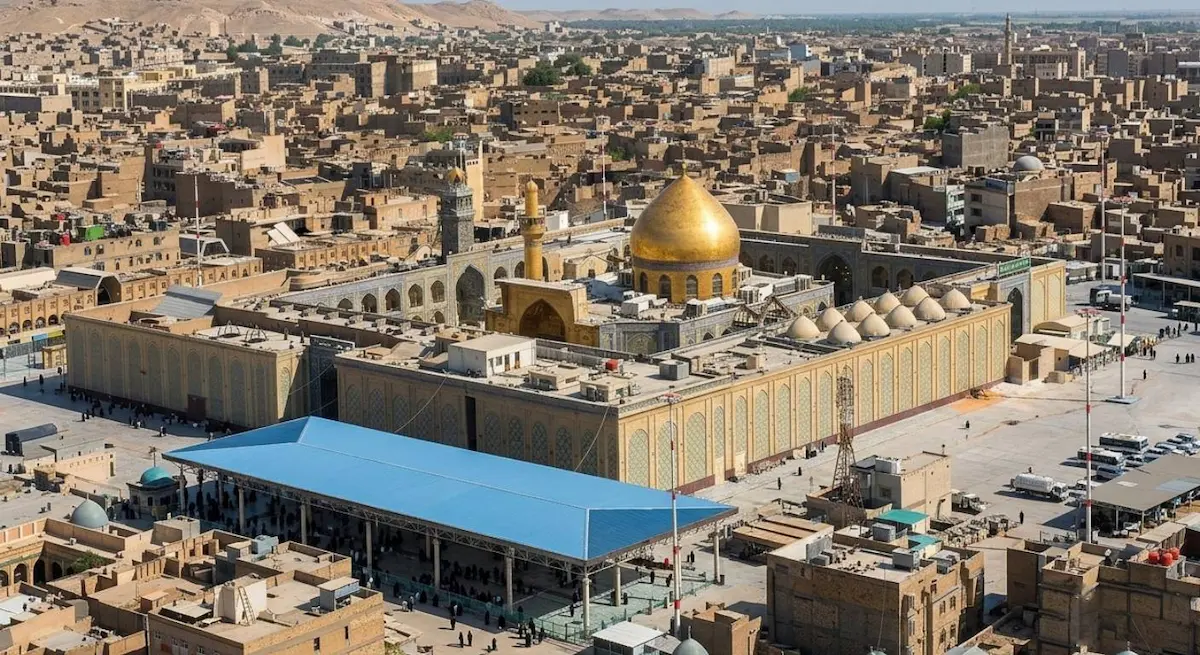
Whether you are drawn by deep Islamic history, stunning architecture or rich culinary traditions, Najaf offers an atmosphere unlike anywhere else on Earth. Gold-leaf domes sit minutes away from a cemetery the size of a small city, and 7th-century mosques share a road with market stalls selling stones found nowhere else in the world.
Here is the complete guide to the top 10 things to see, do and experience in Najaf — plus the practical essentials you will want settled before you land.
Najaf by the Numbers
7,777 Tiles
Gold Leaf on the Dome
1,485 Acres
Wadi-us-Salaam Cemetery
6 Million
Estimated Graves
7th Century
Great Mosque of Kufa
661 AD
Martyrdom of Imam Ali
10 km / 15 Min
Najaf to Kufa
October–April
Best Time to Visit
45°C+ (113°F)
Summer Highs
The Top 10 at a Glance
Short on time? This is the full list in order, with what each stop is really about.
- 01 Holy Shrine of Imam Ali Spiritual Icon
- 02 Wadi-us-Salaam Cemetery World Record
- 03 Great Mosque of Kufa 7th Century
- 04 Souk El-Kabeer (Grand Souk) Shopping
- 05 Daheenah, the Signature Sweet Must Taste
- 06 Al-Sahla Mosque Best at Night
- 07 Heritage Museums in Old Khans History
- 08 Al-Hannanah Mosque On the Kufa Road
- 09 Khan al-Nuss Caravanserai Desert Ruins
- 10 Iraqi Kebab & Cardamom Tea Local Flavour
10 Unforgettable Things to Do in Najaf
1. Marvel at the Holy Shrine of Imam Ali
The beating heart of Najaf is the breathtaking Holy Shrine of Imam Ali — the resting place of the cousin and son-in-law of the Prophet Muhammad, and the fourth Caliph of Islam.
As you approach, the first thing that strikes you is the towering central dome, covered in 7,777 tiles of pure gold leaf. Step through the grand vaulted gates (Iwans) and you enter an intricate world of mosaic tilework, calligraphic inscriptions and inner sanctuaries lined with millions of tiny mirror fragments that catch the light like shimmering diamonds.
How Shrine Entry Works
Leave large bags, cameras and power banks in the official lockers (Keshwaniya).
Women must wear a full-length black abaya, which can be acquired outside the gates.
Enter the main sanctuary and the mirrored inner halls that give the shrine its reputation.
Travel tip: dress strictly in conservative attire from the moment you leave your hotel — not only at the gates.
2. Wander Through Wadi-us-Salaam (The Valley of Peace)
Stretching directly adjacent to the Holy Shrine is Wadi-us-Salaam, officially recognised as the largest cemetery in the world. Spanning over 1,485 acres, this vast city of the dead contains an estimated six million graves — and it continues to grow every day.
Walking through its endless labyrinth of brick tombs, underground crypts and family mausoleums is a humbling and surreal experience. The cemetery also holds the tombs of ancient prophets, including Prophet Hud and Prophet Salih.
Did you know? Millions of Muslims aspire to be buried here, believing that resting near Imam Ali brings spiritual peace in the afterlife.
3. Step Back in Time at the Great Mosque of Kufa
Just a 15-minute drive (10 km) from central Najaf is Kufa, one of the earliest capital cities of the Islamic world. At its core stands the Great Mosque of Kufa, constructed in the 7th century.
This expansive open-air courtyard mosque is steeped in history:
- It marks the site where Imam Ali ruled and was subsequently martyred in 661 AD.
- Its walls showcase classic early-Islamic architectural layouts.
- It features several sacred prayer niches (Mihrabs) and shrines dedicated to key historical figures such as Muslim ibn Aqeel.
4. Get Lost in the Bustling Souk El-Kabeer
Right outside the main gates of the Holy Shrine lies the Grand Souk (Souk El-Kabeer). Covered by high arched ceilings that shield shoppers from the desert sun, this market is sensory overload in the best possible way.
Precious Stones & Rings
Najaf is famous for Dur Al-Najaf, a clear quartz found only in the surrounding desert, alongside turquoise and agate (Aqeeq) rings.
Handmade Prayer Beads
Misbaha crafted from amber, stone or fragrant woods, often finished by hand in the market workshops.
Spices & Incense
Saffron, cardamom, dried limes and rich frankincense fill the narrow lanes with scent.
5. Indulge in Daheenah, Najaf's Signature Sweet
You cannot leave Najaf without trying Daheenah (also called Daheen), the city's undisputed culinary pride.
Made from a rich mixture of flour, sugar, butter and date syrup, this dense, chewy confection is baked in large circular pans and heavily topped with shredded coconut, walnuts or almonds. It is best enjoyed fresh and warm from traditional bakeries in the market — pair it with a small glass of strong Iraqi black tea to balance the sweetness.
6. Visit the Historical Al-Sahla Mosque
Another essential spiritual stop in neighbouring Kufa is Al-Sahla Mosque (Jamia Al-Sahla). Established in the 1st century of the Islamic calendar, tradition holds that the site was frequented by numerous prophets, including Abraham, Enoch (Idris) and Khidr.
With sprawling tiled courtyards and a tranquil atmosphere, Al-Sahla is particularly vibrant in the evenings, when floodlights illuminate its turquoise minarets and visitors gather for night prayers.
7. Discover Local History at the Heritage Museums
For history enthusiasts, Najaf offers a glimpse into its socio-political past through small heritage museums housed in restored Khans (historical caravanserais). Look for:
- Artifacts from the 1920 Iraqi Revolt against British rule.
- Displays of traditional crafts, local costumes and ancient manuscripts.
- Historical photographs showing how the city evolved over the past two centuries.
8. Pay Respects at Al-Hannanah Mosque
Situated along the main road connecting Najaf and Kufa, Al-Hannanah Mosque holds a poignant place in local lore. According to historical accounts it is tied to the funeral procession of Imam Ali and the aftermath of the Battle of Karbala. The mosque's name roughly translates to "the weeping mosque", reflecting the solemn events associated with its grounds.
9. Explore the Ancient Desert Caravanserais
In centuries past, travelers making the long trek between the holy cities of Najaf and Karbala relied on fortified desert inns known as Khans.
The most famous is Khan al-Nuss ("The Halfway Inn"). Built with thick brick walls, grand arched entryways and central courtyards designed to shelter horses and camels, these ruins offer a glimpse into medieval trade and pilgrimage routes across the Mesopotamian desert.
10. Savour Iraqi Kebabs & Cardamom Tea
After a long day of exploring, pull up a chair at a busy local restaurant near the city center. Order a platter of Iraqi kebab — juicy skewers of minced lamb seasoned simply, grilled over hot coals and served with freshly baked diamond-shaped flatbread (samoon), grilled tomatoes and fresh herbs.
Finish the authentic Iraqi way: an istikan (curved glass cup) of hot, dark black tea heavily infused with crushed cardamom.
Quick Essentials for Your Najaf Trip
- Best Time to Visit October to April — milder temperatures; summer exceeds 45°C (113°F)
- Local Currency Iraqi Dinar (IQD); carry US Dollars in cash for exchange
- Getting Around Official airport taxis or private hotel transfers are recommended
- Dress Code Modest and conservative for all travelers, at all times
Final Thoughts
Najaf is more than a destination; it is an immersive step into living history, deep-rooted tradition and spiritual devotion. Whether you are standing before the gleaming gold of the Holy Shrine or sipping tea in a centuries-old market, a trip to Najaf lingers with you long after you leave.
Things to Do in Najaf: FAQ
The questions visitors ask most about Najaf's shrines, markets, food and practical planning.