

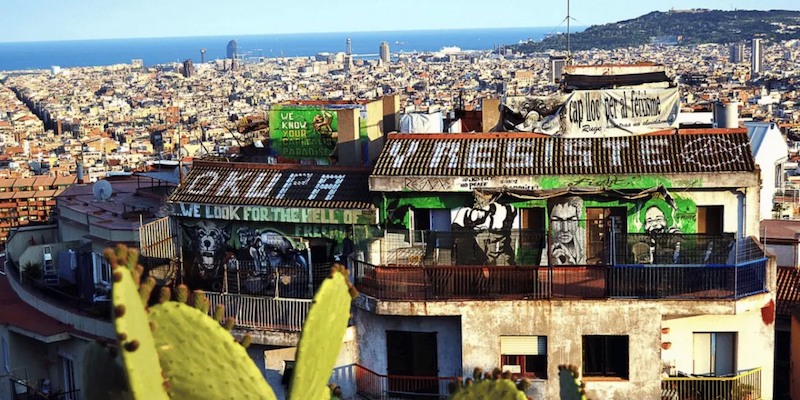
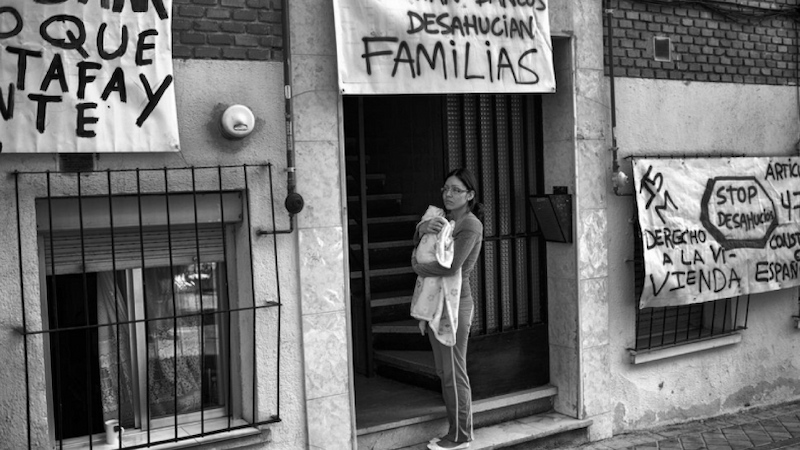
If you’ve been to Spain, especially Barcelona or Madrid, you’ve probably walked by a building covered in colorful graffiti, bold slogans, or banners that read "Stop Desahucios" (Stop Evictions).
Maybe you thought it was vandalism. Maybe you thought it was art.
But for thousands of people across Spain, it’s something more. It’s part of a decades-old cultural, social, and political phenomenon known as the Okupa Movement.
What Is the Okupa Movement?
The Okupa Movement is a social phenomenon in Spain where individuals or groups occupy unused buildings without the legal owner’s permission. The term “okupa” is a twist on the Spanish word ocupar, meaning “to occupy.”
But calling it just “squatting” doesn’t really tell the whole story.
Since the late 20th century, okupas have created more than just shelter for themselves. In many cases, they’ve opened up buildings to the public, hosting free events, workshops, art exhibitions, and community kitchens. Some buildings have become cultural landmarks; others remain small and hidden, simply offering people a place to live when other options have failed.
The movement includes many types of people: students, workers, artists, families, activists, and sometimes people with nowhere else to go.
It’s not a new trend. It’s not a fringe issue. It’s a long-standing and complex response to something much bigger.
Why Does It Exist?
To understand why okupas take over buildings, you need to understand Spain’s housing situation.
Spain has one of the highest numbers of empty properties in Europe, over 3 million. Many of these properties are owned by banks or investment companies and sit unused for years.
At the same time, rent prices have soared in major cities like Barcelona, Madrid, and Valencia. It’s common for people with full-time jobs to struggle to afford a basic apartment. Social housing options are extremely limited.
So for some, occupying an empty building isn’t just a protest, it’s survival. For others, it’s political: a way to challenge a system they see as unfair and disconnected from real needs. Some call it civil disobedience. Others call it common sense.
In all cases, the act of okupación is driven by one core belief:
"If a building is empty and someone needs it, leaving it unused is the real crime."
Legal Gray Zones
Okupación exists in a legal gray area. Spanish law draws a sharp line between breaking into someone’s home and occupying an abandoned or unused property.
If a squat happens in someone’s primary residence, it's a criminal offense, and police can act quickly.
But if the property is clearly empty and not lived in, the issue becomes civil, not criminal. That makes it slower and harder to enforce evictions.
In practice, this means that many okupas can stay for months, even years, before a judge orders them to leave. And in that time, some manage to turn these spaces into functioning parts of the local community.
Not All Occupations Are the Same
It’s important to note that the Okupa Movement is not one unified organization. Different squats have different goals.
- Some are radical and anti-capitalist, focusing on autonomy and political action.
- Others are practical, offering housing to those in need.
- Some are public-facing, holding events and inviting neighbors in.
- Others remain closed, private, and focused only on survival.
There’s no one way to be part of the movement. But the unifying factor is usually the same:
A rejection of how housing is managed and a decision to do something about it.
A Controversial Issue in Spanish Society
Ask five Spaniards what they think about okupas, and you might get five different answers.
- Some support them, especially when squats are used for community events or shelter for vulnerable people.
- Others are firmly against them, especially property owners who fear long legal battles to reclaim their spaces.
- Media coverage can also shift public opinion, often focusing on extreme cases or sensational stories.
What’s clear is that okupación brings up deep questions about property, power, and inequality. Whether people see it as theft or as resistance often depends on where they stand in society and what they’ve experienced personally.
When Living Becomes Resistance
The Okupa Movement is not just about buildings. It’s about what happens when people feel left out of a system and what they choose to do in response.
You don’t have to agree with it to understand it. But once you do understand it, it’s hard to ignore.
It’s a story of protest, survival, and creativity, and it’s happening right now, all across Spain.
