
From a Maya trading coast to a planned paradise: the story of Cancun.
Cancun is famous for its turquoise Caribbean water and busy Hotel Zone, but behind the resorts lies a much older story: centuries of Maya maritime trade, a long era of quiet isolation, and an ambitious government plan in 1970 that turned a nearly empty sand spit into one of the world's best-known holiday destinations.
This guide covers Cancun's history from its Maya origins to the modern city, the ruins you can visit without leaving town, the great sites within a day's reach and the landmarks of downtown Cancun.
Kaan K'un · Cancun
Cancun History at a Glance
Climb the steps through the centuries
Early Maya period
c. 300 BCE – 600 CESmall coastal fishing and farming settlements linked to larger inland centres.
Early phases at El Meco and El Rey
Postclassic trade peak
c. 1200 – 1500 CEA thriving Maya canoe-trade network linked the Yucatan mainland with Caribbean islands.
El Rey, San Miguelito, El Meco, Yamil Lu'um
Spanish contact and isolation
1517 – 1960sAfter Spanish arrival, coastal trade collapsed and the island became a quiet, sparsely inhabited barrier strip.
Coconut plantations and small fishing families
The planned resort
1968 – 1970Mexico's tourism fund, Infratur (later FONATUR), chose Cancun for a new master-planned resort city.
Official start of construction on 20 April 1970
Modern resort city
1974 – todayThe airport opened, hotels spread along the Hotel Zone and Cancun grew into a major city, rebuilding after big hurricanes.
Hotel Zone, downtown, Museo Maya
Ancient Maya Roots and the Meaning of "Cancun"
Long before the resort towers
Long before hotels lined Boulevard Kukulcan, the narrow barrier island of Cancun was part of a wide Maya trade network along the Caribbean coast.
The meaning of the name
"Cancun" comes from Yucatec Maya, usually written Kaan K'uun. It is most often translated as "nest of snakes", though other readings such as "place of the golden snake" are also suggested.
A Maya trading stop
In the Postclassic period (around 1200–1500 CE), Maya traders paddled large canoes along the coast, carrying goods such as salt, honey, obsidian, jade, feathers and dried fish between the mainland and islands like Isla Mujeres and Cozumel.
Spanish contact and abandonment
In 1517 a Spanish expedition reached nearby Isla Mujeres. In the following decades, conflict and introduced diseases devastated coastal communities, trade routes faded and the area stayed sparsely populated for centuries.
The Birth of Modern Cancun (1970)
A city planned from scratch
Unlike cities that grew naturally over centuries, modern Cancun was deliberately chosen and planned. In the late 1960s, under President Gustavo Díaz Ordaz, Mexico's tourism development fund Infratur, run through the central bank and later known as FONATUR, set out to build a major new international resort to bring in foreign income.
Planners studied long stretches of the Mexican coastline, and the story is often told that early computers helped analyse the data. Whatever the tools, the criteria were clear:
The winner was a long, L-shaped sand spit in what is now the state of Quintana Roo, home at the time to only a handful of people. Construction officially began on 20 April 1970, still celebrated as Cancun's founding date. Workers built bridges to the mainland, roads, water pipes and the first hotels.
The master plan's three zones
Zona Hotelera (Hotel Zone)
The long, narrow, 7-shaped barrier island, set aside for hotels, beaches, shopping and tourist services.
El Centro (Downtown)
On the mainland, planned for homes, local businesses, schools and services for residents and hospitality staff.
Cancun International Airport
Built south-west of the city and opened in 1974, linking the new resort to international flights.
Maya Ruins Inside and Around Cancun
History without leaving the city
You do not need to travel far to see Maya history. Several archaeological sites sit right within Cancun, some just a short ride from the hotels.
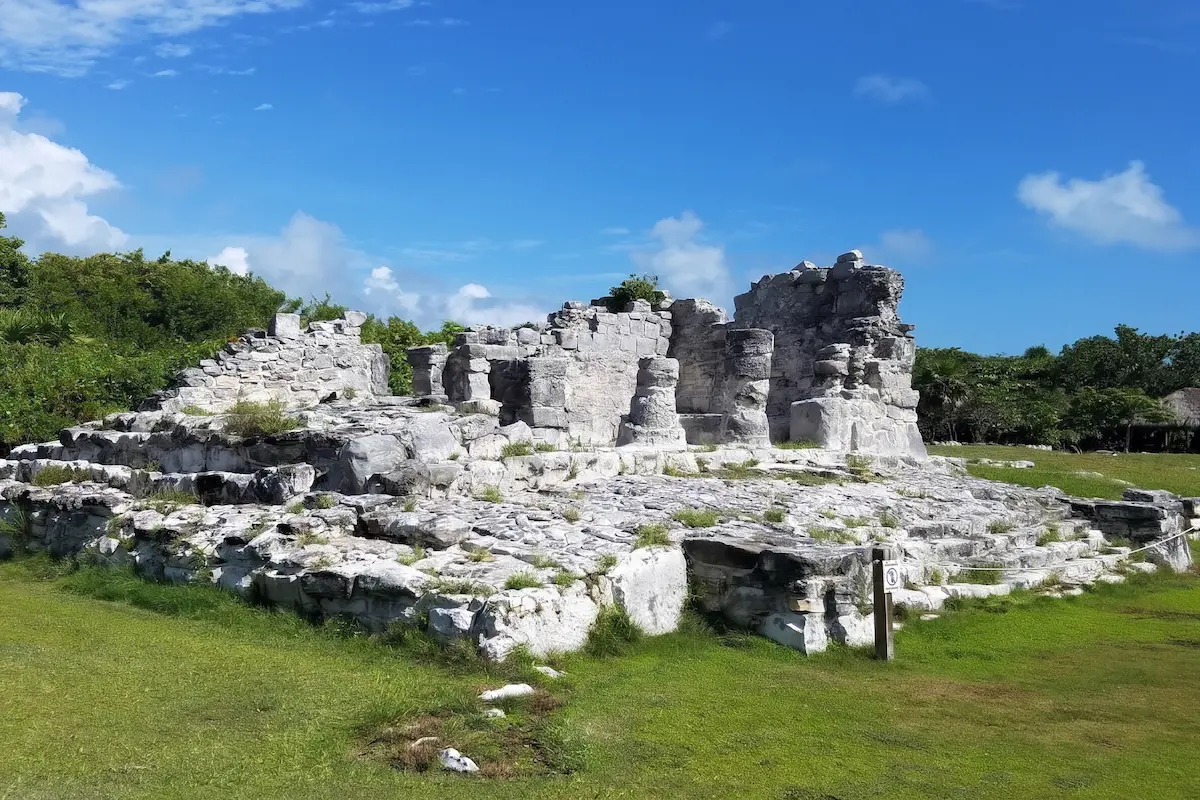
El Rey Archaeological Zone
Hotel Zone, around Km 17–18
An important Maya coastal centre at its height between about 1200 and 1500 CE, with dozens of stone structures, including platforms, civic buildings and a small temple, along two main streets.
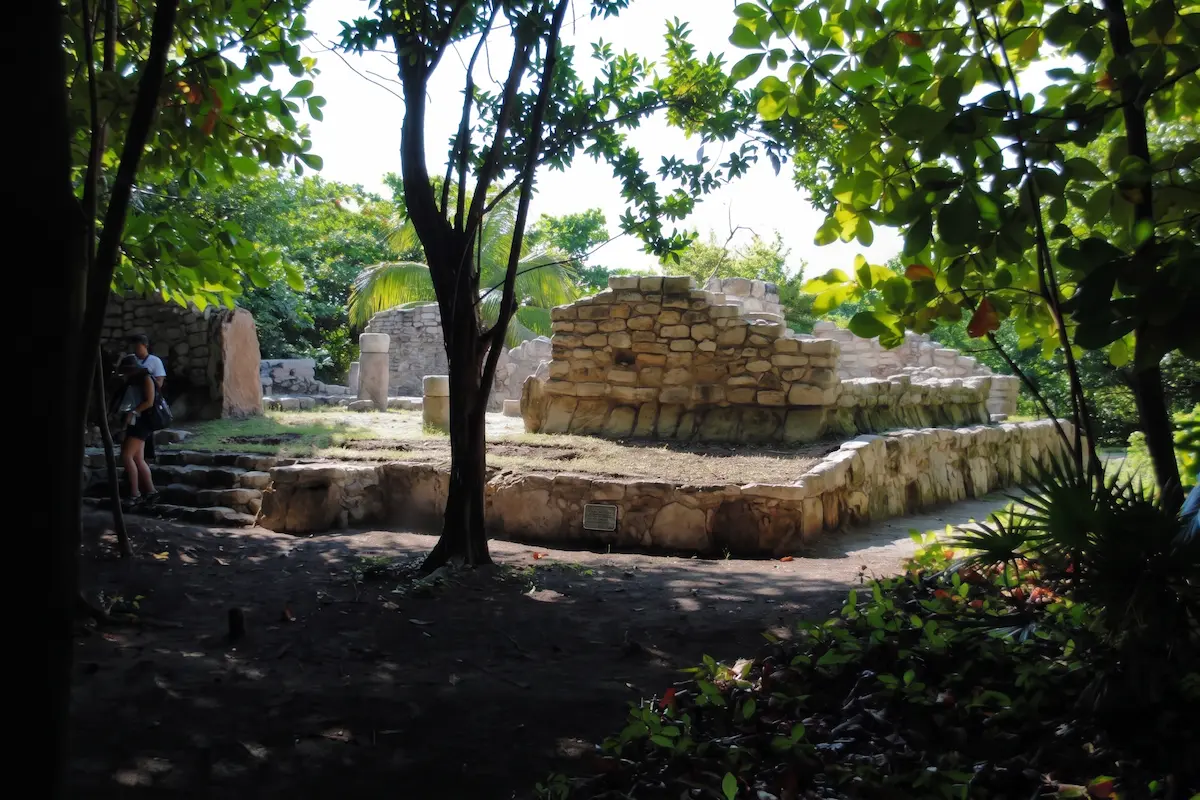
San Miguelito & the Museo Maya de Cancún
Hotel Zone, Km 16.5
The modern Museo Maya displays hundreds of Maya artefacts from across the region, including ceramics, sculpture and jade. Your ticket also covers a shaded trail through the San Miguelito ruins next door.
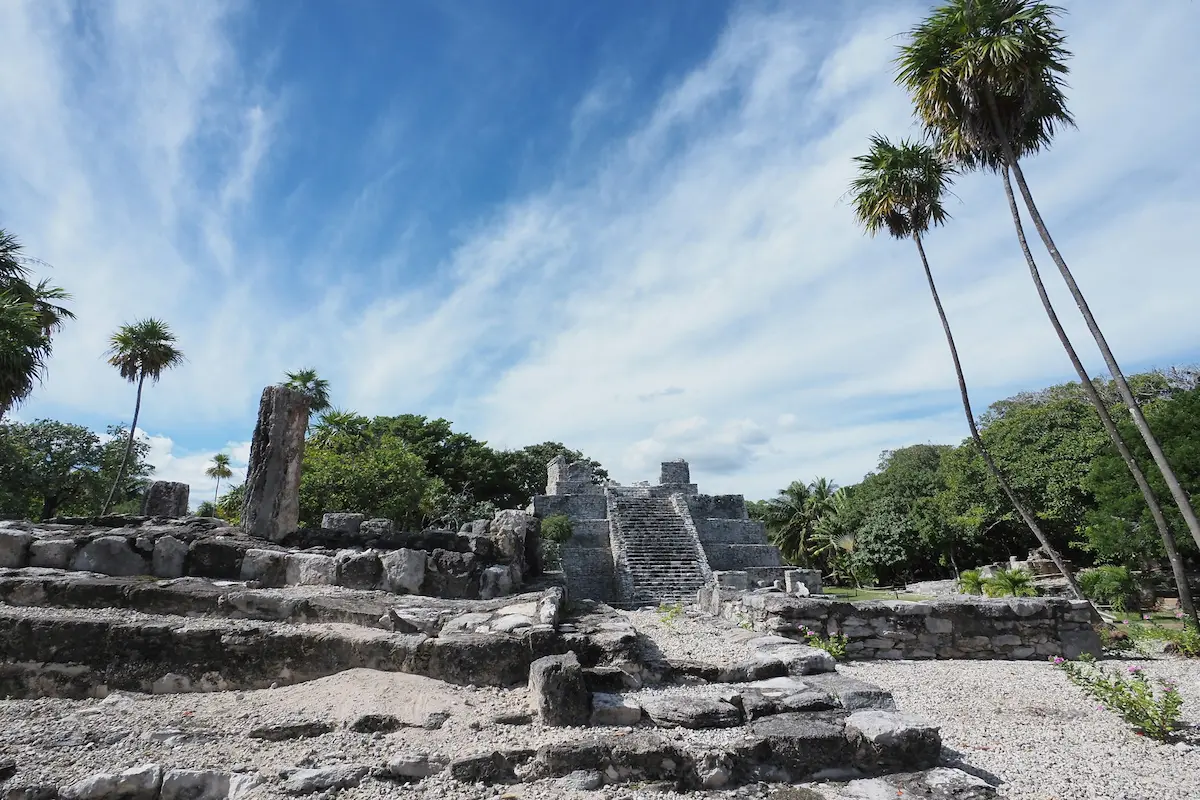
El Meco Archaeological Zone
Near Puerto Juárez, north Cancun
A port settlement that connected the mainland with Isla Mujeres. Its highlight is El Castillo, at about 12.5 metres the tallest pyramid in northern Quintana Roo.
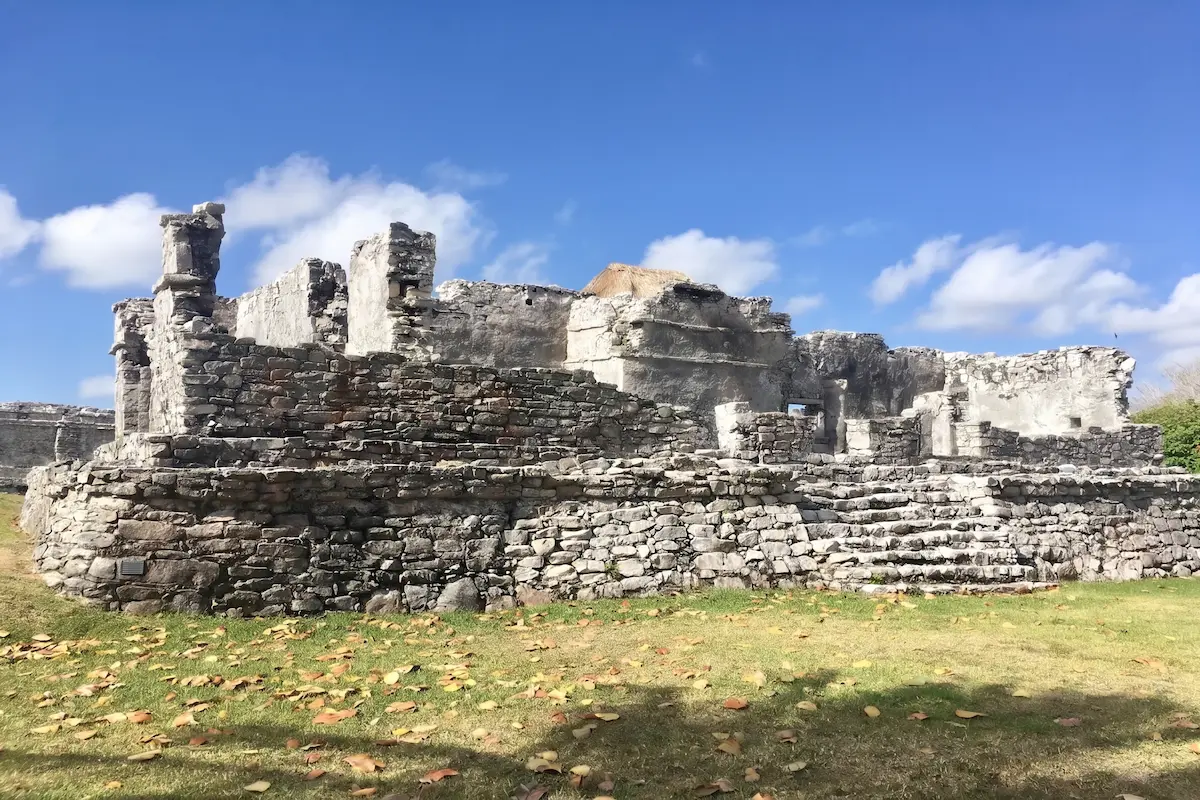
Yamil Lu'um
Hotel Zone, around Km 12.5
A small Postclassic temple on top of a beach dune, one of the highest natural points of the Hotel Zone, once thought to have helped guide canoes along the coast.
Famous Historical Day Trips from Cancun
Gateway to the great Maya cities
Cancun is the gateway to some of the most important Maya sites on the Yucatan Peninsula. Choose a site to see what makes it special.
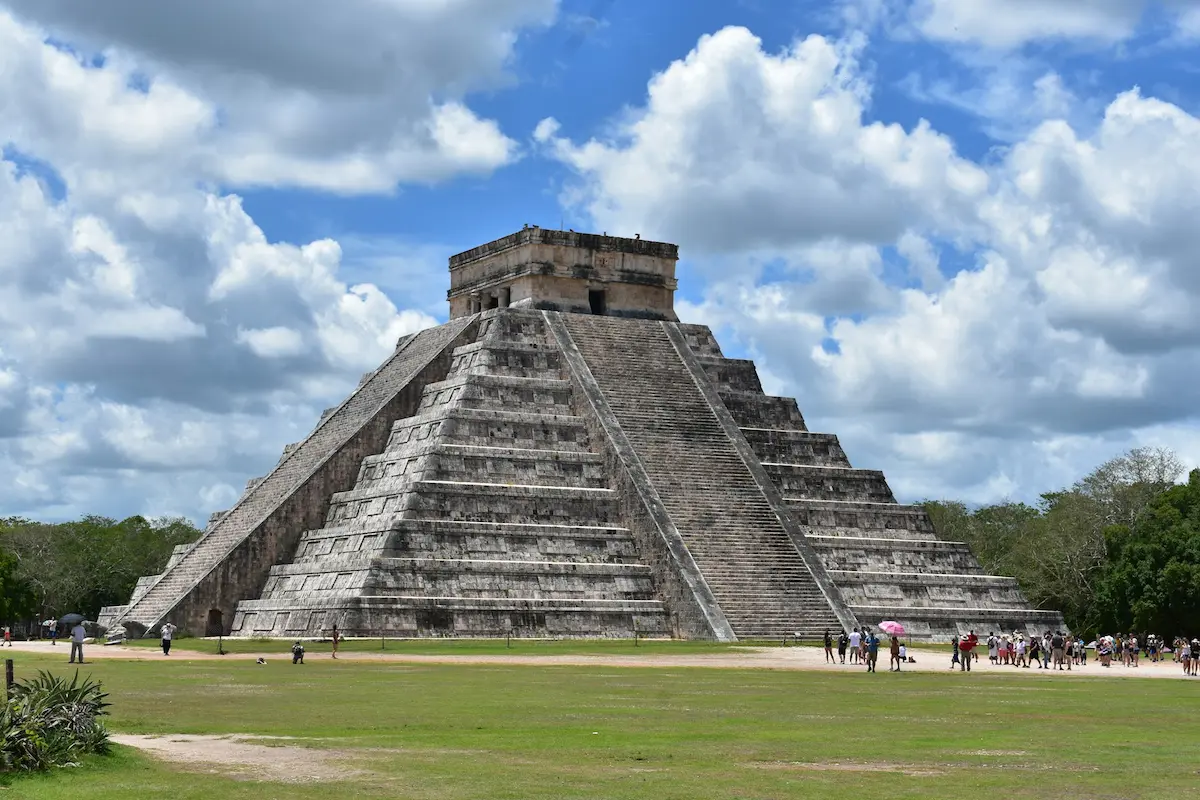
Chichén Itzá
About 200 km west · 2.5–3 hours
One of the greatest Maya cities and a UNESCO World Heritage Site, famous for El Castillo (the Temple of Kukulcan), the Great Ball Court and the Temple of the Warriors.
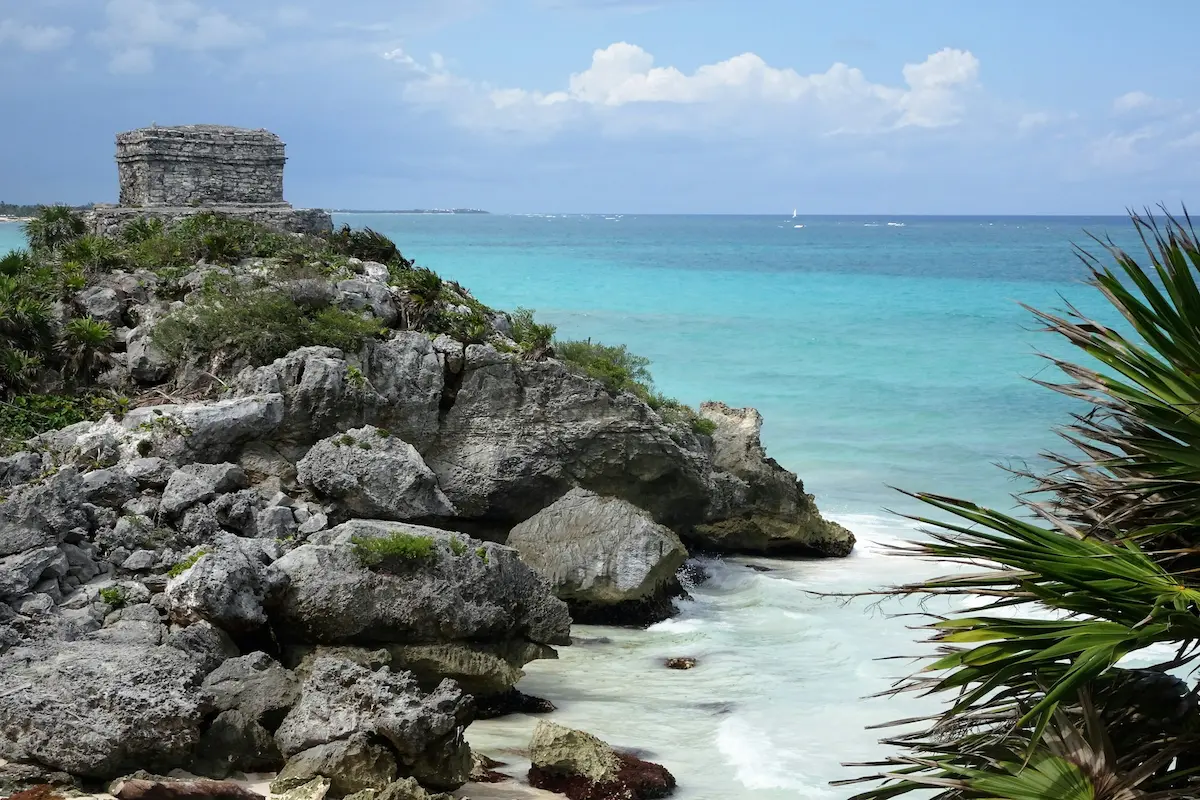
Tulum
About 130 km south · around 2 hours
A walled Postclassic Maya city set on limestone cliffs above the Caribbean, one of the most photogenic ruins in Mexico.
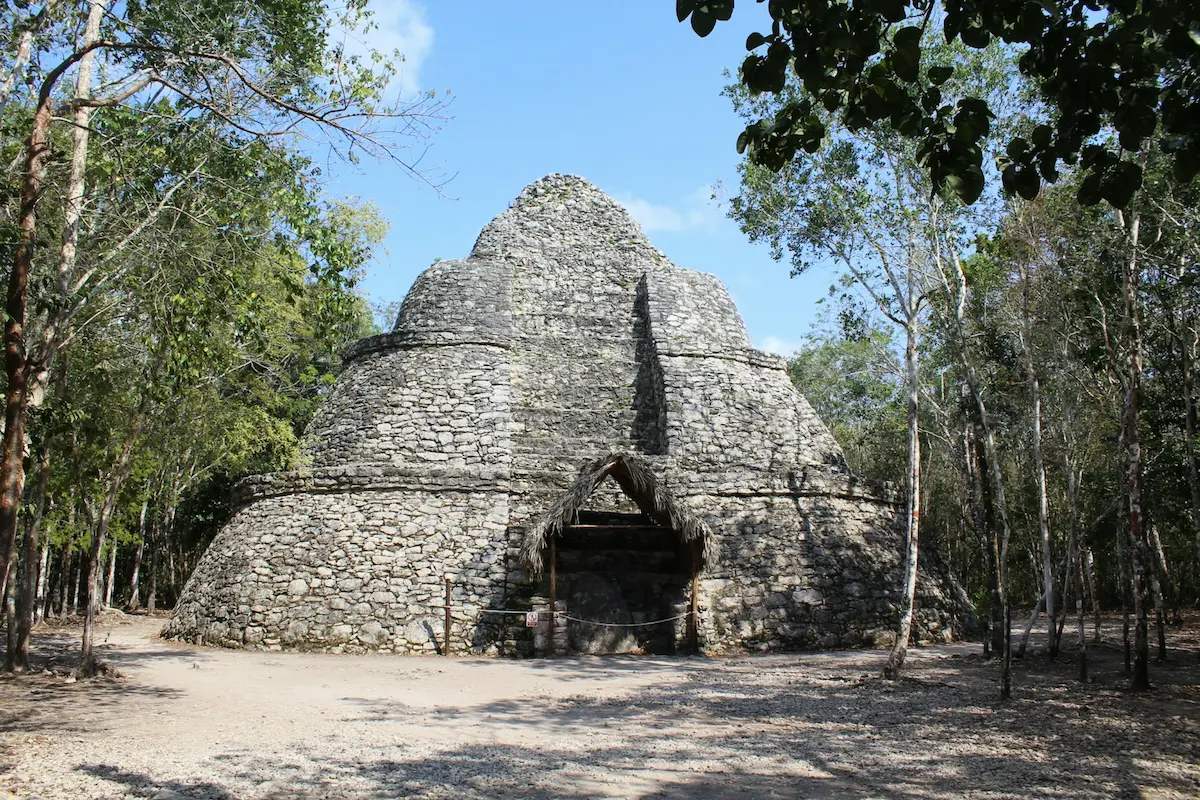
Cobá
Inland from Tulum · around 2.5 hours
A large Maya city deep in the jungle, linked by ancient raised roads (sacbeob) and home to the Nohoch Mul pyramid, one of the tallest in the Yucatan.
Downtown Cancun: the City's Living History
El Centro since 1970
While the Hotel Zone caters to visitors, downtown Cancun (El Centro) tells the story of the Mexican community that has built the city since 1970.
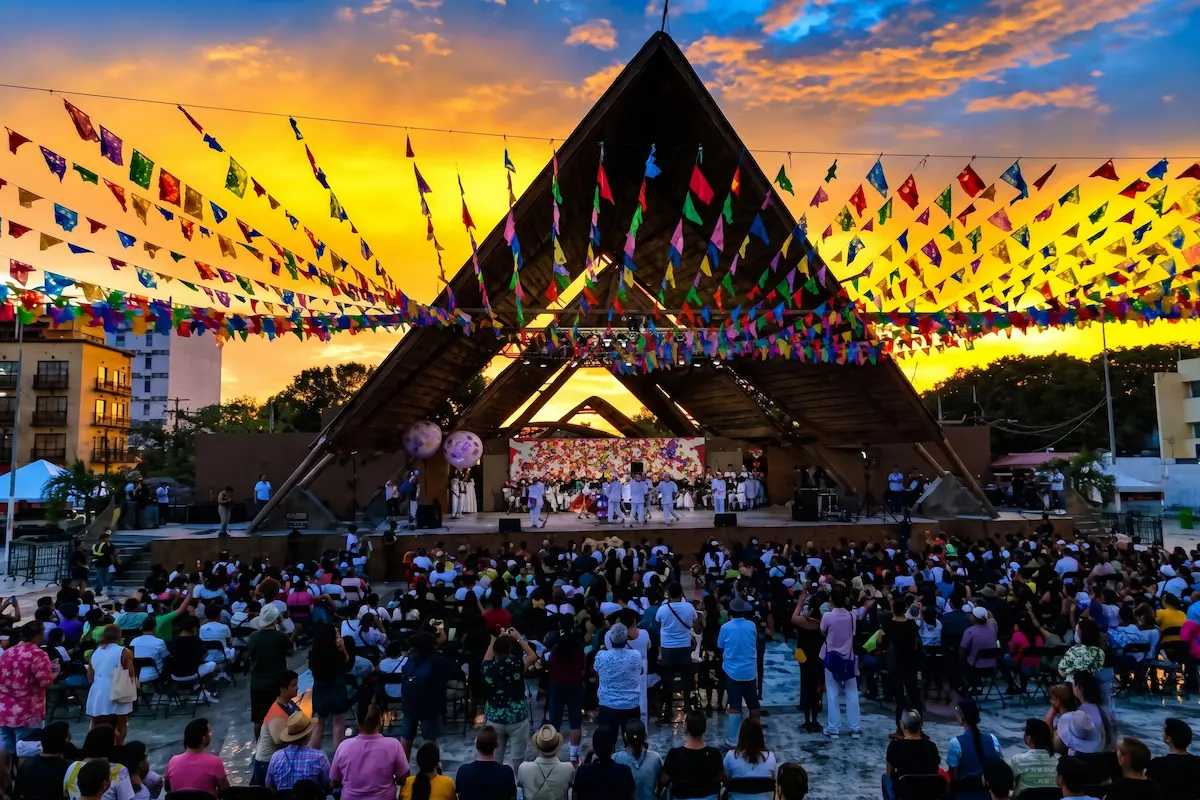
Parque de las Palapas
Downtown's main square, dating from the early years of the city. Locals gather here in the evenings for street food such as marquesitas, live performances and community events.
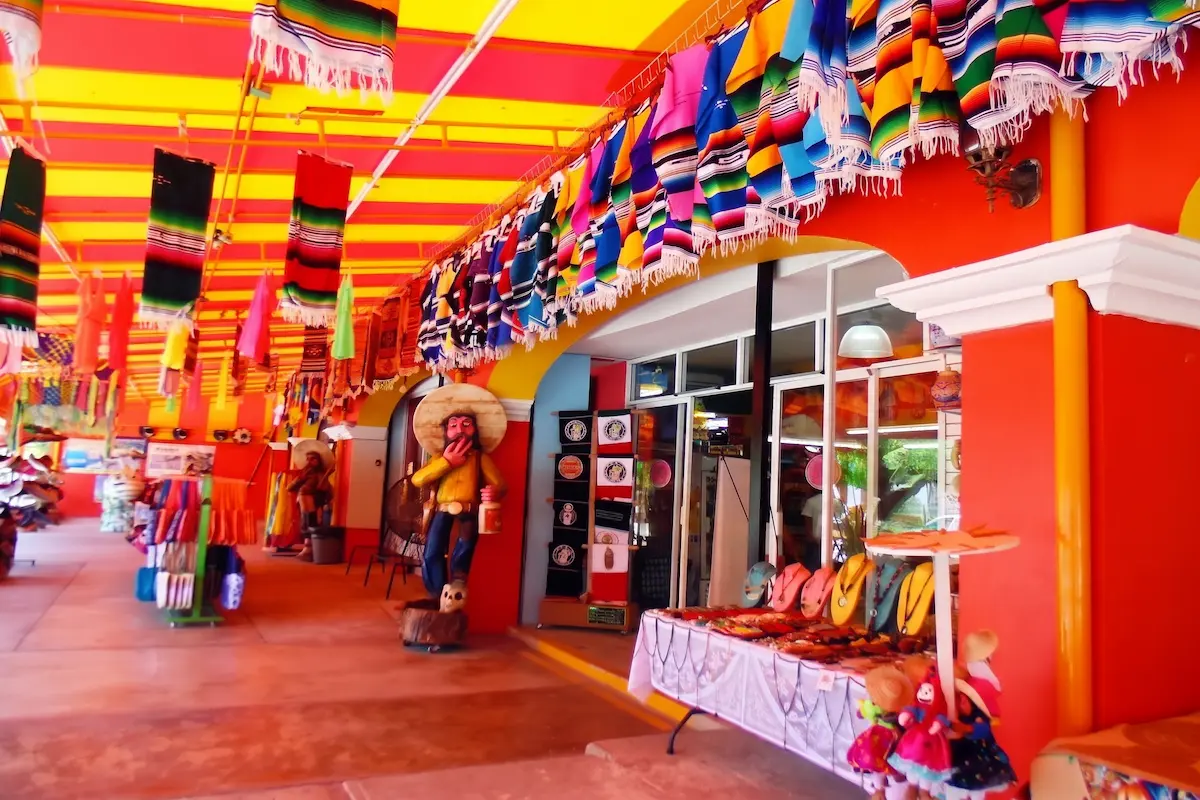
Mercado 28
One of Cancun's best-known traditional markets, with Mexican handicrafts, silver, embroidery and local seafood restaurants.
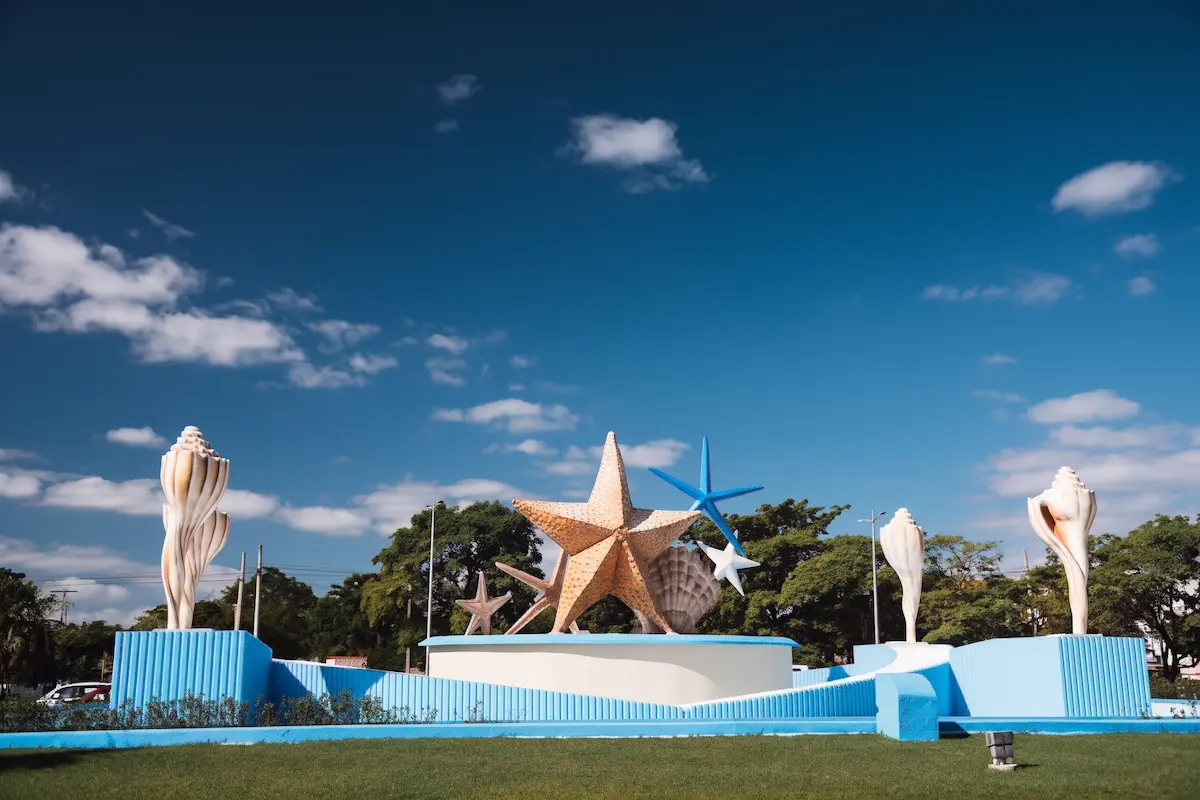
Glorieta del Ceviche
A well-known roundabout with a large shell sculpture where Avenida Tulum meets Avenida Cobá, on the main route to the Hotel Zone.
Tips for Visiting Cancun's Historical Sites
Make the most of your visit
Beat the midday heat
Ruins like El Rey and El Meco have little shade. Visit early, roughly between 08:00 and 10:30.
Carry pesos
Entry fees for INAH sites change, so check the current price and bring Mexican pesos in case cards are not accepted.
Respect the ruins
Climbing on structures or touching carved stone is not allowed at El Rey, San Miguelito and El Meco.
Combine museum and ruins
Allow about 1.5 to 2 hours for the Museo Maya galleries and the San Miguelito trail.