

Chicago O'Hare International Airport (ORD) is one of the world's major aviation hubs, operating around the clock, 365 days a year. For travelers with a red-eye departure, a delayed connection, or an early-morning check-in, an unplanned night at the airport is common — but it means navigating a vast multi-terminal complex, unpredictable Midwest weather, and strict overnight security procedures.
This guide breaks down exactly what to expect if you find yourself sleeping at ORD overnight: where security shuts down, which concourses stay quiet, how cold the terminals really get, and what to pack so you can rest until the first flights of the morning.
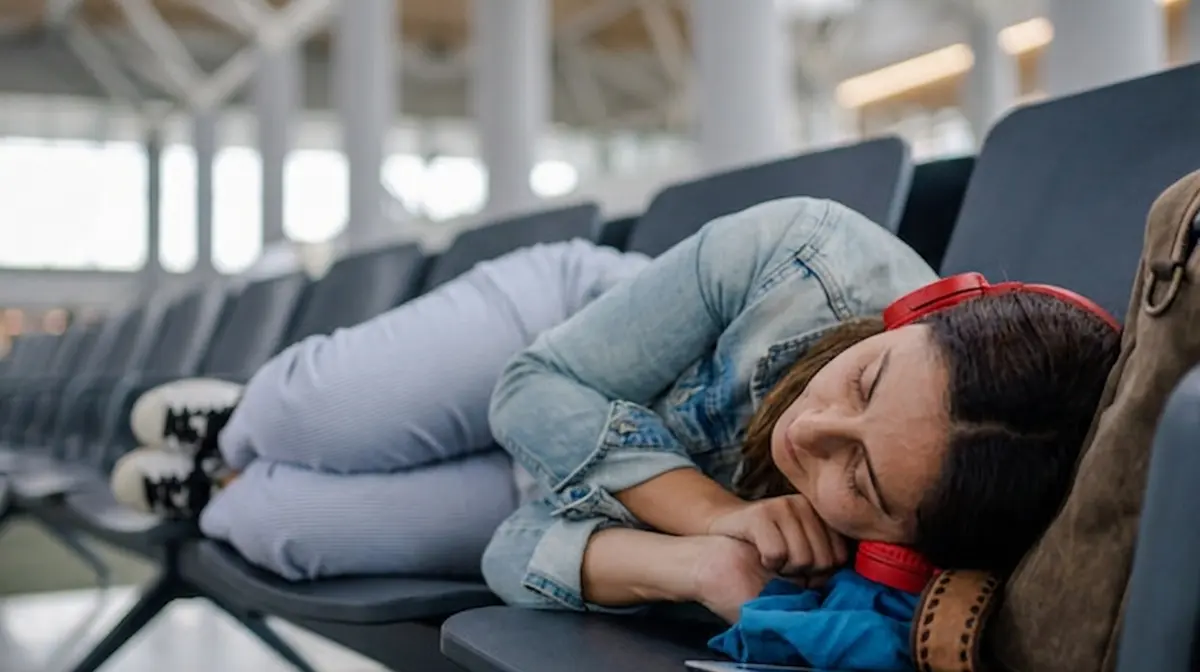
Whether you land in Terminal 1, 2, 3, or 5, the fundamentals of an ORD overnight stay are the same: know your terminal, know your security status, and come prepared for the cold.
Security & Terminal Layout Rules
O'Hare consists of four active passenger terminals: Terminals 1, 2, and 3 (domestic flights, home to the United and American Airlines hubs) and Terminal 5 (international flights and select low-cost carriers). Where you're allowed to wait overnight depends entirely on which side of security you're on.
Airside (Post-Security)
Checkpoints close overnight, typically between 11:00 PM and 4:00 AM depending on the terminal. Only passengers with a valid onward boarding pass can remain in the secure area.
Landside (Pre-Security)
Travelers arriving late or waiting for morning check-in must stay landside. Security officers routinely patrol baggage claim overnight and may ask for travel documents or a morning ticket.
ATS Inter-Terminal Transit
The Airport Transit System runs 24/7, connecting Terminals 1, 2, 3, 5 and the Multi-Modal Facility (MMF) — useful if you need to relocate to a quieter concourse overnight.
Because closing times vary by terminal, always confirm your checkpoint's overnight hours with your airline before settling in for the night — missing the reopening window can mean a longer wait than expected.
Top Rest Areas Inside the Terminals (Airside - Post Security)
Central hubs and food court areas stay brightly lit and see maintenance activity all night long. For a quieter rest, head toward the far ends of the concourses instead.
Environment
Concourse L (mostly regional flights) and the far end of Concourse K quiet down significantly once late-evening domestic arrivals wrap up.
Seating
Longer stretches of gate seating with fewer rigid armrest dividers, plus quiet carpeted alcoves near closed gates.
Environment
Connected to Concourse B by a brightly lit underground neon tunnel; the far ends of Concourse C offer more secluded gate spaces late at night.
Seating
Standard gate seating and carpeted areas near closed departure gates, away from the main tunnel foot traffic.
Environment
A modern, spacious concourse, though late-night international flight banks keep foot traffic moving later than in the domestic terminals.
Seating
Padded seating areas and wide window alcoves tucked away from the central duty-free corridor.
What to Expect Overnight
Before you settle in, it helps to know exactly what an ORD overnight stay feels like — from the lighting overhead to the last call for coffee.
Lighting & Sound
Corridors and gate areas stay fully lit 24 hours for safety, with periodic PA announcements, TSA notices and floor-cleaning equipment running through the night.
Temperature
Chicago's climate and continuous HVAC airflow can make terminals feel very cold overnight, especially near large glass facades and jetbridge doors.
Food & Refreshments
Nearly all restaurants and newsstands close by 10–11 PM and reopen around 5 AM. Past security, vending machines and water fountains are the main options.
Water & Refill Stations
Free bottle-refill stations and drinking fountains are located near the major restroom corridors in every terminal, so an empty refillable bottle passed through TSA is one of the most useful things you can carry overnight.
Overnight Survival Checklist
Pack light, but don't skip these four essentials — they make the difference between a rough night and a genuinely restful one.
- Eye Mask & Noise-Canceling Headphones — essential for blocking continuous overhead lighting and periodic audio broadcasts.
- Warm Layering — a hoodie, heavy jacket or compact travel blanket counters the cold air conditioning and winter drafts.
- Portable Power Bank — outlets and charging pillars exist across all terminals, but a power bank lets you rest in quieter spots away from bright charging hubs.
- Empty Refillable Water Bottle — passes through TSA empty and can be filled at water dispensers throughout the airside concourses.