
Hong Kong’s Invisible Design System
Beneath Hong Kong’s skyline of glass and steel lies an invisible geometry shaped not by blueprints alone, but by ancient philosophy. Here, Feng Shui, literally “wind and water”, continues to influence how towers rise, where doors open, and how the city breathes. The result is a metropolis where modern engineering and spiritual belief coexist in perfect balance.
From the curves of Victoria Peak to the edges of Victoria Harbour, Hong Kong’s architecture reflects a dialogue between progress and protection. Each building is more than a design; it is a guardian of energy, a vessel for harmony, and in many cases, a silent battleground of symbolic forces.
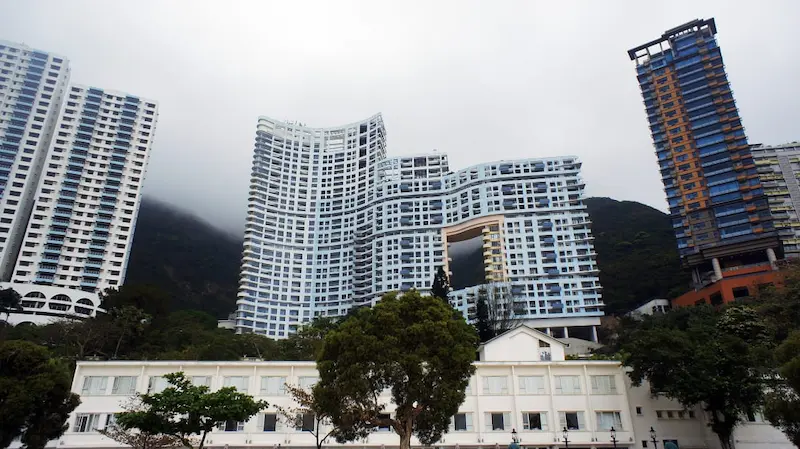
Dragon Gates: Pathways for the Mountains’ Spirits
One of Hong Kong’s most striking Feng Shui features is the “Dragon Gate”, large openings or voids intentionally designed in tall buildings to let mythical dragons pass freely from the mountains to the sea. According to traditional belief, the city’s hills are home to powerful dragon spirits that descend toward Victoria Harbour to drink and maintain the flow of Qi, or life energy.
The most famous example stands at Repulse Bay, where a huge rectangular void pierces the middle of a residential tower. Architects incorporated this feature not for ventilation, but to honor Feng Shui masters’ advice: never block the dragon’s path. Without such passageways, it was said, prosperity might stagnate, and the building could invite misfortune.
Similar principles appear across the city, from high-end apartments overlooking the harbor to government structures like The Governor’s House. In each case, architecture becomes a physical map of myth, designed to protect the balance between the earth’s forms and the city’s ambition.
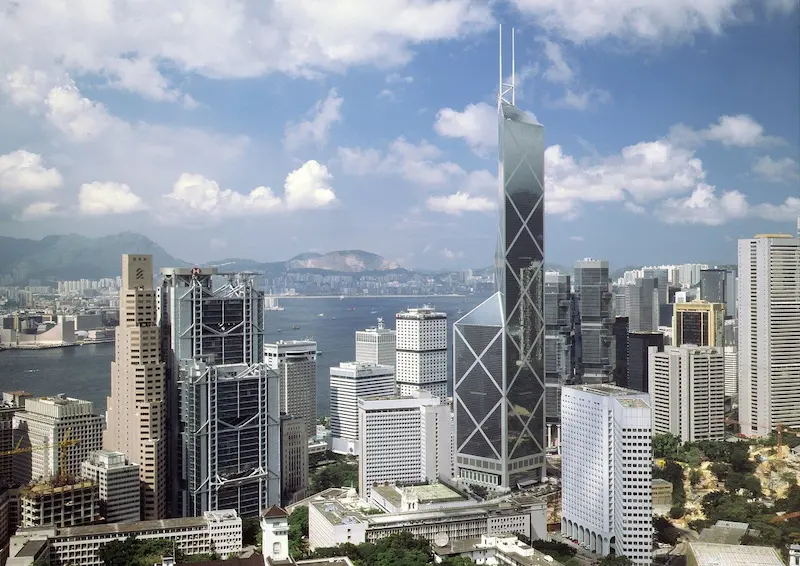
The Flow of Qi: Architecture Aligned with Energy
Central to Feng Shui is the concept of Qi, an invisible current of energy that must circulate freely through both natural and built environments. In Hong Kong, skyscrapers are oriented and shaped to encourage this flow, ensuring that prosperity moves unimpeded between the mountains and the sea.
Building entrances are often positioned to face favorable directions, while reflective surfaces redirect negative energy away from nearby structures. Even the placement of windows, bridges, and escalators follows invisible rules derived from centuries-old cosmology. In a city famous for vertical density, this unseen choreography ensures that growth remains balanced with harmony.
The skyline’s rhythm, its alternating towers and open gaps, functions like a pulse, regulating the movement of energy through concrete arteries. To the untrained eye, it is urban planning; to practitioners, it is the architecture of life itself.
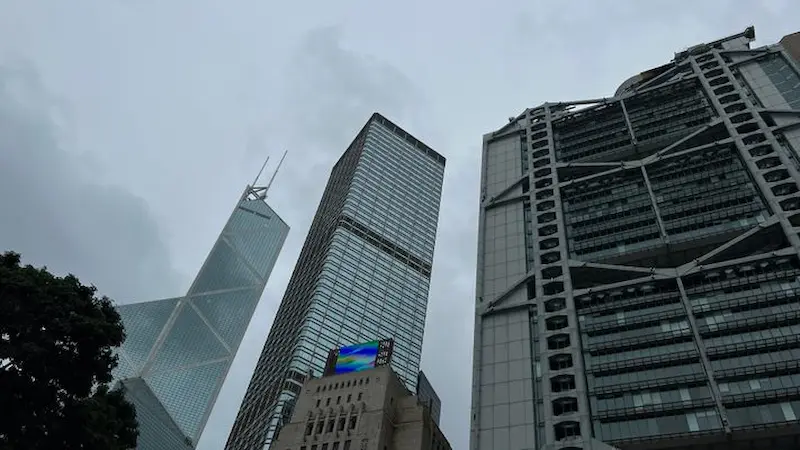
Architectural Rivalry: Bank of China vs. HSBC
Few examples illustrate Feng Shui’s power over modern design better than the symbolic rivalry between the Bank of China Tower and the HSBC Headquarters. Designed by I.M. Pei, the Bank of China’s angular façade, formed of sharp triangular edges, was criticized for “cutting” the energy lines of nearby buildings, a violation of Feng Shui harmony.
In response, HSBC sought the guidance of Feng Shui masters when constructing its own headquarters. The building’s design maximized openness and incorporated two massive bronze cannons aimed directly toward the Bank of China Tower, a symbolic defense against negative energy. Its rooftop mirrors were also strategically placed to reflect the rival tower’s “poison arrows.”
While these gestures may sound ritualistic, they underline Hong Kong’s deep cultural synthesis: a city where finance, architecture, and spiritual geometry intertwine. The skyline becomes a dialogue, each building an argument in glass, steel, and superstition.
Feng Shui and the Shape of a City
Feng Shui in Hong Kong is more than aesthetic symbolism. It reflects an enduring belief that energy, space, and human intention must coexist in equilibrium. Even as international architects push for innovation, local developers continue to consult Feng Shui experts before breaking ground, not from superstition, but from cultural respect and pragmatic faith in balance.
This silent force shapes how the city grows. Skyscrapers are aligned like ancient pagodas; harbors, roads, and green spaces act as channels for Qi. Together they form a living landscape, a metropolis that has mastered both gravity and grace.
In Hong Kong, the future is built with the past in mind. Every tower, whether for banking or residence, stands as proof that even in a world of glass and algorithms, the flow of energy still matters.