

London Heathrow Airport (LHR) is one of Europe's largest and busiest international hubs, operating across four active passenger terminals (Terminals 2, 3, 4, and 5). Heathrow sees steady international transit traffic around the clock, but navigating an overnight stay requires understanding terminal access rules, security schedules, and where to find the quietest zones.
This guide covers exactly what to expect during an overnight stay at LHR: when checkpoints close, which piers stay quietest, how cold it gets indoors, and what to pack to rest comfortably until the shops reopen.
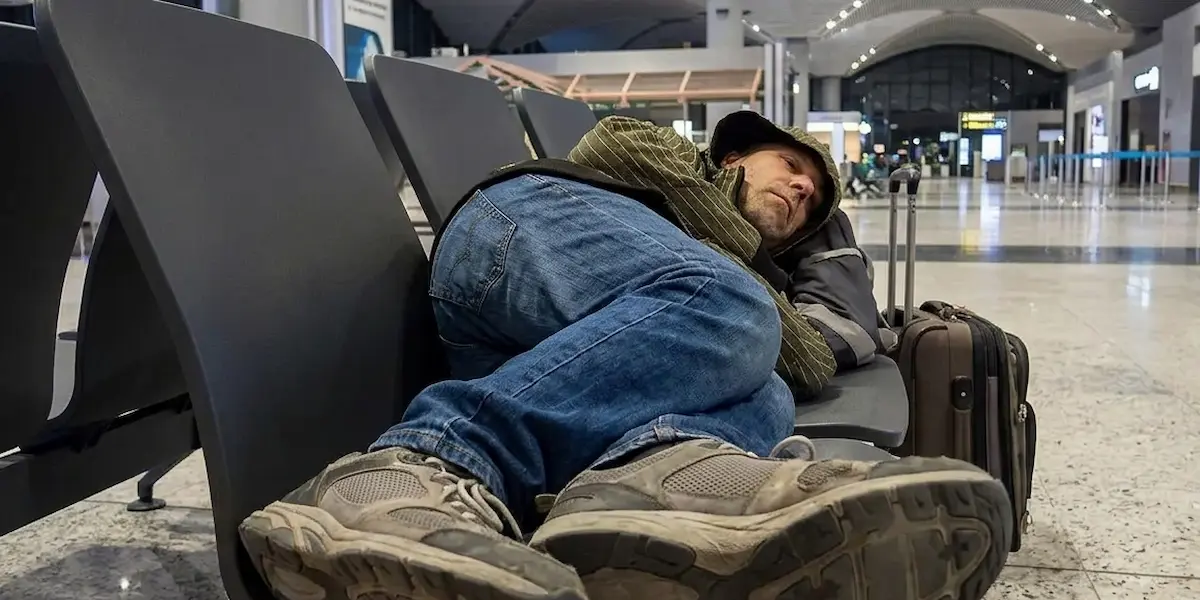
Whether you're connecting through Terminal 3 or Terminal 5, the fundamentals of an LHR overnight stay stay the same: know your terminal, know your security status, and come prepared for the cold.
Security & Terminal Layout Rules
How your night at Heathrow unfolds depends heavily on whether you remain inside the secure international transit area (airside) or are in the public arrivals and check-in areas (landside).
Airside (International Transit)
Passengers transiting with a valid onward boarding pass can remain airside overnight, though moving between terminals is restricted once airside transfer buses pause in the late evening.
Landside (Public Halls)
Public check-in and arrivals concourses close to non-passengers overnight. Officers patrol between midnight and 4:00 AM, checking passports and morning boarding passes.
Security Checkpoint Closure
Checkpoints close overnight, typically between 10:30–11:00 PM, reopening around 4:30–5:00 AM. Passengers landside can't reach departure gates until then.
Because inter-terminal airside transfer buses pause in the late evening, decide which terminal you'll spend the night in before checkpoints close — switching later is much harder.
Top Rest Areas Inside the Terminals (Airside - Post Security)
Central retail avenues and main departure lounges stay brightly lit overnight with cleaning crews active across all terminals. For quieter surroundings, head toward specific concourse piers instead. Alternatively, you can book a private lounge pass now to guarantee a quiet corner.
Environment
Heathrow's largest terminal. While the main T5A building stays busy, the underground transit train to satellite concourses T5B and T5C leads to much quieter gate areas.
Seating
Modern, padded seating, wider carpeted spaces, and designated quiet zones with semi-reclined relaxation chairs overlooking the tarmac.
Environment
Handles many long-haul international flights, with foot traffic dropping off significantly once late-evening long-haul departures wrap up.
Seating
Padded gate seating, carpeted floor alcoves near secondary gates, and secluded seating areas along the long connector walkways.
Environment
The satellite pier is reached via an underground pedestrian walkway from the main T2A building.
Seating
Wide glass facades, carpeted gate sections, and lower ambient noise levels compared to the central departures plaza.
What to Expect Overnight
Before you settle in, here's exactly what an overnight stay at LHR feels like — from the lighting overhead to your last vending machine snack.
Lighting & Sound
Main corridors, duty-free avenues, and gate areas keep full overhead lighting 24 hours a day, with periodic flight calls, security reminders, and floor scrubbers running through the night.
Temperature
Climate control runs continuously, and airflow can feel cool overnight, particularly in the large glass concourses and near exterior gate doors.
Food & Refreshments
Most dining, cafes, and shops close by 10–10:30 PM and reopen around 5 AM. Vending machines near restroom clusters are the main option past midnight.
Water & Refill Stations
Free drinking water refill stations and fountains are located near major restroom blocks airside in all four terminals, so an empty refillable bottle taken through security is one of the smartest things to carry overnight.
Overnight Survival Checklist
Pack light, but don't skip these four essentials — they make the difference between a rough night and a genuinely restful one.
- Eye Mask & Earplugs / Noise-Canceling Headphones — critical for blocking continuous overhead concourse lighting and periodic audio announcements.
- Warm Layering — a hoodie, heavy sweater or compact travel blanket is strongly recommended to stay comfortable against indoor air conditioning.
- Portable Power Bank — integrated seat power outlets and USB ports are widely available, but a battery pack gives flexibility to rest away from main charging hubs.
- Empty Refillable Water Bottle — can be taken through security empty and filled at water dispensers throughout the airside concourses.