

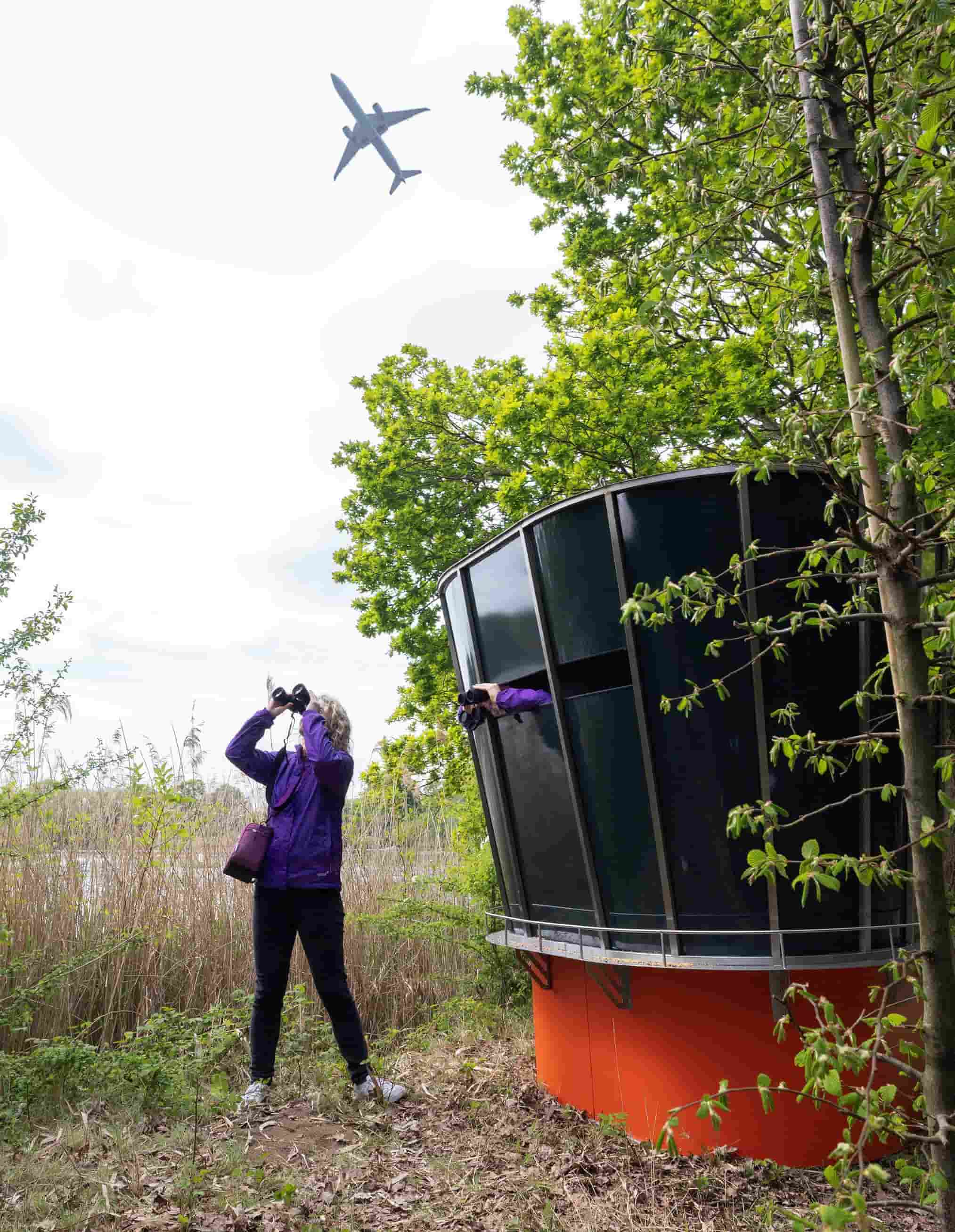
Airports are commonly associated with busy terminals, long queues, and the constant background noise of aircraft engines. However, London’s Heathrow Airport has introduced a new initiative that contrasts sharply with this image. Adjacent to its main operational zones, within a protected conservation area, Heathrow has unveiled a birdwatching tower, architecturally inspired by an air traffic control tower, aimed at promoting environmental awareness and supporting biodiversity.
This structure, referred to as the “Nature Traffic Control Tower,” is part of a broader sustainability and community engagement effort, combining architectural creativity with environmental functionality.
A Tower with Goals in Mind
The Nature Traffic Control Tower is located within the Causeway Nature Reserve, one of 13 nature conservation sites managed by Heathrow. This area is specifically maintained to support regional biodiversity and ecological resilience.
The tower provides visitors with elevated views of various ecosystems and enables the observation of over 70 bird species, as well as butterflies, reptiles such as grass snakes, and rare native tree species like the black poplar. The design of the tower is deliberate, it mirrors the actual air traffic control tower to symbolize the airport’s dual role in managing both airspace and natural habitats.
Why Should an Airport Have a Bird Hide?
Integrating a birdwatching facility within an international airport may seem unconventional. However, Heathrow has designated approximately 170 hectares, about 10% of its total land area, for biodiversity initiatives. These lands serve as habitats for native flora and fauna and are maintained with the assistance of ecologists and conservationists.
The Nature Traffic Control Tower is one component of Heathrow’s Nature Positive Plan, a long-term environmental strategy. This plan includes objectives such as:
- Restoring natural habitats and expanding green spaces
- Improving water quality through surface runoff control
- Investing in carbon reduction programs and reforestation
- Engaging with stakeholders to reduce environmental impact
Heathrow has committed significant funding (over £250 million between 2022–2026) toward these environmental and carbon-reduction goals.
Who Can Benefit?
Access to the Nature Traffic Control Tower is granted through free, guided tours. These tours are led by trained ecologists and offer participants the opportunity to explore various habitats including reed beds, meadows, woodlands, and freshwater bodies. The tours are designed to educate visitors about the native species supported within the reserve and the conservation techniques employed.
Key benefits of these tours include:
- Education on biodiversity and habitat restoration
- First-hand observation of protected species in their natural environment
- Awareness-building regarding sustainability practices in large-scale infrastructure settings
These experiences serve not only recreational but also educational purposes, especially for students, environmental researchers, and local community groups.
Linking People and Place to Close the Distance
A notable aspect of the Nature Traffic Control Tower is its role in community engagement. Heathrow’s biodiversity efforts are not limited to ecological preservation—they also emphasize public education and inclusion.
Local schools and organizations are encouraged to participate in environmental workshops hosted at the site. Planned activities include:
- Environmental education programs for students
- Citizen science projects involving local residents
- Hands-on conservation activities with community volunteers
By providing direct access to a functioning ecological site within an airport context, Heathrow aims to demonstrate that environmental responsibility and modern infrastructure development can coexist.
Changing Our View on What Airports Can Offer
The introduction of the Nature Traffic Control Tower reflects a shift in how airports are perceived. Traditionally seen as spaces of transit and mechanical efficiency, airports are now being reimagined as potential platforms for ecological integration and environmental education.
Heathrow’s approach aligns with a broader trend within the aviation industry: the integration of sustainability into operational planning. While the sector has historically faced criticism for its environmental footprint, projects such as this signal an evolving mindset, one that recognizes the importance of balancing development with ecological stewardship.
How to Visit the Nature Traffic Control Tower
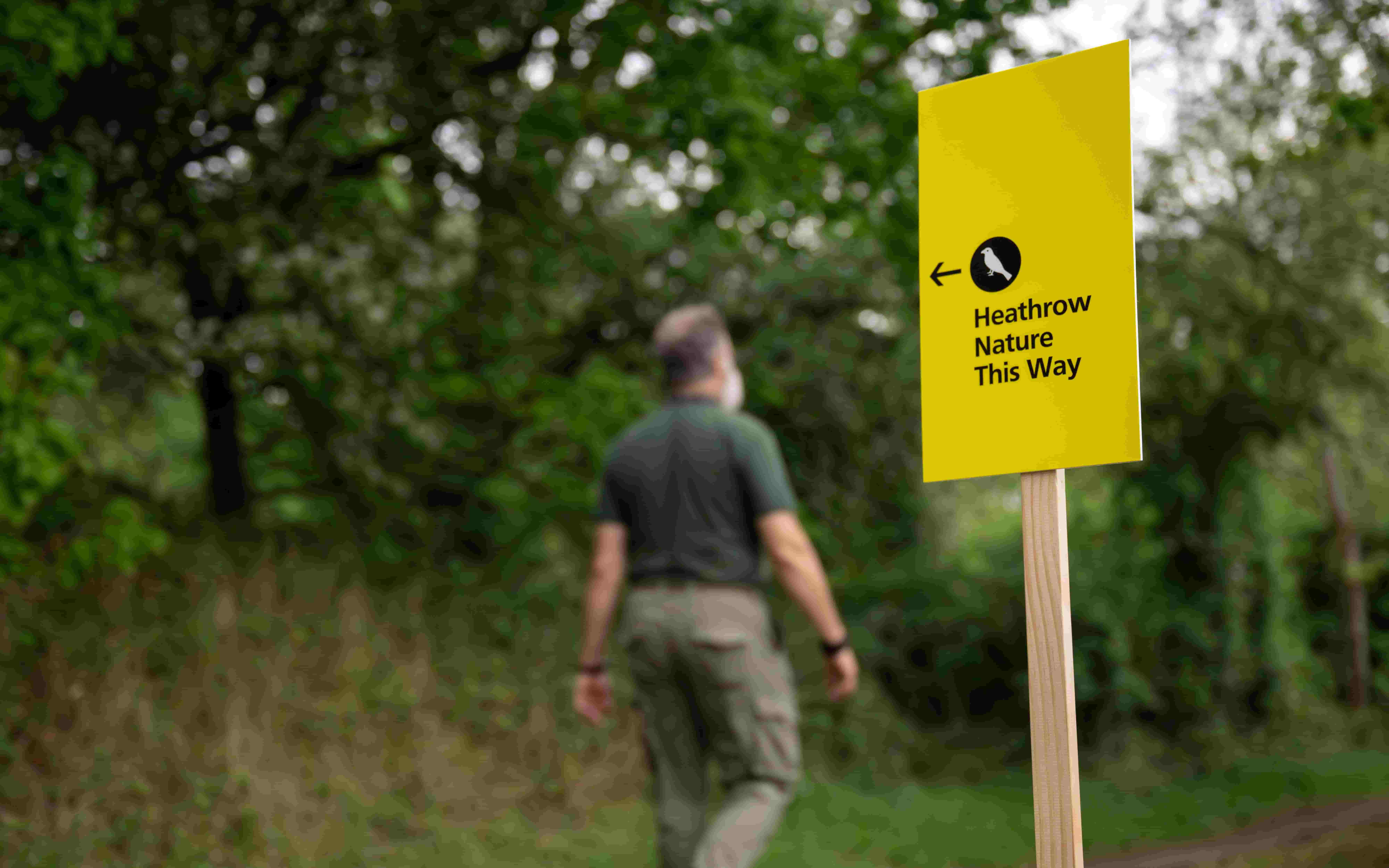
The Nature Traffic Control Tower is not freely accessible without prior booking due to its location within a protected reserve. Visitors must participate in scheduled tours to gain entry.
If you are at Heathrow Airport:
- Meeting points for tours are usually located near Terminal 5 or designated access gates.
- Transportation to the reserve is provided as part of the tour, typically via a shuttle or guided escort.
If you are arriving from central London:
- The Heathrow Express or Elizabeth Line offers direct access to Heathrow from Paddington Station in approximately 15–20 minutes.
- Alternatively, the Piccadilly Line (London Underground) connects the city center to all Heathrow terminals.
- After arrival at the terminal, follow the directions provided in your tour confirmation email.
Important Note:
The Causeway Nature Reserve is not open to general public access. Entry is permitted only through registered tours, and self-guided visits are not allowed due to conservation regulations.
Why Should You Visit There ?
The Nature Traffic Control Tower at Heathrow offers a unique example of how environmental innovation can be embedded within high-traffic infrastructure environments. By transforming part of its grounds into a functioning conservation and education space, Heathrow challenges conventional notions of what an airport can be. This initiative supports the dual objectives of environmental responsibility and community outreach, while also serving as a model for other airports around the world.
