
Step off your flight at Long Thanh International Airport (LTIA) and you will immediately notice the warm tropical air of Southern Vietnam. Located in Đồng Nai province, just a short drive from the bustling energy of Ho Chi Minh City (Saigon), this region is celebrated as one of Asia's most vibrant culinary capitals.
Unlike the subtle and delicate flavors found in the north, Southern Vietnamese cuisine is bold, sweet, herbal, and unapologetically rich. Here, fresh ingredients from the fertile Mekong Delta meet centuries of French, Chinese, and Khmer culinary influences. Whether you have a quick 3-hour layover or are starting a month-long backpacking journey, tasting the local food right after landing is the absolute best way to connect with the culture. Here is your ultimate long-form guide to 5 must-try local dishes near Long Thanh Airport.
Bánh Mì: The World’s Greatest Grab-and-Go Sandwich
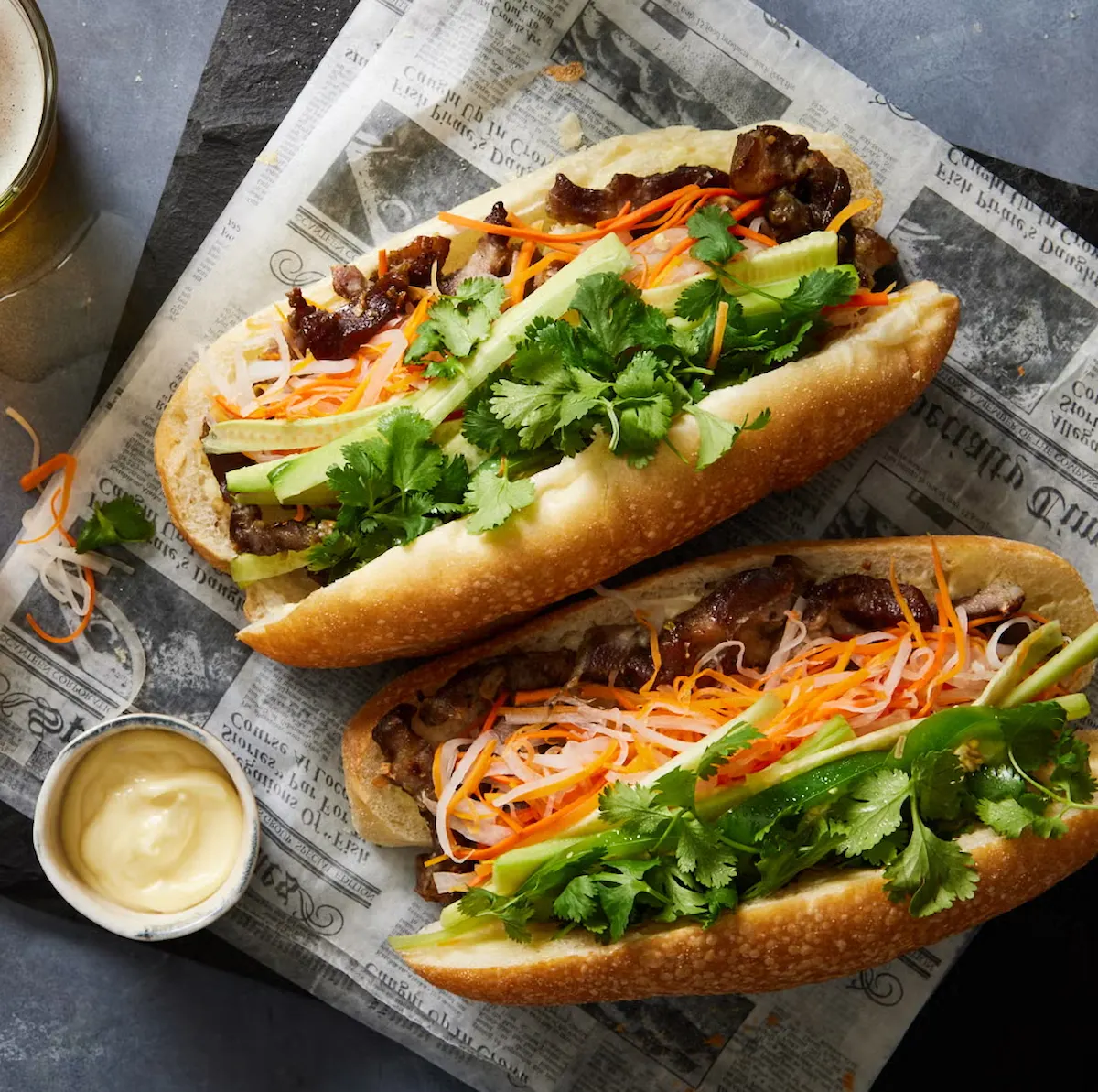
If you need a quick, delicious meal right after leaving Long Thanh Airport, Bánh Mì is your best option. Born during the French colonial era in the late 19th century, Vietnamese bakers modified the traditional French baguette by adding rice flour to wheat flour. The result is a roll that is magically light and airy on the inside, with a paper-thin, crackly outer crust that shatters when you bite into it.
A classic Southern Bánh Mì (Bánh Mì Thịt) is stacked with layers of savory pork liver pâté, rich mayonnaise, pork belly, ham, fresh cucumber spears, cilantro sprigs, and crunchy pickled daikon and carrots. A drizzle of savory soy sauce or concentrated pork broth ties everything together, while fresh slices of bird's eye chili add a firework of heat.
Key Ingredients:
Airy baguette, pork liver pâté, house mayo, pickled carrots & daikon, fresh cilantro, cucumber, pork ham, and fresh chili.
Average Cost:
20,000 to 40,000 VND ($0.80 – $1.60 USD) at roadside food carts.
Airport Transit Hack:
Bánh Mì vendors make sandwiches in less than 90 seconds. If you don't like spicy food, simply point at the chili and say "Không ớt" (No chili). It is wrapped in wax paper and sealed with a rubber band, making it the perfect snack to carry into your airport transfer bus or taxi.
Phở Sài Gòn: A Sweet & Herbal Masterpiece
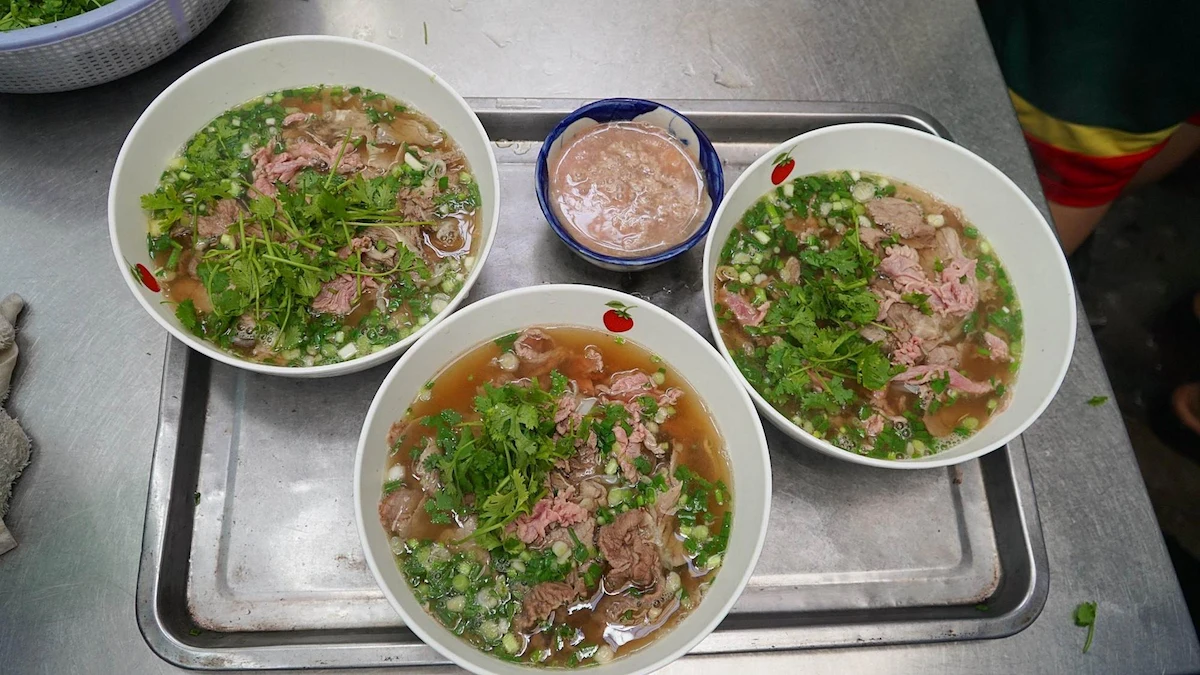
Phở is Vietnam’s national dish, but many first-time travelers do not realize that northern and southern Phở are vastly different. While Hanoi-style Phở focuses on a clear, minimalist, savory broth, Phở Sài Gòn (the southern style served around Long Thanh and Saigon) is a rich, aromatic feast packed with sweetness and fresh herbs.
The beef bone broth is simmered for over 12 hours with charred ginger, yellow onions, star anise, cinnamon, clove, and rock sugar. When your steaming bowl arrives, it comes accompanied by a giant side platter of fresh herbs: Thai basil (húng quế), saw-tooth coriander (ngò gai), mung bean sprouts, lime wedges, and sliced chili.
Broth Profile:
Deep, slightly sweet, highly aromatic with star anise, cinnamon, and beef marrow fat.
Popular Cuts:
Tái (thinly sliced raw brisket cooked by broth), Nạm (flank), and Bò Viên (beef meatballs).
How to Eat Like a Native:
First, taste the pure broth with your spoon. Next, tear the fresh basil and saw-tooth leaves by hand into the soup so their aromatic oils release into the heat. Squeeze in a lime wedge, and mix a 50/50 blend of hoisin sauce (tương đen) and sriracha chili sauce in a tiny side dish for dipping your meat slices!
Cơm Tấm: The Ultimate Comfort Food of Southern Rice Farmers
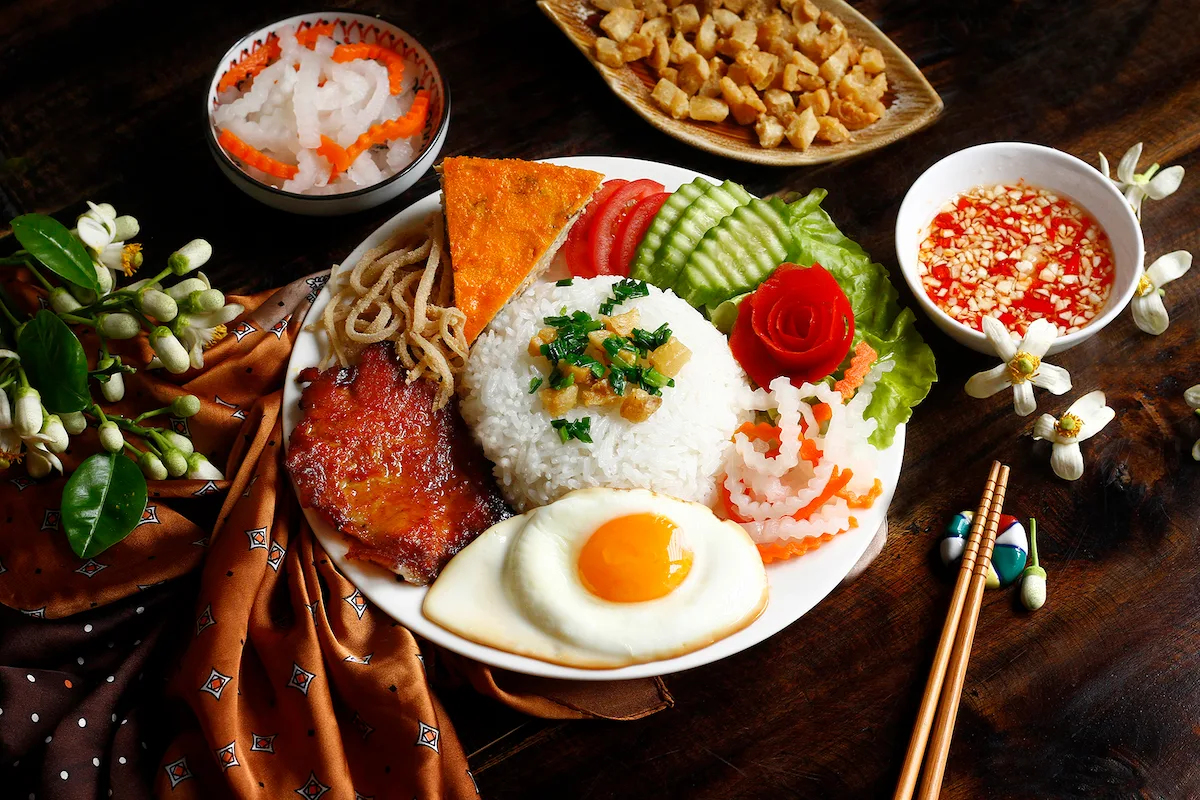
Translated literally as "broken rice," Cơm Tấm has one of the most fascinating histories in Vietnamese cuisine. Historically, when rice grains broke during the milling process, they were considered damaged and unsellable. Poor farmers in the Mekong Delta and laborers in Saigon saved these broken grains for themselves. Over time, locals realized that broken rice grains absorb marinades, scallion oil, and sauces far better than whole grains!
Today, Cơm Tấm is a beloved culinary icon enjoyed by workers, CEOs, and tourists alike. A complete plate (Cơm Tấm Sườn Bì Chả) features a mound of fluffy broken rice topped with a smoky, lemongrass-marinated grilled pork chop (Sườn), shredded pork skin tossed in toasted rice powder (Bì), and a steamed egg-and-pork meatloaf cake (Chả Trứng).
The Magic Ingredient: Garlic Fish Sauce (Nước Mắm)
What transforms Cơm Tấm from a simple rice dish into an unforgettable explosion of flavor is the fish sauce. Every vendor guards their secret recipe. It is warm, sweetened with coconut water, infused with minced garlic and red chili, and poured generously over the entire plate before eating.
Best Time to Eat:
While originally a breakfast food for manual laborers, you can now find Cơm Tấm stalls open 24 hours a day near major transit routes in Đồng Nai and Ho Chi Minh City. It is incredibly filling and cures jet lag instantly.
Bánh Xèo: The Sizzling, Crispy Mekong Crepe
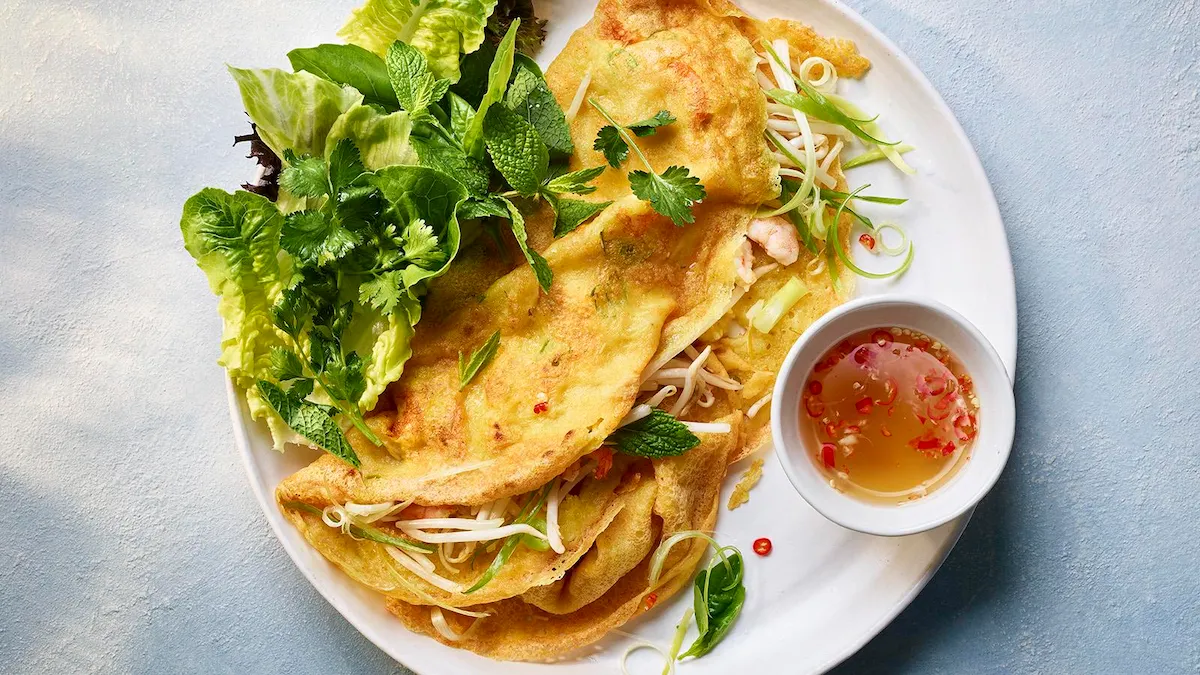
The word "Xèo" mimics the loud, satisfying sizzle sound the batter makes the moment it hits a roaring-hot iron skillet coated in pork lard. Bánh Xèo is often mistaken for an egg omelet due to its vibrant yellow color, but it actually contains no eggs at all! The batter is made purely from rice flour, water, rich coconut milk, and ground turmeric.
In the southern region around Long Thanh, Bánh Xèo crepes are served large roughly the size of a dinner plate. They are stuffed generously with pork belly slices, small sweet river shrimp, mung beans, and a handful of fresh, crunchy bean sprouts.
An Interactive, Hands-On Feast
Eating Bánh Xèo is an interactive art form. You do not use forks or chopsticks to eat it directly. Instead, you cut a piece of the crispy crepe, place it on top of a large leaf of wild mustard greens or lettuce, add herbs like mint and basil, roll it tightly with your fingers like a spring roll, and dip it deep into sweet chili fish sauce.
Sensory Tip:
Expect your hands to get messy! Clean wet wipes (khăn lạnh) are always provided on tables for a small charge (around 2,000 VND).
Cà Phê Sữa Đá: The High-Caffeine Liquid Energy
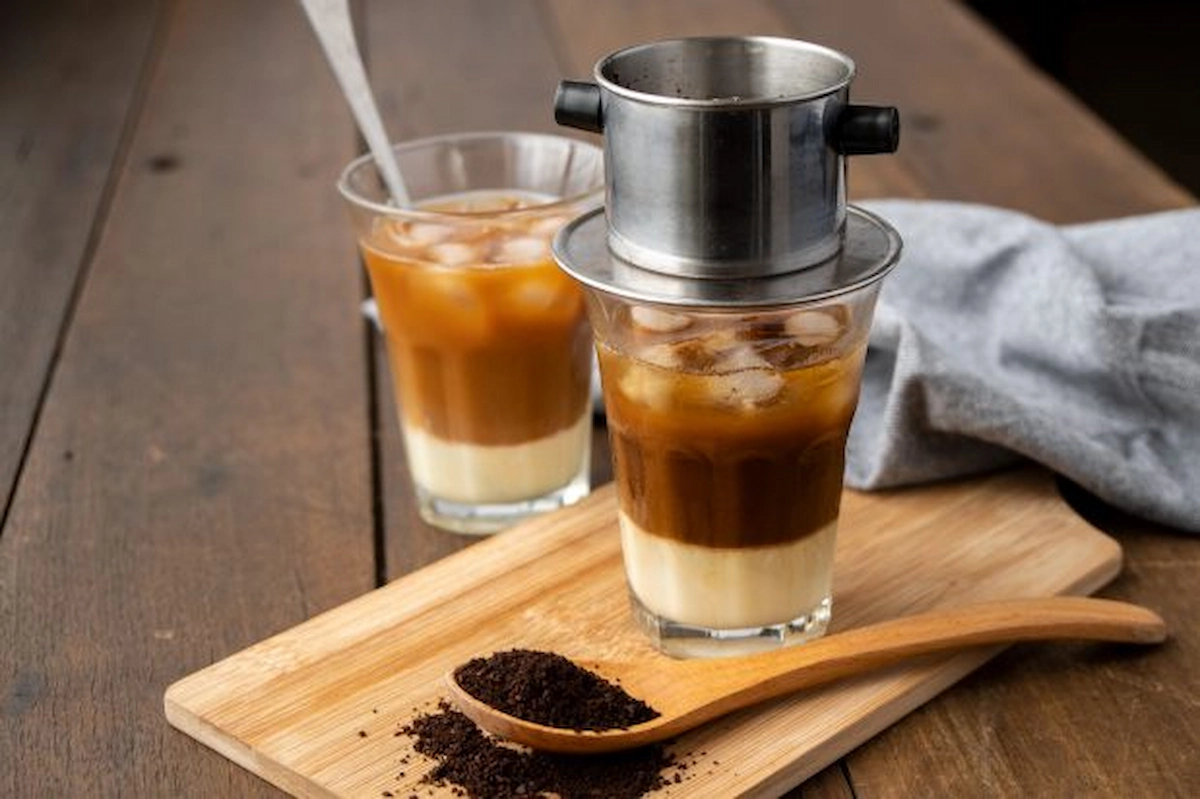
Vietnam is the world's second-largest exporter of coffee and the absolute king of Robusta beans. Robusta beans contain almost double the caffeine content of Arabica beans, offering a strong, bitter, nutty, and chocolatey flavor profile. To balance this intense bitterness in the hot tropical climate, locals came up with an ingenious creation: Cà Phê Sữa Đá (Iced Milk Coffee).
Dark-roasted coarse coffee grounds are placed inside a traditional stainless steel drip filter called a Phin. Hot water is poured over top, allowing concentrated coffee to drip slowly, drop by drop, into a glass containing a thick layer of sweetened condensed milk. Once the drip is complete, it is stirred briskly and poured over a glass filled to the brim with crushed ice.
Flavor Notes:
Intensely bold, bittersweet, velvety, creamy, and instantly refreshing.
The Culture:
Enjoyed while sitting on low plastic stools on sidewalk corners (Cà Phê Cóc).
Warning for New Arrivals:
Do not gulp this down like an iced Americano! Vietnamese Robusta coffee is extremely potent. Sip it slowly as the ice melts, allowing the water to dilute the concentrated brew gradually.
4 Essential Street Food Rules for Travelers Near Long Thanh
Eating street food in Vietnam is safe, clean, and one of the highlights of international travel. Follow these 4 practical tips for a seamless experience:
1. Follow the Busy Crowds
Choose food stalls packed with local families and motorbikes. High customer turnover guarantees that meat, vegetables, and broths are freshly cooked throughout the day.
2. Carry Small Cash (VND)
Street food vendors do not accept credit cards or foreign currencies. Exchange a small amount of money at Long Thanh Airport and keep 20,000 and 50,000 VND bills handy.
3. Ice is Safe in Cities
Don't be afraid of the ice in your coffee or drinks! Modern commercial ice in Southern Vietnam is produced in factory blocks using purified water and delivered daily.
4. Master Table Condiments
Every table features soy sauce, chili oil, fresh garlic in vinegar, and fish sauce. Feel free to adjust your soup or rice dish to match your personal taste preference!