

Los Angeles International Airport (LAX) is one of the busiest aviation gateways in the world, spreading nine terminals across a central horseshoe loop. Spending an overnight layover here is a common experience for travelers with late connections or early departures, but the sheer size of the loop means a bit of planning goes a long way.
This guide covers exactly what to expect during an overnight stay at LAX: how the nine terminals connect after security closes, which piers stay quietest, how cold it gets indoors, and what to pack until the shops reopen.
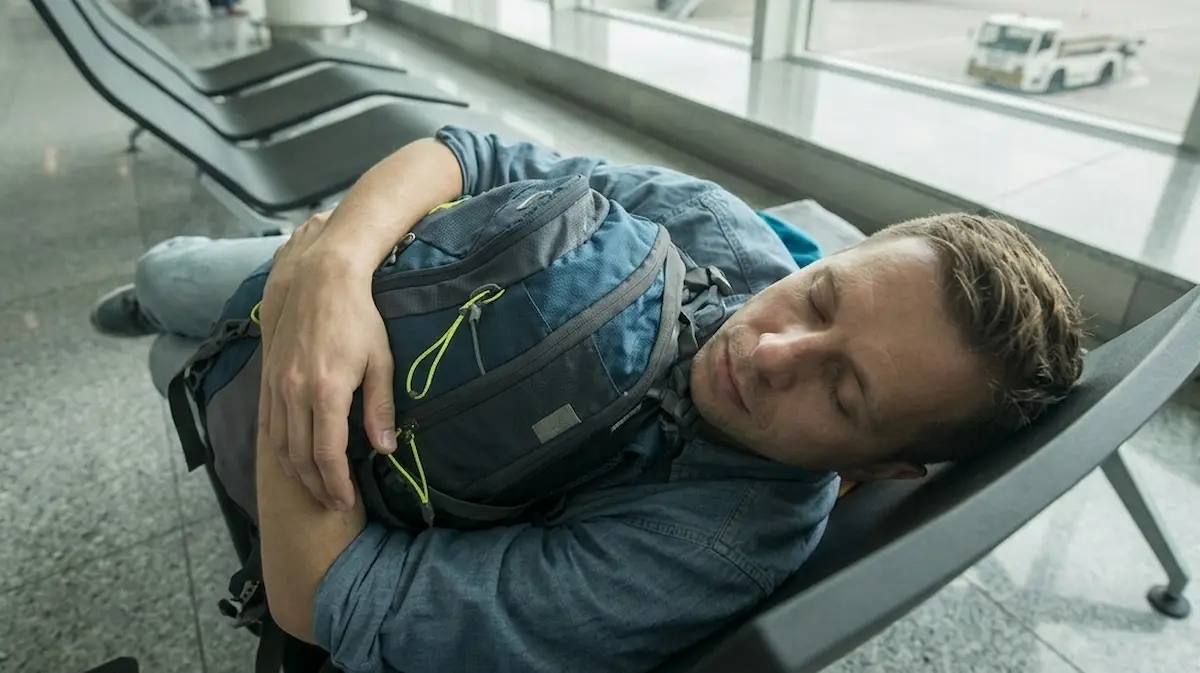
Whether you land at TBIT or one of the domestic piers, the fundamentals of an LAX overnight stay stay the same: know your terminal, know your security status, and come prepared for the cold.
Security & Terminal Layout Rules
LAX consists of nine terminal buildings: Terminals 1 through 8 and the central Tom Bradley International Terminal (TBIT / Terminal B), along with its connected West Gates concourse. Where you can wait overnight, and how far you can roam to find quiet, depends on which side of security you're on.
Airside (Post-Security)
All nine terminals connect post-security via airside walkways, bridges, and underground tunnels. With a valid onward boarding pass, you can move freely around the loop without re-clearing security.
Landside (Pre-Security)
Checkpoints close overnight, generally between 11:00 PM–midnight and 3:30–4:00 AM depending on the terminal. Late arrivals wait in check-in or baggage claim, where officers run routine document checks.
Inter-Terminal Airside Walkways
You can walk the entire loop post-security, but distances add up fast — Terminal 1 to Terminal 7 airside can take 20 to 30 minutes on foot.
Because the walk between opposite ends of the horseshoe eats up real time, decide on a rest area as soon as your gate is assigned rather than wandering the loop later in the night.
Top Rest Areas Inside the Terminals (Airside - Post Security)
The Great Hall in TBIT and the domestic food court nodes stay brightly lit and busy with maintenance crews overnight. For quieter space, move toward the secondary concourse piers instead.
Environment
LAX's largest, most modern terminal. The central hall stays active around the clock, but the outer concourses and West Gates drop off sharply once late-night international departures conclude.
Seating
Wide carpeted floor sections, quiet gate alcoves, and select bench seating without restrictive armrests near the secondary gate areas.
Environment
Serves primarily domestic and long-haul transcontinental flights, with late-night traffic clearing out once the evening's final arrivals land.
Seating
Padded gate seating clusters near Gate 71B, wider carpeted alcoves, and lower noise levels away from the central thoroughfares.
Environment
Modernized connector spaces and upper-level walkways linking Terminals 2 and 3, easy to overlook and rarely crowded.
Seating
Quiet seating spots near closed gate sectors, plus padded chairs tucked away from the main elevator hubs.
What to Expect Overnight
Before you settle in, here's exactly what an overnight stay at LAX feels like — from the lighting overhead to your last vending machine snack.
Lighting & Sound
Overhead security lighting stays on 24 hours a day, with TSA audio notices, safety broadcasts, and floor scrubbers operating periodically through the night.
Temperature
Climate control runs continuously to manage Southern California weather and large indoor crowds, feeling especially cool in concourses with high glass curtain walls.
Food & Refreshments
Most dining and newsstands close between 10–11 PM and reopen around 4:30–5 AM. Vending machines throughout each concourse are the main option overnight.
Water & Refill Stations
Free drinking water bottle-refill stations and fountains sit near major restroom blocks across all terminals, so an empty refillable bottle passed through TSA is one of the smartest things to carry overnight.
Overnight Survival Checklist
Pack light, but don't skip these four essentials — they make the difference between a rough night and a genuinely restful one.
- Eye Mask & Earplugs / Noise-Canceling Headphones — essential for blocking constant concourse lighting, maintenance sounds, and periodic overhead broadcasts.
- Warm Layering — a hoodie, jacket or light travel blanket is strongly recommended to handle continuous indoor air conditioning.
- Portable Power Bank — outlets and USB charging posts are widely distributed across gate seating, but a battery pack gives freedom to rest away from bright charging hubs.
- Empty Refillable Water Bottle — passes through TSA empty and can be refilled at water dispensers throughout the airside concourses.