

Tbilisi on a Budget
The Smart Traveler’s Comprehensive Guide
Tbilisi is a city of layers, a place where the silk road’s ancient dust settles on Soviet concrete and futuristic glass. For the discerning traveler, the city’s true wealth isn't locked behind museum turnstiles or expensive hotel lobbies; it is found in the communal echoes of its "Italian yards," the steam rising from its thermal springs, and the panoramic silence of its surrounding peaks. This isn't just about saving money, it's about reallocating your resources to what truly matters: authentic connections and sensory overload.
01. The Narikala Ascent: A Vertical History
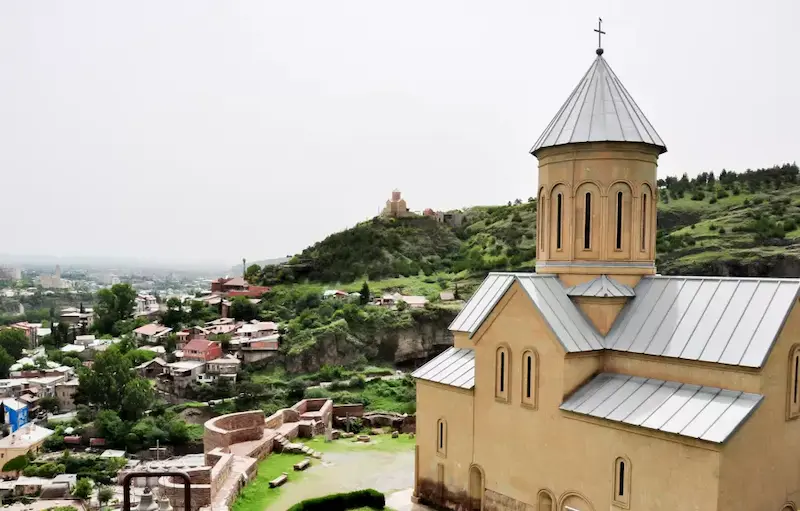
While many tourists opt for the ease of the cable car from Rike Park, the smart traveler understands that the true essence of Tbilisi’s history is best absorbed through the soles of their shoes. The climb via the Betlemi Street stairs is a sensory masterclass. As you navigate the steep, winding incline, you are walking through the "Sololaki" and "Kala" districts, the historic heart of the city. Here, the architecture tells a story of multiculturalism; Persian-style balconies meet Russian imperial facades, all adorned with the tangled grapevines that represent Georgia’s 8,000-year wine heritage.
Upon reaching the crest of the hill, you are greeted by the 4th-century Narikala Fortress. This ancient citadel has survived Arab, Mongol, and Persian invasions. Standing at its base, you are looking at the same view that Georgian kings did a millennium ago. The Mother of Georgia (Kartlis Deda) statue stands nearby, a massive aluminum figure holding a sword for enemies and a bowl of wine for friends. Accessing the fortress walls is free, providing a 360-degree theater of the city. You can see the futuristic Rike Concert Hall, the ancient Metekhi Church, and the entire sprawl of the Old Town, all shimmering in the light of the setting sun. This climb isn't just a workout; it's a rite of passage for anyone wanting to truly "know" Tbilisi.
02. Dry Bridge: Navigating the Living Attic
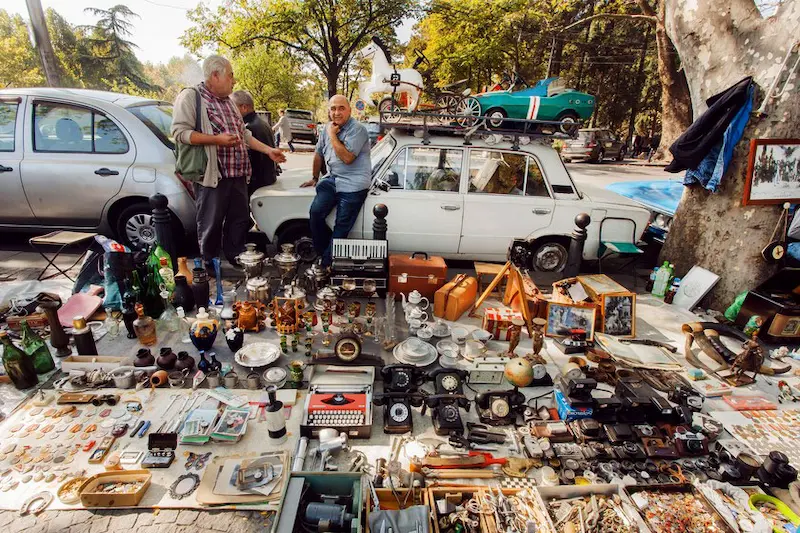
The Dry Bridge Flea Market is not just a place for commerce; it is an open-air museum of the Soviet and post-Soviet identity. Spread across the sidewalks and park paths near the Mtkvari River, this market is where Tbilisi’s residents have come for decades to sell their heirlooms and memories. For the budget traveler, it is a free immersive gallery. You don’t need to spend a single Lari to enjoy the visual feast of vintage Zenit cameras, hand-painted Orthodox icons, weathered Soviet medals, and stacks of vinyl records featuring Georgian polyphonic singing.
The real value here is the social interaction. Unlike a sterile museum where silence is mandatory, Dry Bridge is a place of loud stories and deep history. The vendors are often retired professionals, engineers, teachers, and artists who can explain the intricate details of a 100-year-old brass samovar or the symbolism behind a piece of cloisonné enamel jewelry. It is a world where the objects serve as anchors for the stories of a generation that lived through the transition from communism to independence. Spending an afternoon wandering between these blankets is the most efficient way to understand the complex, resilient character of the Georgian people without spending a cent on entrance fees.
03. The Chronicles: Tbilisi’s Stonehenge
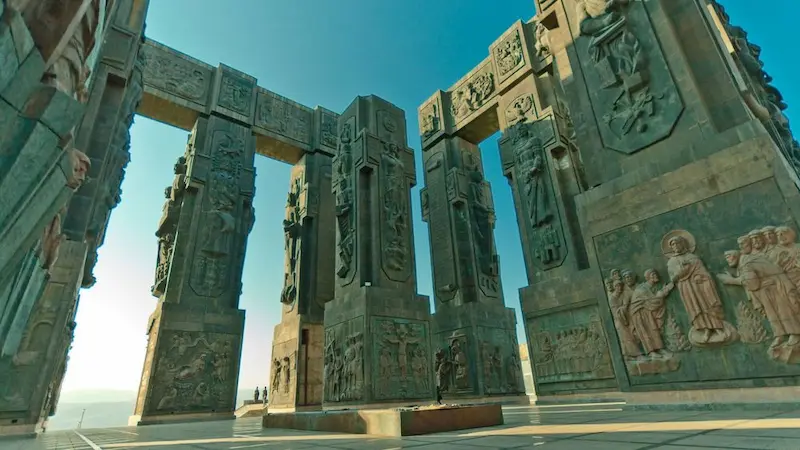
Perched on a high hill overlooking the northern residential districts and the massive reservoir known as the Tbilisi Sea, the Chronicles of Georgia is perhaps the most underrated monument in the Caucasus. Designed by the visionary sculptor Zurab Tsereteli in 1985, this brutalist masterpiece consists of 16 massive bronze and copper columns, some reaching heights of 35 meters. Each column is intricately carved with scenes from Georgian history—kings, queens, saints, and the life of Christ, creating a narrative that is both epic and intimate.
For the budget traveler, this is a goldmine. There is no entrance fee, yet the experience is monumental. Standing among these towering pillars, you feel the raw power of Georgian identity. The location also offers a unique geographical perspective; to one side, you see the endless rows of Soviet-era apartment blocks that house the majority of the city’s population, and to the other, the tranquil blue waters of the Tbilisi Sea. It is a study in contrasts, monumental art meeting urban sprawl meeting nature. The journey there via the metro to Ghrmaghele and a short bus ride provides a glimpse into the everyday life of the city beyond the polished tourist center of Old Tbilisi.
04. Leghvtakhevi: The Urban Canyon
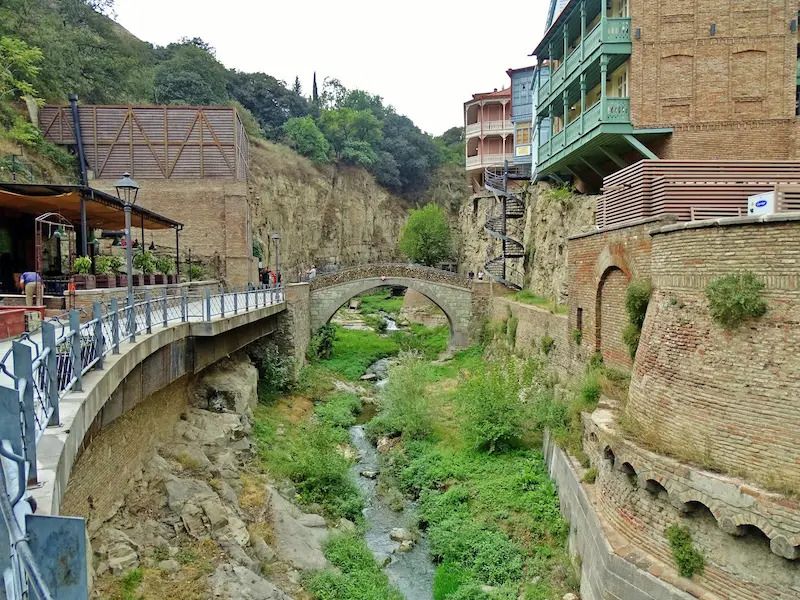
One of the most surreal experiences in Tbilisi is finding a 22-meter waterfall in the middle of a historic urban core. Tucked away behind the blue-tiled Orbeliani Baths in the Abanotubani district, the Leghvtakhevi Canyon (Fig Ravine) feels like a natural portal. As you enter the canyon, the temperature drops, and the sounds of the city are replaced by the roar of the water. The walk along the canyon floor is paved and perfectly accessible, leading you past towering slate cliffs that are capped with ancient wooden houses seemingly hanging over the abyss.
This area was historically used for social gathering and washing clothes, as the thermal waters that gave Tbilisi its name (Tbilis means 'warm') flow naturally here. Today, it is a free nature sanctuary. It highlights the city's unique topography, Tbilisi wasn't built around nature; it was built into it. Standing at the foot of the waterfall, you are just minutes away from a bustling highway, yet you feel completely isolated in a prehistoric ravine. For a budget traveler, it’s a high-impact, low-effort destination that provides some of the best cool air and scenery in the city during the hot Georgian summers.
05. Sameba: The Golden Beacon
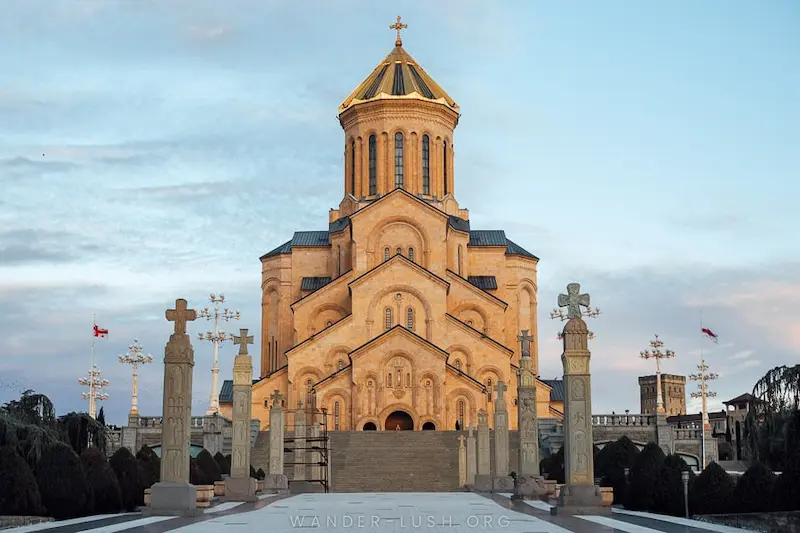
The Holy Trinity Cathedral (Sameba) is more than just a church; it is the symbol of Georgia’s spiritual revival after decades of Soviet secularism. Completed in 2004, it is one of the tallest Orthodox churches in the world, visible from almost every point in the city. While the building is relatively new, its design follows traditional Georgian architectural principles, with soaring arches and intricate stone carvings. The gold-covered dome glows brilliantly against the Tiflis sky, acting as a constant landmark for navigators.
Visiting Sameba is an essential budget experience because the entire complex, including the massive courtyard, the lower chapels, and the surrounding gardens, is free to the public. It provides a fascinating look into the role of religion in modern Georgian life. On weekends, you can often witness traditional baptisms or weddings. The interior is vast and filled with the scent of beeswax candles and incense. Beyond the religious aspect, the cathedral’s location on Elia Hill offers another fantastic free viewpoint, looking back towards the Narikala Fortress and Mtatsminda Park. It is a place of profound silence and monumental beauty that doesn't cost a Lari to appreciate.
Maximize Your Time, Minimize Your Stress
You’ve discovered how to see Tbilisi on a budget now ensure you arrive there like a professional. Don't waste your first hour in the city arguing with airport taxi drivers over non-existent meters. Save your money for the real city experiences.
Secure My Fixed-Price Ride06. Dezerter Bazaar: A Feast of Senses
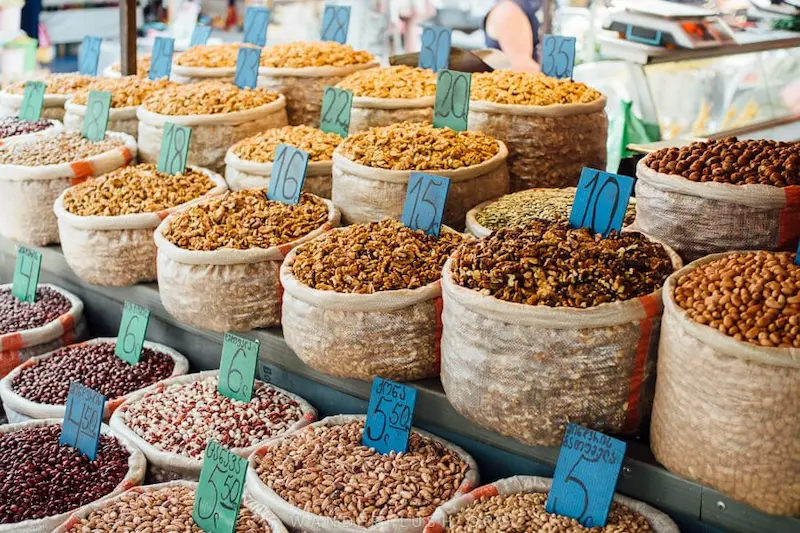
For the traveler who wants to taste the "real" Georgia, there is no better place than the Dezerter Bazaar. This massive, chaotic market near the central railway station is where the city’s heart truly beats. Named after soldiers who deserted the front in the 1920s and sold their gear here, it is now a sprawling labyrinth of local produce, spices, cheeses, and meats. It is a sensory overload in the best possible way, the smell of smoked Sulguni cheese, the vibrant colors of mountain-grown pomegranates, and the rhythmic sound of vendors calling out their daily specials.
This is a budget traveler’s paradise because it offers the cheapest and freshest food in the city. You can assemble a gourmet picnic for a few Laris. Most vendors will offer you free samples, a slice of salty cheese here, a handful of walnuts there, or a piece of Churchkhela (Georgia’s famous walnut-and-grape-juice candy). Wandering through the market is free, but you’ll likely find yourself spending your coins on things you never knew you needed. It is an authentic glimpse into the Georgian agrarian soul that has remained unchanged by the gentrification found in the city’s tourist districts.
07. Fabrika: The Urban Soul
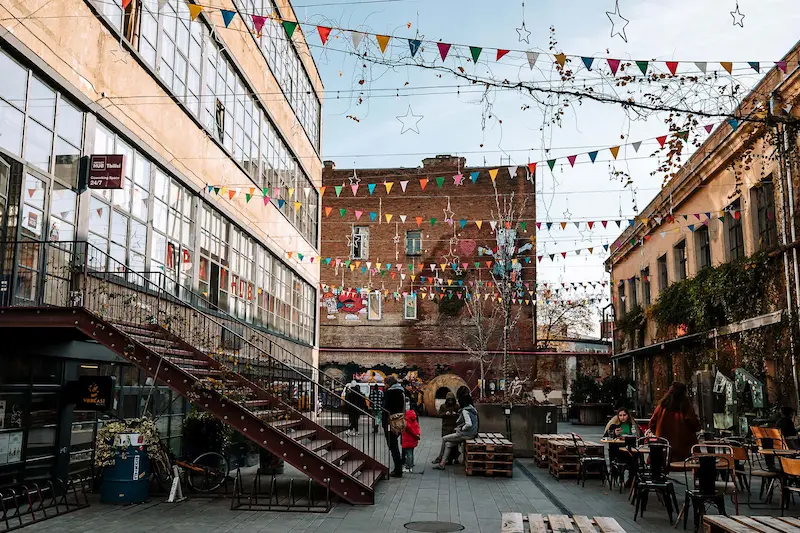
In the Marjanishvili district, a former Soviet sewing factory has been transformed into Fabrika—the epicenter of Tbilisi’s modern, creative energy. This isn't just a hostel; it’s a massive community space that represents the city’s youthful, forward-thinking spirit. For the budget traveler, the industrial courtyard is a free social hub. It is decorated with some of the city's best street art, and its open-air seating area is the perfect place to absorb the local atmosphere.
The beauty of Fabrika is its accessibility. You don’t need to be a guest or buy an expensive cocktail to sit on the steps and soak in the vibe. It is a melting pot of local digital nomads, artists, and international travelers. Whether you're using the free Wi-Fi to plan your next move or simply people-watching, Fabrika offers a glimpse into a Tbilisi that is far removed from ancient cathedrals and fortresses. It is a brutalist industrial space reimagined for a new generation, proving that the city can respect its Soviet past while forging a vibrant, inclusive future.
08. Subterranean Marvels: The Metro
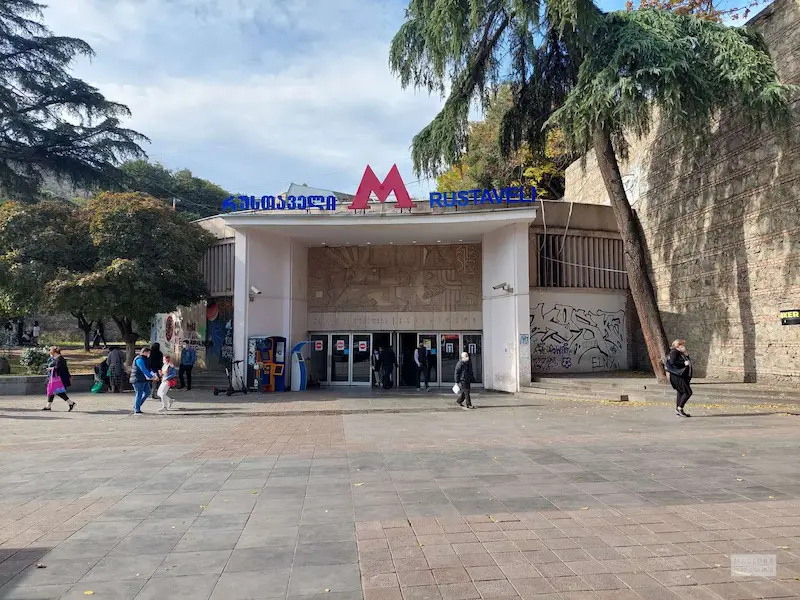
For just 1 GEL ($0.35), the Tbilisi Metro provides a masterclass in Soviet-era engineering and art. Opened in 1966, it was the fourth subway system built in the USSR. For a budget traveler, a single fare can turn into a subterranean museum tour. Stations like Rustaveli are buried over 60 meters deep, requiring a long, mesmerizing escalator ride that feels like a descent into the center of the earth.
Many stations are adorned with mosaics, high ceilings, and brutalist light fixtures. Avlabari Station features a unique green wall (a modern addition), while Technical University offers a raw, industrial aesthetic. Beyond the commute, the metro is a living cultural experience. It is where you see the diverse faces of Tbilisi, from babushkas with shopping bags to students with headphones, all moving through the city with high-speed efficiency. It is the cheapest "museum" in the city and a vital part of the urban heartbeat that most tourists overlook in favor of walking or taxis.
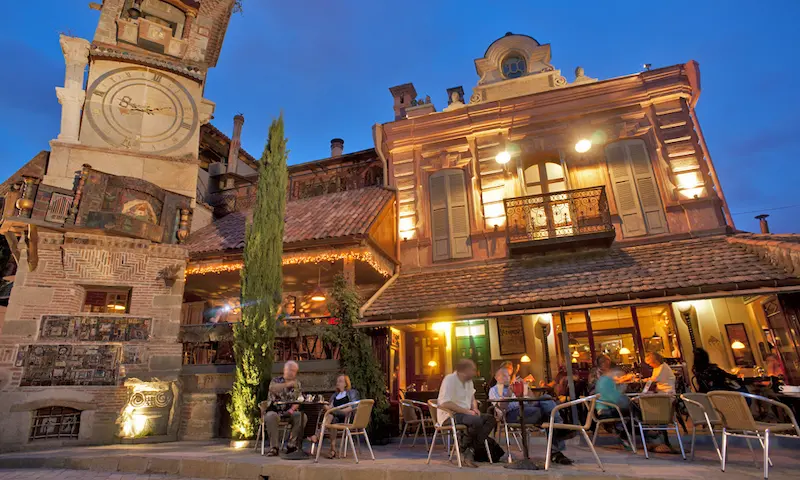
09. The Leaning Clock Tower
Located on Shavteli Street in the Old Town, the Rezo Gabriadze Clock Tower looks like something out of a fairy tale. Built by the legendary puppeteer and artist Rezo Gabriadze, the tower is a whimsical, leaning structure composed of hundreds of tiles and salvaged stones. It represents the artistic whimsy and resilience of Tbilisi.
Every hour on the hour, a small mechanical angel emerges from a door at the top to strike the bell with a hammer. At noon and 7:00 PM, a larger mechanical show called "The Circle of Life" takes place, depicting the life cycle of a couple from meeting to marriage to old age. This enchanting performance is completely free and draws a small, joyful crowd of locals and tourists alike. It is a reminder that in Tbilisi, even the smallest corner can be a stage for high-quality art, and that the city’s most magical moments often occur right on the street corner.
10. Mtatsminda: The Peak of the City
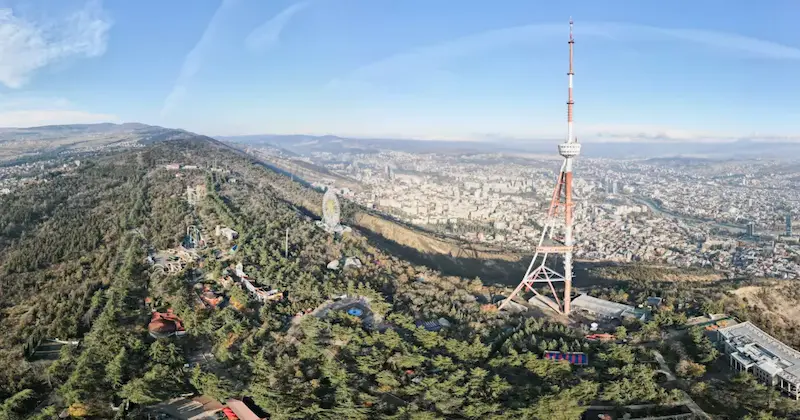
Standing at the highest point in the city, Mtatsminda Park is a hilltop destination that offers the ultimate free reward: a view that extends all the way to the Caucasus Mountains on a clear day. While the funicular is a popular way to get there, budget travelers can hike up through the pine forests of the Mtatsminda slope or take the local #124 bus for a fraction of the cost.
The park itself is free to enter and wander. It’s a surreal blend of a vintage Soviet amusement park, modern landscaping, and wild nature. Walking along the perimeter provides various vantage points over the city, including a direct line of sight to the Public Service Hall (the "mushrooms" building) and the Presidential Palace. It is the perfect place for a sunset picnic. As the lights of the city begin to twinkle below and the TV Tower above starts its colorful light show, you’ll realize that your most expensive experience in Tbilisi was, in fact, absolutely free.
Tbilisi Awaits Your Discovery
Tbilisi is not just a destination; it's an experience that rewards the curious and the smart. By choosing elite logistics for your arrival, you preserve your energy and budget for the true heart of Georgia. We hope this guide helps you find the magic in every corner of our ancient yet ever-evolving home.
