

Accessibility Options for Airport Meet and Greet: Minimizing Inconvenience for Every Passenger
Transportation by air can be quite a stressful period, especially for disabled people or people with some sort of disability. Getting through terminals crowded with people, waiting in security lines, and not being familiar with the terminal layout is just stress-inducing. It is here where private airport meet and greet services come in to help because they aim to make the process as easy and stress-free as possible.
In this blog, you will learn that meet and greet services are created in an accessible manner to accommodate all travelers. These services include wheelchairs and elevators that will help move around the airports and personalized assistance that will help other travelers with mobility or sensory impairment to move around with ease. We will also provide some helpful tips when it comes to booking meet-and-greet services and some tips on having a stress-free flight. Whether one is flying or assisting someone to fly this guide is aimed at making air travel easy for everyone.
What is Airport Meet and Greet Service?
Passengers with disabilities will always find it difficult to navigate through the airports early, as this always causes a lot of complications. But today terminals are created to meet the needs of different people and try to make the stay of passengers as comfortable as possible. One such service that is gradually being adopted is the Airport Meet and Greet Service, which entails the provision of specific assistance to the person with a disability in order to ease his or her encounter with the airport. You will learn about accessibility options for airport meet and greet the features to consider, and how to book such services in order to enjoy a comfortable trip.
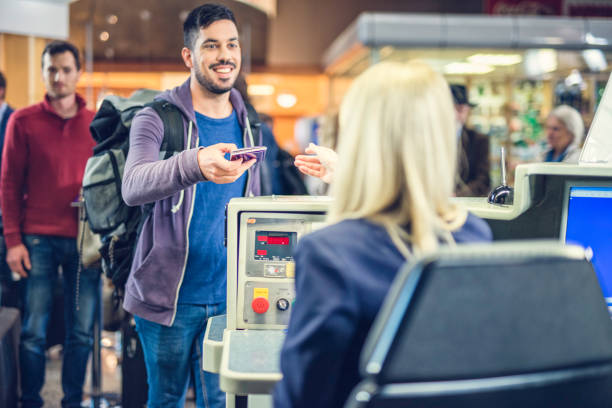
How Does Airport Meet and Greet Service Work?
These services are priceless to the disabled as they optimize the journey, making it as stress-free as possible. This usually entails assistance with processing through checkpoints, finding their way through the airport, and then boarding the flight.
Identifying whether the difference is more significant between business and leisure-disabled airport meet-and-greet travel can make a big difference.
Accessibility Features: Wheelchairs, Elevators, and More
Airports globally are slowly focusing on accessibility for disabled or mobility-impaired passengers to be able to have an easy time. One of the foundations of these efforts is the features and arrangements that are in place to address the needs of others. Here’s a closer look at some of the most common accessibility options for airport meet and greet that you can expect:
1. Wheelchair Assistance
Among all the accessibility services, the most popular is wheelchair assistance. Most of the airports have ambulances, which provide free wheelchairs and professional staff who will take care of the passengers from curbside check-in to the boarding ramp. These services can be pre-ordered by the passengers or ordered when needed due to the large size of terminals that seem to be quite far apart.
2. Elevators and Escalators
Almost all contemporary airports have facilities such as elevators and escalators that enable movement from one floor to the other. The spaces inside may also be large and contain features such as braille buttons to help blind and mobility-impaired persons. Signs are superimposed or written clearly to enable users to navigate to such features within the airport and move around unchallenged.
3. Accessible Restrooms
The toilet issue is very important, and almost every airport is equipped with special toilets for disabled persons. These restrooms are equipped with wider doors; grab bars extra emergency calls; and buttons for convenient usage. Some airports have also installed adult changing facilities for people with other needs that require changing.
4. Tactile Guidance Paths and Braille Signs
Some of the airports have incorporated special flooring used for lighting systems for the blind commonly referred to as the tactile guidance paths. These raised strips go to popular zones including check-in points, security points, and gates among others. Besides, braille plates and auditory signals give important information to improve orientation and mobility.
5. Priority Lanes Through Security Checkpoint
Disability guests can enjoy swift passage through security points through the proposed priority checks lanes which will ease the congestion. Members of airport staff know how to deal with a piece of medical equipment or assist in moving a disabled person during the security check.
6. Hearing Assistance Systems
Hearing-impaired passengers are generic services such as hearing loops and a visual station is normally available for use at different airports. These systems are convenient to use when informing passengers about changes in gates, boarding calls, and other important information that are normally announced aurally.
7. Assistance Animals
Airports necessarily receive assistance from animals and have special spots for these dogs and cats to take a comfort break. Employees are instructed to approach the client and the animal with courtesy in such circumstances so that no traveler with a service animal feels discomfort while in the airport.
Personalized Assistance for Travelers with Disabilities
In terms of meet and greet for disabled passengers, it is apparent that individual attention is paramount to making the airport enjoyable. For instance, if one needs help to get on the airplane or needs a quiet area because of their special need, the team will help the individual with such service. Moreover, these services are individual ones, so the staff will be as prepared to give help with some other conditions that can be necessary in your circumstances while working with the company.
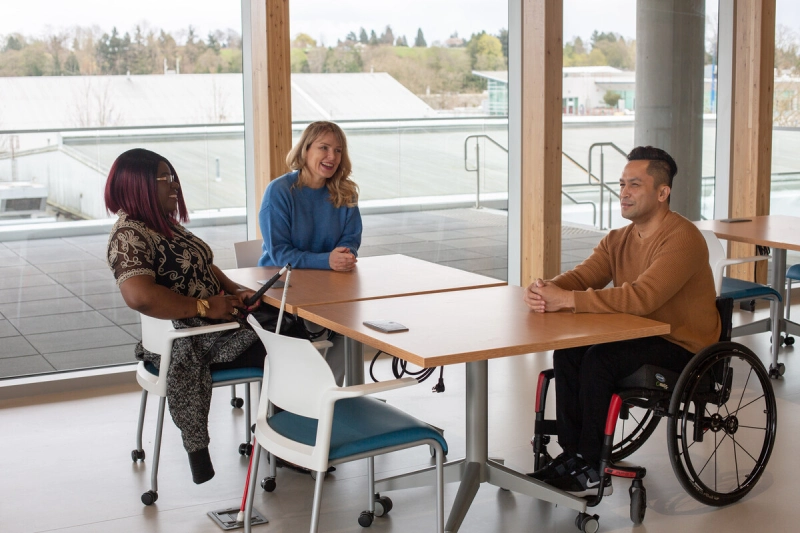
Some of these are pre-boarding and priority seating which enables the disabled more time to prepare and appropriate seats. Help with transfers and connections guarantees that there will be no problems with changing airports and terminals. Passengers with visual or hearing impairment can rely on the assistance of a sighted person, communication in sign language or with the help of special means, obligatory for informing at the airport, such as messages on the information board.
These services also include coordination services with the airlines to manage required services aboard the aircraft, for example, storage of wheelchairs or other medical equipment and the ground staff for the transfer services to the next destination.
In summary, personalized assistance for a person with disability extends beyond the physical and practical and touches on the psychosocial well-being of the disabled person hence air travel for persons with disability is feasible and stress-free.
Booking Accessible Meet and Greet Services: What to Know
While making the booking, it is prudent to get in touch with the airline or the service provider to indicate that you will need some form of accommodation, like being a wheelchair user, or if you require any kind of assistance in the process of boarding, etc.
All existing airports nowadays provide the opportunity to order meet and greet services provided to disabled people on the official website or by calling the hotline. Others also engage connectors that offer these services throughout the airports.
You should be told in a precise manner on the specific spot to look for your greeter, whether it is at the terminal or any other part.
Tips for Stress-Free Airport Navigation
However, one should consider that even with the availability of the above accessibility options, getting around a busy airport can be very challenging. However, with a few helpful tips, you can make your travel experience much smoother:
Arrive Early
Airports, as you know, can be crowded and noisy, and it is wise to arrive early enough for check-in and going through security checkpoints, among other things. Coming early also enables a client to sort out any unforeseeable challenges within their tight schedule.
Prepare Documentation
Regarding any needed aids, like wheelchairs in the airport, you have to present the documents. This can include a doctor’s note or any other paperwork that the airports/airlines may need to provide services to a person with your disability.
Stay Informed
Always monitor your flight number for such changes and always be conscious of the gate number and the time left before boarding starts. Most airports have now come up with features on their websites where they offer real-time information, which eases you if you have some stress.
Take Advantage of Airport Lounges
Some airports have special assistance lounges for disabled passengers where the clients can calm down and rest without being engulfed by other travelers. Such lounges may provide extra facilities like exclusive passenger washrooms, reclining chairs, and touch-free rest zones.
Use Assistance from the Start
If you have ordered accessibility options for airport meet and greet services, they should take full advantage of help from the time of arrival. This way your assigned greeter will be able to effectively help throughout the different parts of the airport, starting from check-in or security.
That is why it is rather possible to have a non-stressful way towards airports by planning for the right services in advance.
Final thoughts about Accessibility Options for Airport Meet and Greet
Accessibility options for airport meet and greet services assist disabled passengers in making the airport experience for them as smooth as possible. These online services range from wheelchair rental services to one-on-one friendly services that anybody with a disability requires when travelling. Disabled passengers will be able to appreciate that they can get access to those services and benefit from features that exist in airports with less hassle.
Making sure to book such services ahead of time and do all that is possible to prepare will simply help keep travel as comfortable as it can get.
