

A Brief History of Sumo
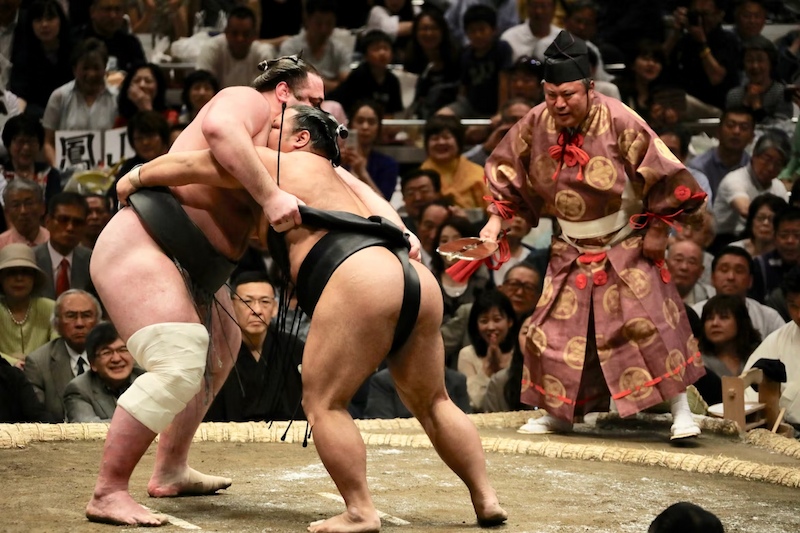
Sumo is not only Japan’s national sport but also one of its oldest traditions, with roots dating back over 1,500 years. In its earliest form, it was performed as a Shinto ritual to entertain the gods. Many of the gestures still seen today, such as throwing salt to purify the ring, clapping hands, or symbolic stomping, come directly from these religious origins.
The Sumo Tournament Calendar
Tokyo hosts three of the six annual grand tournaments (honbasho):
- January Tournament (Hatsu Basho)
- May Tournament (Natsu Basho)
- September Tournament (Aki Basho)
Each tournament lasts 15 days. Early in the morning, lower-ranked wrestlers compete, while the top division stars (rikishi) appear in the afternoon. The energy inside the arena grows stronger as the day progresses.
Life of a Sumo Wrestler
Sumo wrestlers live and train in special stables called heya. Their daily routines are strict, with training starting early in the morning. Wrestlers wear the traditional mawashi (belt) and keep their hair tied in a topknot, even when walking the streets of Tokyo. Spotting a rikishi outside the ring is part of the city’s charm.
Chanko Nabe: The Wrestlers’ Diet
The famous dish of sumo wrestlers is chanko nabe, a hot pot filled with vegetables, meat, tofu, and plenty of protein. It is the secret behind their massive strength and bulk. In Tokyo’s Ryogoku district, many restaurants serve chanko nabe, allowing visitors to taste the same meal as the wrestlers.
Ryogoku Kokugikan: The Sumo Arena
Known as the “home of sumo,” Ryogoku Kokugikan can seat over 11,000 people.
- Before matches, small exhibitions introduce the history of sumo.
- Inside the lobby, you can find traditional snacks and souvenirs.
- Ticket prices vary: cheaper seats are at the top, while tatami-style box seats near the ring are the most expensive and atmospheric.
Tip: Book early, tickets for big tournament days sell out quickly.
Tips for Visitors
- Arrive early to see the progression from junior matches to the top division.
- Photography is allowed, but silence is expected during entrances and rituals.
- If you miss out on advance tickets, same-day seats are sometimes available at the box office, but lines form early in the morning.
Alternative: Watch Morning Practice
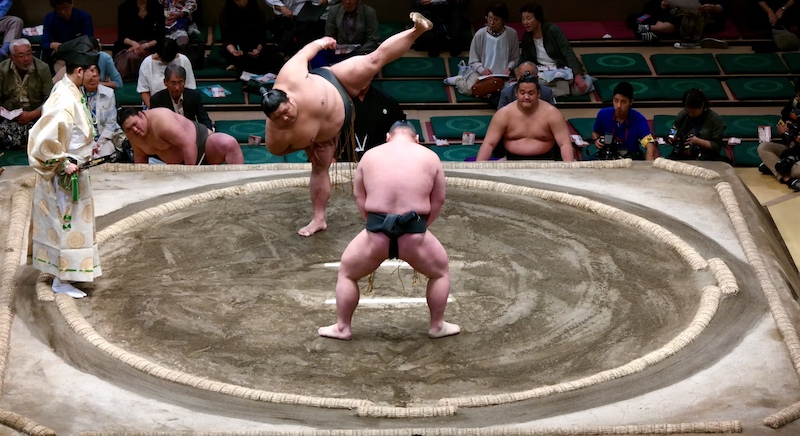
If you can’t attend a tournament, you can still experience sumo by visiting a stable (heya). Some stables in Tokyo allow visitors to watch morning practice sessions. Seeing wrestlers up close in such an intense training environment is an unforgettable cultural experience.
Why You Should Watch Sumo in Tokyo
Watching sumo in Tokyo is more than a sports event; it’s a cultural journey. Between the booming chants of the crowd and the sacred Shinto rituals, sumo reveals Japan’s deep traditions in the middle of its modern capital. For visitors, it’s one of the most authentic experiences you can have in Tokyo.
Whether you attend a grand tournament at Ryogoku Kokugikan or visit a training stable, sumo will leave you with a powerful impression of Japan’s heritage.
