
Every day, millions of travelers hustle through security checkpoints, routinely removing shoes, unholstering laptops, and double-checking liquid limits. It is one of the dullest rituals in modern travel — a few minutes of shuffling in socks before you reclaim your belongings and head for the gate. But for the customs officers and security personnel watching the scanning monitor on the other side of the belt, that same routine occasionally reveals something that defies all logic.
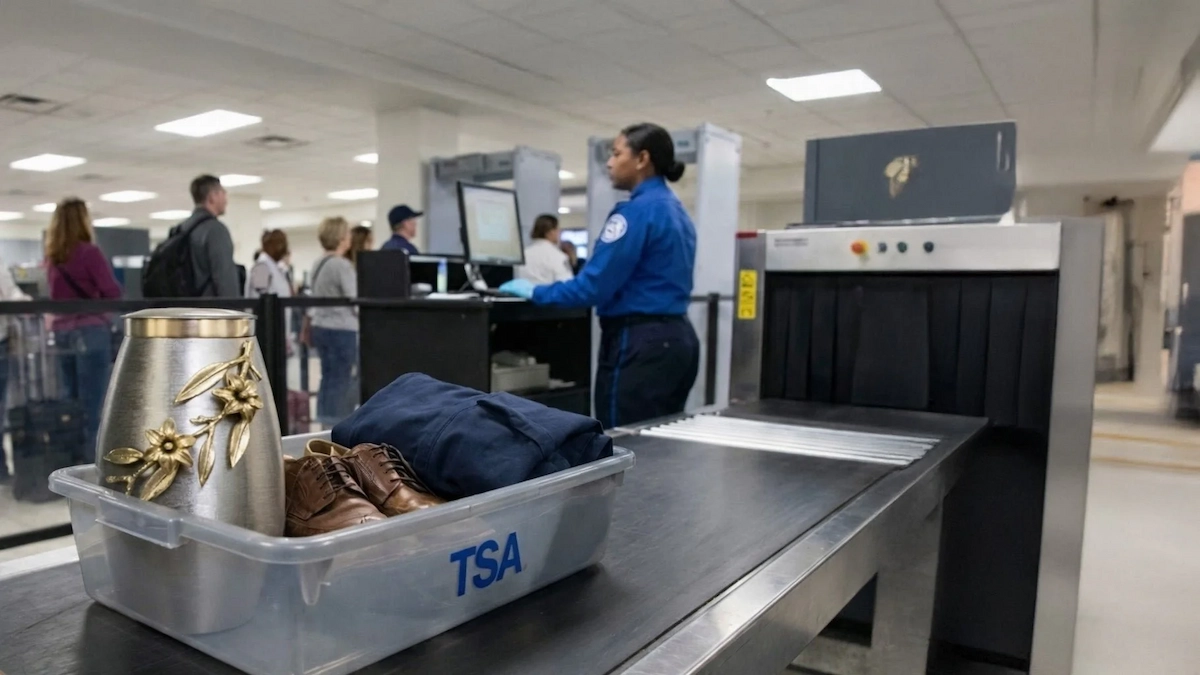
Border agencies publish a steady trickle of these cases, and the pattern is remarkably consistent: an enormous amount of creative effort, invested in a plan that unravels within seconds of reaching the checkpoint. From live wildlife stuffed into intimate apparel to priceless artifacts hidden in freight crates, here are 10 of the most jaw-dropping and bizarre airport smuggling attempts ever foiled by airport security — and, just as interestingly, the small detail that gave each one away.
1. The Live Tiger Cub Hidden in Plush Toys (Bangkok)
When security officers at Bangkok's Suvarnabhumi Airport scanned a traveler's oversized checked bag bound for Iran, an unusual silhouette appeared on the X-ray screen. The bag was filled with soft, uniform shapes — dozens of stuffed tiger plushies, exactly the kind of bulk souvenir haul that passes through a Southeast Asian hub every hour of every day. Except that one of those shapes was different. Denser, structured, and unmistakably alive. Nestled among the toys was a real heartbeat.
Upon opening the bag, wildlife protection officers discovered a sedated, two-month-old live Bengal tiger cub. The smuggler had seemingly hoped the live cub would blend in with its toy counterparts, drugged into stillness and surrounded by imitations of itself. It is a plan that sounds almost plausible until you consider what an X-ray actually shows: a plush toy is a homogeneous mass of polyester filling, while a living cub has a skull, a spine, ribs and organs of wildly varying density. On screen, the difference is not subtle. Fortunately, the cub was rescued in time and safely transferred to a local wildlife sanctuary.
2. "Snakes on a Plane" in Real Life (Stockholm)
Hollywood made the movie, but real life proved even stranger at Stockholm's Arlanda Airport. In this case no scanner was involved at all. Customs officers pulled aside a female passenger for the oldest reason in the profession: she simply did not look comfortable. She was constantly scratching and adjusting her chest area, in a way that had nothing to do with the ordinary fidgeting of a tired traveler at the end of a long flight.
A routine physical search revealed 75 live baby snakes concealed inside her bra. The traveler had reportedly planned to bring the reptiles into the country in order to start a breeding farm, apparently calculating that small, quiet animals held against the body would never register as cargo. What she had not accounted for is that behavioral detection is a discipline in its own right, and that officers at major international airports spend entire careers learning to read exactly the kind of involuntary discomfort that 75 moving reptiles produce.
3. The Thanksgiving Special: Gun in a Raw Chicken (Fort Lauderdale)
Transportation Security Administration (TSA) agents at Fort Lauderdale-Hollywood International Airport see plenty of unusual carry-on snacks, particularly around the holidays, when passengers travel with everything from whole pies to frozen seafood. But one holiday season brought a truly bizarre discovery on the X-ray belt.
An X-ray scan revealed a full-sized handgun packed tightly inside the cavity of a raw, packaged chicken. The passenger seemingly assumed the dense meat would block the scanner's view, forgetting that modern multi-energy X-ray technology easily differentiates between organic tissue and high-density metals. In practice the concealment achieved the opposite of what was intended. Surrounding a firearm with low-density organic material does not obscure it; it isolates it, framing the metal against a soft, uniform background with almost diagrammatic clarity.
How Airport Scanners Detect Hidden Objects
| Material Class | Typical Contents | Shown On Screen As |
|---|---|---|
| Organic | Food, flesh, fabric, paper, most plastics — and every living thing | Orange |
| Mixed / inorganic | Glass, ceramics, bone, light alloys such as aluminium | Green |
| High-density metals | Steel, firearms, ammunition, gold, dense electronics | Blue / Black |
4. The 51-Fish Skirt (Melbourne)
Arriving at Melbourne Airport in Australia, a passenger raised immediate suspicion — not because of her behavior, and not because of anything on a monitor, but because of the distinct flipping and sloshing noises originating from underneath her long skirt. Officers did not need technology at all. They needed ears.
A border security search revealed she had constructed a custom apron equipped with 15 water-filled plastic pouches containing 51 live tropical fish, worn against the body beneath the fabric, aiming to bypass Australia's strict biosecurity quarantine laws. Those laws are among the toughest in the world precisely because the country's isolated ecosystems are so vulnerable to introduced species and waterborne disease. The case also illustrates a recurring blind spot in smuggling logic: enormous ingenuity goes into defeating the imaging equipment, while the most basic physical realities — weight, movement, temperature, smell and, here, sound — are left completely unaddressed.
5. An Ancient Egyptian Sarcophagus (Miami)
In one of the more historical smuggling attempts, customs officers at Miami International Airport flagged a massive wooden crate arriving as freight. The shipping documents claimed it contained "reproduction furniture" — a description vague enough to be unremarkable, and vague enough to be worth a second look.
Upon inspection, they discovered a genuine, 3,000-year-old ancient Egyptian sarcophagus lid. The invaluable artifact had been illegally looted and was being trafficked across multiple countries before being seized. Antiquities cases like this one rarely turn on a dramatic scanner image; they turn on paperwork. Declared value, stated provenance, weight and origin have to agree with one another, and looted objects almost always travel with documents that describe something cheaper, newer and more boring than what is actually inside the crate.

6. "I Have Monkeys in My Pants" (Los Angeles)
In one of the most famous airport customs incidents on record, a traveler arriving at Los Angeles International Airport (LAX) from Thailand immediately raised alarms when four rare birds escaped from his luggage and began flying around the terminal ceiling. Whatever the original plan had been, it ended the moment the baggage was opened and the arrivals hall acquired an aviary.
When customs officers questioned him about whether he had anything else undeclared, he uttered the now-infamous response: "I have monkeys in my pants." Sure enough, two endangered pygmy slow lorises were discovered tucked inside his underwear. The line has circulated online for years as a punchline, but the underlying case was prosecuted seriously. Pygmy slow lorises are a protected species, and carrying them in clothing for the duration of a trans-Pacific flight is precisely the kind of treatment that kills most trafficked animals long before they ever reach a buyer.
7. Smuggled Gold Bars Inside a Laptop Battery (Dubai)
At Dubai International Airport, security flagged a laptop as unusual for a reason that had nothing to do with its contents on screen: it was simply far too heavy for its size. When the device went through the scanner, the X-ray image of the internal components also seemed slightly distorted, with the battery compartment reading far denser than the surrounding electronics.
Technicians carefully disassembled the device and found that the entire rechargeable battery pack had been hollowed out and filled with custom-molded gold bars. The attempt aimed to smuggle the precious metal in order to avoid import taxes and declaration duties. Gold is one of the densest materials that routinely passes through a checkpoint, which makes it one of the worst possible things to hide inside consumer electronics — on a multi-energy scan it renders almost solid black against the mottled greens and blues of ordinary circuitry.
8. Songbirds Hidden Inside a Cheese Wheel (Rome)
At Rome's Fiumicino Airport, security officers flagged a large organic density inside a traveler's carry-on luggage. A whole cheese wheel is not in itself suspicious in Italy, but its interior read as inconsistent rather than solid, which was enough to send the bag for a hand search.
When agents sliced open the large traditional cheese wheel found in the bag, they discovered dozens of dead protected songbirds stuffed inside the hollowed-out center, reportedly destined to be sold illegally to gourmet restaurants. The trade in protected songbirds is one of the less visible forms of wildlife trafficking, driven by regional delicacies that remain in demand long after the species involved have been placed under legal protection. It is also, from the perspective of the scanner, one of the easier concealments to spot: hollow cavities inside a dense food product produce exactly the kind of internal irregularity operators are trained to question.
9. An Albino Alligator in a Chocolate Box (Munich)
Customs officers at Munich Airport noticed unusual movement on the scanner while inspecting luggage belonging to a passenger traveling from Lebanon. Movement is a decisive signal in baggage screening. Luggage contents are inert by definition, so anything that shifts between frames narrows the possibilities down very quickly.
Opening a decorative holiday chocolate box, officers found a live three-foot albino alligator wrapped tightly in plastic wrap and squeezed between rows of pralines. The rare reptile was immediately confiscated and handed over to animal rescue handlers. Albino specimens are especially prized in the exotic pet trade, which is exactly why they are trafficked, and exactly why enforcement agencies treat these seizures as commercial cases rather than eccentric one-offs.
10. Live Pigeons Tucked in Pant Legs (Melbourne)
Arriving at Melbourne Airport from Dubai, a male traveler caught the attention of border force officials due to his strangely stiff gait and bulky lower legs. Once again, no imaging technology was required. Officers noticed how he walked.
A physical search revealed two live protected pigeons wrapped in padded envelopes and strapped inside custom-made pockets sewn directly into his trousers, along with several pigeon eggs hidden in body-strapped tubes. Racing and show pigeons of certain bloodlines command serious money, and Australia's quarantine regime makes legal import effectively impossible for most breeds — a combination that produces a steady stream of attempts like this one. The tailoring was genuinely elaborate. The walk gave it away in under a second.
Why These Strange Smuggling Attempts Fail
While these stories range from absurd to entertaining, it is worth being clear about what they actually are. Most of them involve illegal wildlife trafficking, severe animal cruelty, cultural heritage crime or straightforward tax evasion. A sedated tiger cub in a suitcase, 75 snakes pressed against a body for hours, an alligator wrapped in plastic film and a looted 3,000-year-old artifact are not quirky anecdotes from the perspective of the animals or the countries they were taken from.
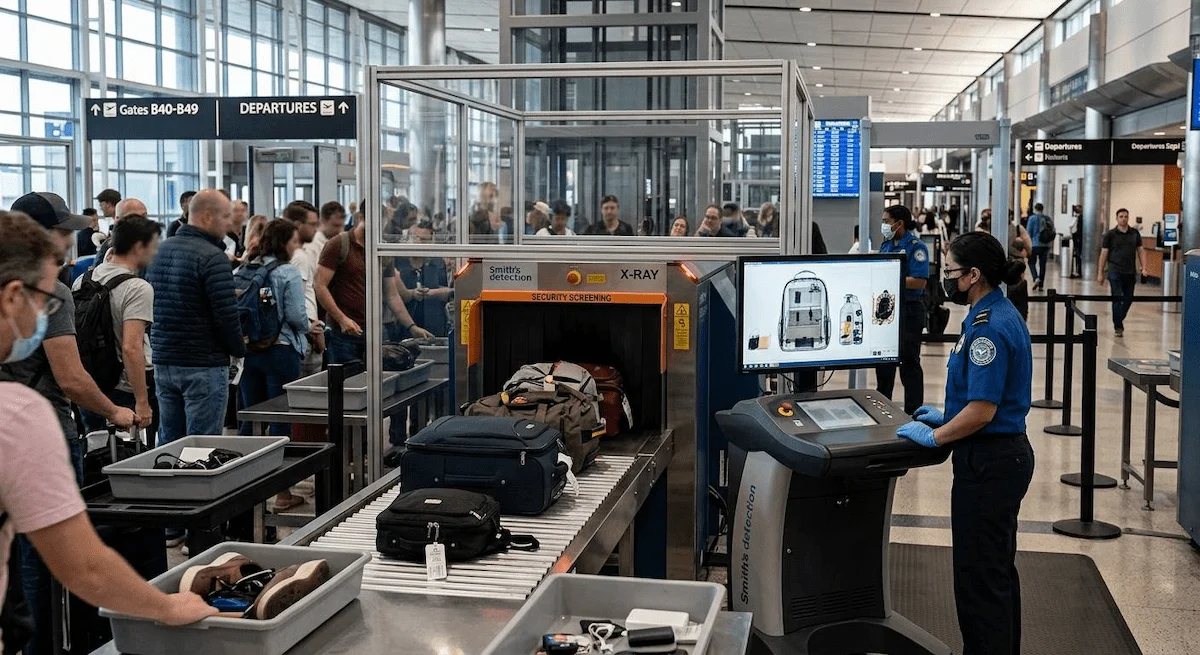
They also serve as a stark reminder of how advanced modern airport security has become. Between high-definition 3D CT scanners, biometric profiling, millimeter-wave body scanners, document and manifest cross-checks, and specialized K9 units whose sense of smell no packaging fully defeats, attempting to bypass airport customs remains a losing proposition. The layers are deliberately different in kind — imaging, chemistry, paperwork, scent and human observation — so that a trick which fools one is usually caught by the next. And notice how many of these cases were never a technology story at all. The decisive clue was a sound, a scratch, an escaped bird, a suspicious weight, or the way somebody walked.