
For many passengers, airport announcements are a normal part of traveling. People hear messages about boarding, delays, gate changes, and security information many times during their airport experience. However, some modern airports are changing this system. Instead of making many loud announcements, they are creating quieter terminals where passengers receive information through screens, mobile applications, and personal notifications.
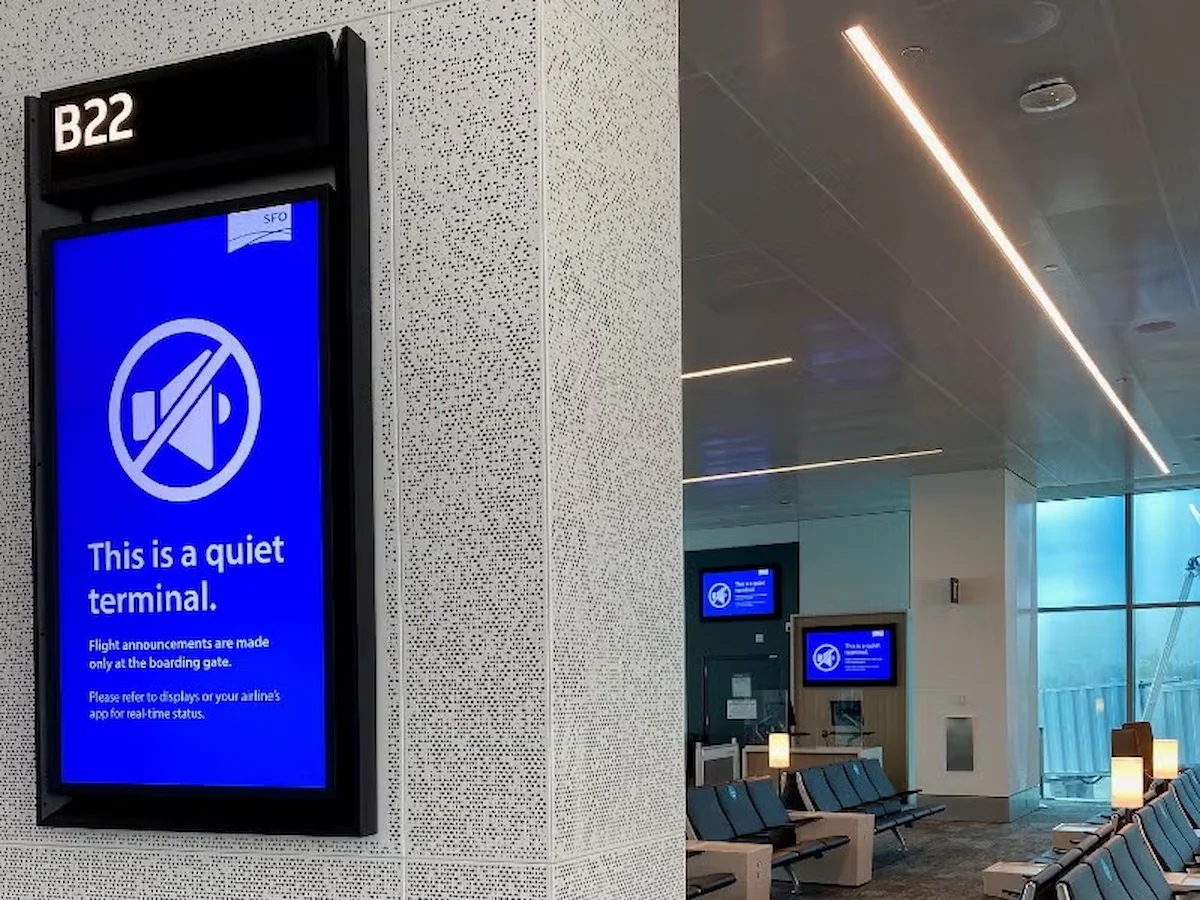
This new approach is called the “Silent Airport” concept. The main idea is to reduce unnecessary noise and create a calmer environment for travelers. However, some passengers ask an interesting question: Is the goal only to reduce noise or does a quieter airport also change where people look and how they spend their time inside the terminal?
What Is a Silent Airport?
A silent airport does not mean a completely quiet place. Important messages, emergency information, and safety announcements can still be shared when necessary. The difference is that airports reduce repeated general announcements that every passenger does not need to hear.
Traditional Airport
Passengers often hear many general announcements throughout the day:
- Gate changes.
- Boarding announcements.
- Flight reminders.
- General airport information.
Silent Airport
Important information moves to digital communication systems:
- Flight information screens.
- Airline mobile applications.
- Personal notifications.
- Airport websites.
The purpose of a silent airport is to give passengers the right information at the right time instead of creating constant background noise.
Why Are Airports Reducing Announcements?
There are several reasons why airports are moving toward quieter communication systems.
Reducing Noise Pollution
Airports are naturally busy places. Thousands of passengers walk through terminals every day, and many different sounds exist at the same time. Too many announcements can create a stressful atmosphere.
Feel more relaxed.
Focus better on important information.
Enjoy waiting time more comfortably.
Improving Passenger Experience
Modern airports are not only places where people wait for flights. They are designed as complete travel environments. Comfortable seating areas, restaurants, shops, and lounges are part of the passenger experience.
Using New Technology
Instant Notifications
Passengers can receive gate changes and flight updates directly on their devices.
Easy Flight Access
Travelers can check flight information anytime without waiting for announcements.
Personal Communication
Airlines can send important updates directly to the right passengers.
This makes airport communication more personal, efficient, and suitable for modern travel.
Does Silence Change Passenger Behavior?
One interesting effect of silent airports is that they can change how passengers interact with the terminal. When passengers hear constant announcements, their attention is often focused on listening. They are waiting for their name, flight number, or gate information.
A More Visual Airport Experience
In a quieter airport, passengers may spend more time observing their surroundings.
Digital Screens
Passengers check flight details and gate information visually.
Terminal Movement
Travelers may walk around and explore different areas.
Shops and Restaurants
Passengers may notice more commercial areas around them.
Waiting Areas
Passengers can relax in a calmer environment before boarding.
The airport environment becomes more visual. Passengers depend more on what they see instead of what they hear.
The Hidden Connection Between Silence and Airport Shopping
Some people believe silent airports are designed to make passengers spend more time in commercial areas. This idea exists because airports earn money from shops, restaurants, and services.
Commercial Effects
A quieter environment may create some opportunities for airport businesses.
The Real Purpose
Silence is not only about shopping. Airports must also focus on passenger needs and daily operations.
The main goal is to create a better balance between passenger comfort, technology, and business.
What Are the Problems of Silent Airports?
Although silent airports have many benefits, there are also some challenges. Some passengers may find it difficult because:
Because of this, airports must find the right balance. A completely silent airport may not work for everyone.
How Do Passengers Receive Information Without Announcements?
Modern airports use several communication methods together.
Digital Screens
Large screens show:
Mobile Applications
Airline apps can send direct notifications about flight changes.
Airport Staff
Information desks and employees continue helping passengers who need assistance.
The Future of Silent Airports
Airports are becoming more digital every year. Future terminals will likely use smarter systems to communicate with passengers.
The future airport may not be completely silent, but it may become smarter. Instead of giving the same information to everyone, airports will provide the right information to the right passenger at the right moment.