
Ready to Ditch the Crowds? Decoding Turkey’s Secret Season Strategy
From the sun-drenched beaches of the Mediterranean to the snowy peaks of Eastern Anatolia, Turkey presents a vast mosaic of climates. This comprehensive guide helps you navigate the regional weather patterns to plan a comfortable, memorable, and insightful journey.
Exploring the Climatic Regions of Türkiye: A Geographical Insight
Forget the "one-size-fits-all" travel guides. Turkey is a land of extremes. From desert heat to alpine snow, mastering its seven unique climates is the key to an unforgettable, crowd-free journey. Let's look past the postcards and break down exactly what each region has in store for you.
The coastal areas, particularly the Aegean and Mediterranean shores, share a classic Mediterranean climate (`Csa`). This means travelers can expect long, hot, and dry summers, ideal for beachgoers, followed by mild and notably rainy winters. In contrast, the regions bordering the Black Sea experience a different coastal climate, marked by precipitation year-round, thanks to the Caucasus Mountains trapping moisture. This results in lush, green landscapes unseen anywhere else in the country.

Moving inland, the climate transitions sharply. Central Anatolia, home to Ankara and the whimsical landscapes of Cappadocia, falls under the Continental climate umbrella. Here, summers are hot and dry, but the high elevation ensures winters are extremely cold and often snowy, with temperatures dipping well below freezing. Further east, the extremes intensify. Eastern Anatolia is characterized by the harshest and longest winters in the country, appealing only to those seeking intense winter sports or dramatic, snowy photography opportunities. Therefore, the simple question, "What is the weather like in Turkey?" demands a detailed, regional answer.
📅 Optimizing Your Visit: Why the Shoulder Seasons Reign Supreme
For the majority of travelers focused on balanced sightseeing, moderate comfort, and enjoying both cultural and natural sites, the shoulder seasons, Spring and Autumn, are unequivocally the best choice. This period skillfully bypasses the twin difficulties of summer: the overwhelming crowds and the oppressive, triple-digit heat (in Fahrenheit) which can make walking through ancient ruins unbearable.
🌸 Spring: Freshness and Festivals
April and May bring moderate temperatures, revitalizing the landscape. This is the prime time for sightseeing. The coastal waters are starting to warm, and cities are celebrating seasonal life, such as Istanbul’s famous annual Tulip Festival.
🍂 Autumn: The Tranquil 'Summer Encore'
From September through October, the intense summer heat dissipates, yet the sea retains its warmth from months of sun. This "Summer Encore" is perfect for those who want a beach holiday without the peak-season prices. It also provides the clearest, calmest conditions for hot air ballooning in Cappadocia.
Personal Insight: I always advise booking coast trips for late September. The sunsets are clearer, the air is gentle, and you feel like you have the entire Aegean to yourself, a truly tranquil and unforgettable travel experience far removed from the July hustle. These months consistently provide the best balance of temperature and tourist density across the entire country.
🌡️ Deep Dive: Pros and Cons of Peak and Off-Peak Travel
The Peak Season Dilemma: Summer (June - August)
While summer guarantees sun and reliably warm seas, it comes with significant caveats. The heat, especially in the Southeastern and Mediterranean regions, can reach scorching levels, often hitting 35°C to 40°C. This heat limits daytime activity. This is the peak time for tourism, meaning historical sites and beaches are crowded, and accommodation prices are at their highest premium.
The Quiet Beauty: Winter (November - March)
Winter travel to Turkey offers substantial rewards for a specific kind of traveler. Flights and hotels are significantly cheaper, and major cultural attractions in Istanbul can be explored with minimal queues. Inland, the vast Anatolian plains transform into stunning, snow-covered landscapes. While many outdoor excursions may be suspended, major cities remain vibrant, offering cozy cafes and a deeper dive into Turkish urban culture.
"Choosing the right season in Turkey is less about avoiding bad weather and more about aligning your trip's pace with the regional rhythm, whether that’s the slow, sun-drenched coastal days or the dramatic, brisk clarity of a continental winter."

📊 Detailed Regional Weather Data: Monthly Averages
Color Key for Tables: To simplify planning, table rows are color-coded based on optimal travel conditions. Yellow (Warning) rows denote the ideal "Shoulder Seasons" (April, May, Sept, Oct), offering the best balance of temperature and low rainfall. Red (Danger) rows highlight months with extreme conditions, such as scorching summer heat or deep winter cold/heavy rain, which may impede sightseeing or outdoor activities.
Review the average temperatures and rainfall below to strategically plan the timing of your visit to Turkey's seven distinct regions.
Marmara Region (Istanbul, Bursa, Edirne)
| Month | Avg High (°C) | Avg Low (°C) | Rainfall (mm) |
|---|---|---|---|
| January | 8 | 3 | 100 |
| February | 9 | 3 | 70 |
| March | 12 | 5 | 60 |
| April | 17 | 9 | 45 |
| May | 22 | 13 | 40 |
| June | 27 | 18 | 35 |
| July | 29 | 20 | 25 |
| August | 30 | 21 | 30 |
| September | 26 | 17 | 50 |
| October | 20 | 12 | 75 |
| November | 14 | 8 | 90 |
| December | 9 | 4 | 110 |
Aegean Region (İzmir, Bodrum, Kuşadası)
| Month | Avg High (°C) | Avg Low (°C) | Rainfall (mm) |
|---|---|---|---|
| January | 14 | 7 | 110 |
| February | 15 | 7 | 85 |
| March | 18 | 9 | 70 |
| April | 22 | 12 | 35 |
| May | 27 | 16 | 25 |
| June | 31 | 20 | 10 |
| July | 34 | 23 | 2 |
| August | 34 | 23 | 3 |
| September | 30 | 20 | 15 |
| October | 25 | 15 | 45 |
| November | 20 | 11 | 75 |
| December | 15 | 8 | 115 |
Mediterranean Region (Antalya, Mersin)
| Month | Avg High (°C) | Avg Low (°C) | Rainfall (mm) |
|---|---|---|---|
| January | 15 | 6 | 210 |
| February | 16 | 7 | 120 |
| March | 18 | 9 | 70 |
| April | 22 | 12 | 45 |
| May | 26 | 16 | 30 |
| June | 31 | 20 | 10 |
| July | 35 | 24 | 3 |
| August | 35 | 24 | 2 |
| September | 32 | 20 | 15 |
| October | 28 | 16 | 90 |
| November | 22 | 11 | 140 |
| December | 17 | 8 | 220 |
Central Anatolia (Ankara, Cappadocia, Konya)
| Month | Avg High (°C) | Avg Low (°C) | Rainfall (mm) |
|---|---|---|---|
| January | 4 | -4 | 40 |
| February | 6 | -3 | 35 |
| March | 11 | 0 | 35 |
| April | 16 | 4 | 45 |
| May | 21 | 8 | 40 |
| June | 26 | 12 | 25 |
| July | 30 | 15 | 5 |
| August | 30 | 15 | 5 |
| September | 26 | 11 | 10 |
| October | 19 | 6 | 30 |
| November | 12 | 1 | 35 |
| December | 6 | -2 | 45 |
Black Sea Region (Trabzon, Rize, Samsun)
| Month | Avg High (°C) | Avg Low (°C) | Rainfall (mm) |
|---|---|---|---|
| January | 10 | 5 | 125 |
| February | 11 | 5 | 90 |
| March | 13 | 6 | 80 |
| April | 16 | 9 | 70 |
| May | 20 | 13 | 60 |
| June | 24 | 17 | 75 |
| July | 26 | 19 | 60 |
| August | 27 | 20 | 85 |
| September | 24 | 17 | 120 |
| October | 20 | 14 | 160 |
| November | 15 | 10 | 145 |
| December | 12 | 7 | 130 |
Eastern Anatolia (Erzurum, Kars, Van)
| Month | Avg High (°C) | Avg Low (°C) | Rainfall (mm) |
|---|---|---|---|
| January | -2 | -12 | 30 |
| February | 0 | -11 | 25 |
| March | 4 | -6 | 35 |
| April | 11 | -1 | 60 |
| May | 16 | 3 | 70 |
| June | 21 | 7 | 45 |
| July | 26 | 11 | 15 |
| August | 26 | 11 | 10 |
| September | 21 | 7 | 25 |
| October | 14 | 2 | 40 |
| November | 6 | -4 | 35 |
| December | -1 | -10 | 30 |
Southeastern Anatolia (Gaziantep, Şanlıurfa)
| Month | Avg High (°C) | Avg Low (°C) | Rainfall (mm) |
|---|---|---|---|
| January | 10 | 3 | 110 |
| February | 13 | 4 | 85 |
| March | 18 | 7 | 75 |
| April | 23 | 11 | 55 |
| May | 29 | 16 | 22 |
| June | 35 | 21 | 3 |
| July | 39 | 25 | 0 |
| August | 39 | 25 | 0 |
| September | 35 | 20 | 2 |
| October | 28 | 14 | 30 |
| November | 18 | 8 | 55 |
| December | 11 | 4 | 95 |
Best Time for Popular Destinations
A visual guide to matching each region with its most unforgettable moment.

Istanbul
Best Months: April–May, September–October
Ideal for Bosphorus walks, cultural sightseeing, and exploring the city’s vibrant yet gentle spring and fall atmosphere.

Mediterranean & Aegean Coast
Best Months: May, September–October
Warm sea, calm beaches and a soft glow perfect for swimming, sailing, and peaceful coastal days.

Cappadocia
Best Months: May, September–October
Clear skies and mild temperatures make balloon flights magical and valley hikes unforgettable.
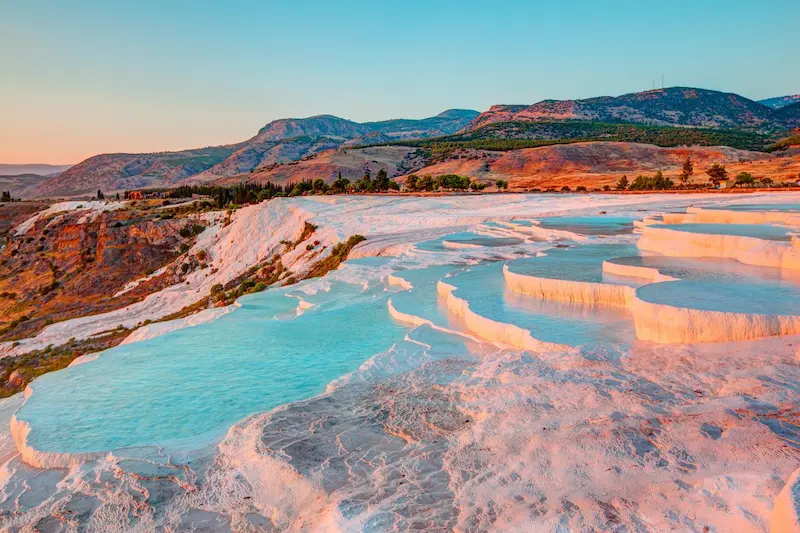
Ephesus & Pamukkale
Best Months: April–May
Comfortable spring weather and ideal natural light for exploring ancient sites and travertine terraces.
Ready to Plan Your Turkish Adventure?
Whether you chase the sun on the Aegean coast or seek the dramatic snowscapes of the East, a well-timed trip ensures you experience Turkey at its absolute best. Happy travels!