
Passengers on a Sepehran Airlines Boeing 737 were left shaken on September 15 when the aircraft returned to Mashhad shortly after takeoff. Part of a landing gear tire tread separated during departure, and the severe vibration that followed brought sections of the cabin ceiling down over the passenger seats.
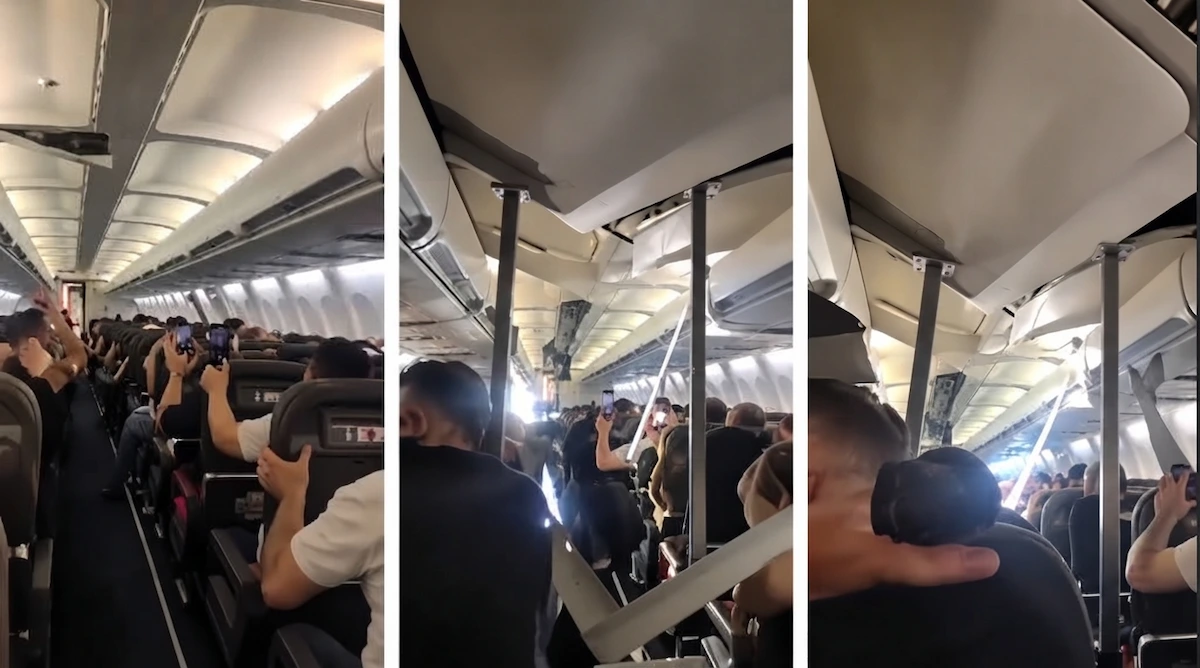
The aircraft was operating a domestic flight from Mashhad to Kermanshah when the problem developed. The crew also reported an engine issue after departure, turned back toward Shahid Hashemi Nejad International Airport and landed safely. No injuries were reported, and passengers were later transferred to another flight to continue their journey.
The Incident at a Glance
Boeing 737
Sepehran Airlines
17:39 Local
Departure Time
Mashhad — Kermanshah
Planned Route
Zero
Reported Injuries
Tire Tread Separates During Takeoff
The flight departed Mashhad at around 5:39 p.m. local time, according to Iranian reports. Shortly after takeoff, part of the tread from one of the aircraft's tires separated.
That detail matters. Early reports described the event as a blown or lost tire, but a statement attributed to Hassan Jafari, public relations director for airports in Iran's Razavi Khorasan province, said the tire itself did not burst — only part of the tread came off during the takeoff roll.
The crew also reported an engine problem after departure. As the aircraft began experiencing severe vibrations, the pilots decided to return to Mashhad. The runway was temporarily closed after the landing so the airport area and the aircraft could be checked, and was later reopened.
How the Flight Unfolded
A short sequence of events turned a routine domestic departure into an emergency return within minutes of leaving the ground.
- 01 Takeoff from Mashhad 17:39 Local
- 02 Tire tread separates During Takeoff
- 03 Crew reports engine problem After Departure
- 04 Severe vibration, ceiling panels fall In Flight
- 05 Safe landing back at Mashhad No Injuries
Cabin Ceiling Falls as the Aircraft Shakes
The most striking part of the incident happened inside the passenger cabin. Video released after the flight shows ceiling panels and sections of the cabin interior coming loose while the aircraft was shaking, with some panels falling toward the passenger seats and exposing parts of the structure behind the cabin lining.
Overhead compartments were also affected, with reports saying passengers' belongings fell during the intense shaking. Passengers can be heard reacting in the footage, which spread quickly online and gave a rare view of what the emergency looked like from inside the aircraft.
What Is Confirmed So Far
A tire tread separation during takeoff, a reported engine problem and severe vibration that loosened cabin ceiling and overhead panels — followed by a safe landing at Mashhad with no reported injuries. The technical link between these events has not been officially established.
Why Did the Cabin Ceiling Fall?
The exact cause of the cabin damage has not yet been established. Available reports point to a sequence involving the tire tread separation, an engine problem and strong vibration, but the relationship between those events will need to be confirmed by investigators.
One possible explanation is that debris from the tire affected the aircraft's engine, though that has not been established as the official cause. Several outlets have linked the tire problem with subsequent engine damage, while other reporting has focused on the severe vibration experienced during the return. The passenger video shows the result of that vibration rather than its technical cause — a full examination of the aircraft will be needed to determine what happened.
Investigation Underway
Iran's Civil Aviation Organization is investigating the incident. Investigators are expected to examine the landing gear, the affected tire, the engine and the damaged cabin panels, with the condition of the aircraft after landing helping to establish how the sequence developed.
Landing Gear
Assembly and wheel condition after the tread separation.
Engine
Whether tire debris caused the reported engine problem.
Vibration Source
What produced the severe shaking felt throughout the cabin.
Cabin Panels
Why ceiling and overhead sections became detached.
Another Sepehran Boeing 737 Incident
The event comes only weeks after a separate incident involving the same airline at the same airport. On August 25, a Sepehran Boeing 737-500 reportedly veered off the runway while landing at Mashhad and its nose landing gear collapsed. That incident also ended without reported injuries.
There is currently no evidence that the two incidents were caused by the same technical problem. They involved different circumstances, and any connection would need to be established by aviation authorities.
An Emergency That Ended Safely
The Sepehran Airlines flight to Kermanshah never reached its destination. Instead, the Boeing 737 returned to the airport it had left only minutes earlier, landed safely and was emptied without injury. A replacement flight was arranged for the travelers.
The images from inside the cabin are striking, but the final outcome was considerably less serious than the footage might suggest. The focus now is on determining exactly what happened during those few minutes after takeoff.